A new national poll from Nanos Research has recorded Liberal Party support at 47 to 48 percent, marking the highest level for the governing party in recent polling history and surpassing even the peak figures achieved by Pierre Poilievre’s Conservatives in early 2025. The survey, discussed on the Ontario-based current affairs program Paikin on Politics, underscores a sustained period of elevated popularity for Prime Minister Mark Carney’s government one year after his election victory.
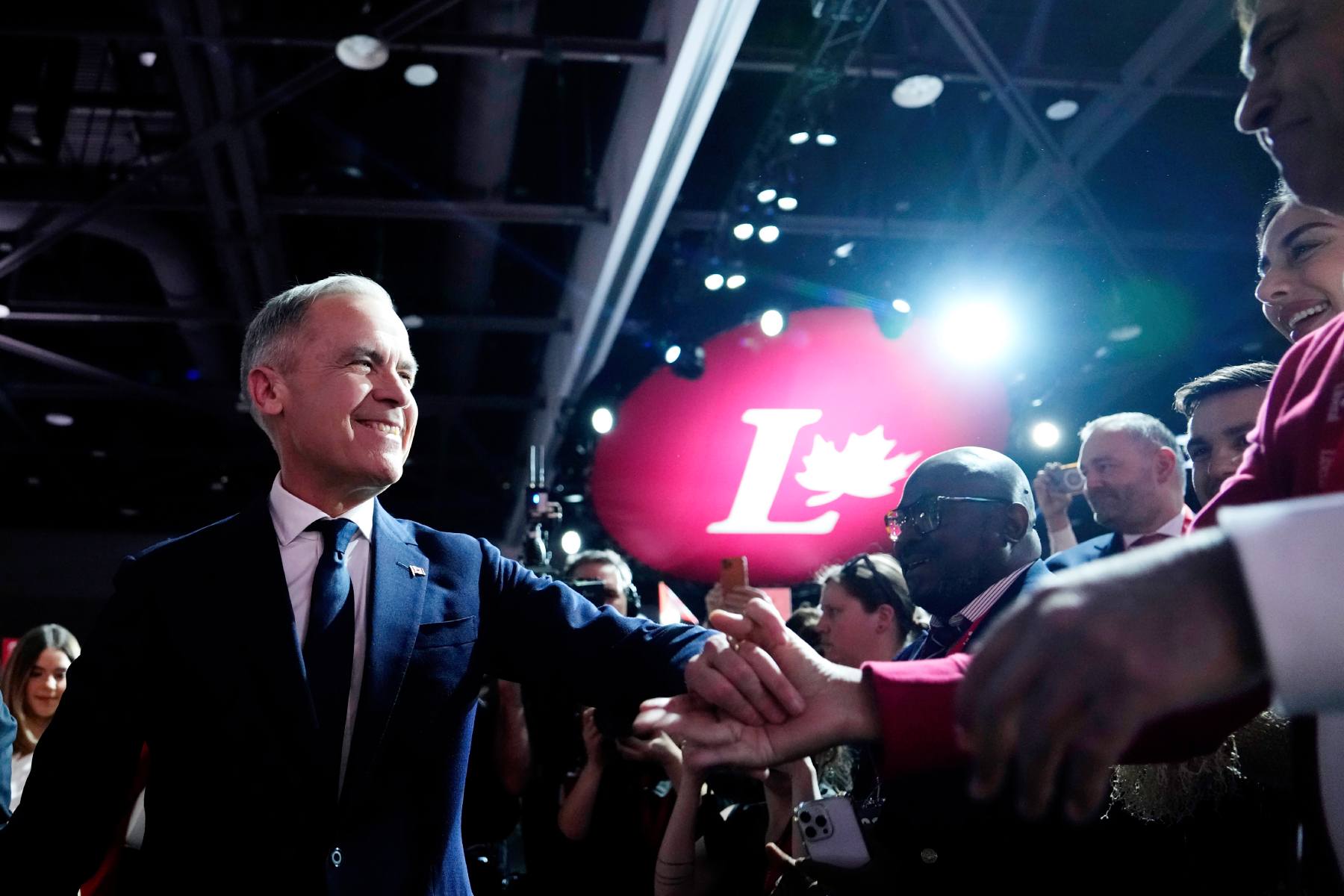
Carney assumed office following the 2025 federal election, in which the Liberals secured a majority with approximately 43.5 percent of the popular vote. Political observers described that result as a conventional honeymoon high point, with the expectation that support would moderate over time. Instead, the latest figures indicate the party has not only maintained but increased its standing despite a challenging international environment that included prolonged trade pressures from U.S. tariffs, ongoing geopolitical tensions, and broader global instability.
Analysts appearing on the program attributed the durability to a combination of factors. Carney’s personal leadership numbers have consistently run 10 to 20 points ahead of his party’s overall support and significantly higher than those of Conservative Leader Pierre Poilievre. Preferred prime minister tracking shows Carney enjoying broad appeal that extends beyond the traditional Liberal voter base. In regions historically resistant to Liberal governments, such as parts of Alberta, the party has registered gains that, while not yet translating into seat projections, signal a shift in public perception.
Commentators suggested that authenticity and perceived competence have played central roles. Carney, a former central banker with a background at the Bank of Canada, the Bank of England, and the United Nations, has cultivated an image of steady stewardship rather than charismatic flair. His public appearances, including a widely noted address at the World Economic Forum in Davos, positioned Canada as a voice of reasoned engagement on the global stage at a moment when many observers felt international leadership was fragmented. The speech was described as elevating Canada’s diplomatic profile in a way that resonated domestically, reinforcing a narrative of effective governance amid uncertainty.
The program’s discussion highlighted the contrast with previous political cycles. When Poilievre led the Conservatives, his personal numbers trailed his party’s, reflecting a dynamic driven more by rejection of the prior Liberal administration under Justin Trudeau than by affirmative endorsement of the opposition leader. Under Carney, the Liberals appear to benefit from validation tied to the prime minister’s handling of external challenges. The year since the election has featured sustained economic pressures from U.S. trade policy, yet domestic polling suggests voters credit the government with navigating those conditions competently.
The extended honeymoon period stands out as unusual. Political observers noted that governing parties typically experience a gradual erosion of support as routine governance decisions accumulate scrutiny. The Liberals have branded themselves as a renewed administration, emphasizing a break from the Trudeau era despite representing a fourth consecutive Liberal mandate. Carney’s approach has leaned on technocratic credibility and measured communication, qualities that appear to align with public demand for stability in an era of international volatility.

Regional dynamics add another layer to the analysis. While national numbers reflect broad strength, seat distribution remains a separate consideration. Gains in western provinces, even if modest in absolute terms, indicate softening of longstanding regional divides. The program’s hosts observed that such shifts may stem from perceptions of competence rather than ideological realignment, with Carney’s understated style and policy focus resonating in areas previously skeptical of Liberal priorities.
The poll results arrive against the backdrop of ongoing legal proceedings related to the previous Liberal government’s invocation of the Emergencies Act in 2022. The federal government has confirmed it will seek leave to appeal to the Supreme Court of Canada after lower courts ruled that the use of the act during the Ottawa convoy protests was not justified. The Federal Court and Federal Court of Appeal found that the threshold for invoking the legislation—requiring a national emergency threatening the security of Canada—had not been met, as existing laws could have addressed the situation.
A public inquiry led by Commissioner Paul Rouleau had previously concluded that the invocation was reasonable under the circumstances, creating a mixed judicial record. The program’s discussion questioned the strategic rationale for pursuing the appeal. With the current administration emphasizing renewal and distance from the Trudeau years, revisiting a signature decision from that period risks reopening divisive debates. Some observers suggested the move preserves future flexibility in emergency powers, while others viewed it as inconsistent with efforts to project a forward-looking government.
The Emergencies Act remains a singular event in Canadian history, the first use of legislation that grants temporary extraordinary authority to the federal government. Its application in 2022 allowed measures including bank account freezes and tow-truck requisitions to clear protest blockades. The legal challenges have centered on whether the threshold for national security justification was properly met and whether proportionality requirements were satisfied.
The appeal process now rests with the Supreme Court, which will decide whether to grant leave. If heard, the case could clarify the scope of emergency powers and set precedent for future invocations. The government’s decision to proceed has drawn attention given the political sensitivities involved. The convoy protests polarized public opinion, and the subsequent legal findings have kept the issue alive in public discourse.
Broader polling trends suggest that domestic economic management and international positioning continue to dominate voter priorities. Carney’s government has maintained messaging around resilience and pragmatic leadership, themes that appear to align with current public sentiment. The Nanos figures, while impressive, come with the caveat that political fortunes can shift rapidly. Historical examples illustrate how quickly high support can erode when external conditions change or internal missteps occur.
Analysts cautioned against overinterpreting a single poll, noting that Nanos has tracked consistent Liberal strength in recent months. The program’s hosts emphasized the importance of context: a year marked by significant global headwinds has not diminished the government’s standing but, in some respects, appears to have strengthened it. This pattern contrasts with conventional expectations and may reflect a public preference for experienced stewardship in uncertain times.
Looking ahead, the durability of these numbers will depend on continued performance in key policy areas, including trade negotiations, economic stability, and responses to international developments. The Conservatives, under Poilievre, face the challenge of reframing their message in an environment where the governing party holds a substantial lead. Opposition strategies have focused on critiques of specific policies, yet the prime minister’s personal numbers suggest a resilience that complicates traditional attack lines.
The Nanos survey provides a snapshot of a political landscape that has evolved markedly since the 2025 election. Mark Carney’s leadership has benefited from a convergence of favorable conditions, including perceived competence on the world stage and a public appetite for stability. Whether this momentum persists will hinge on the government’s ability to sustain effective governance amid evolving domestic and international pressures.

As Canada navigates its fourth consecutive Liberal mandate under new leadership, the current polling environment offers a rare example of sustained post-election popularity. The figures reflect not only party strength but also a broader public assessment of leadership in a period of global flux. The coming months will test whether this alignment endures or gives way to more familiar patterns of political






