“Hope is not a plan.”
That single sentence may have just marked the beginning of one of the biggest geopolitical realignments in decades.
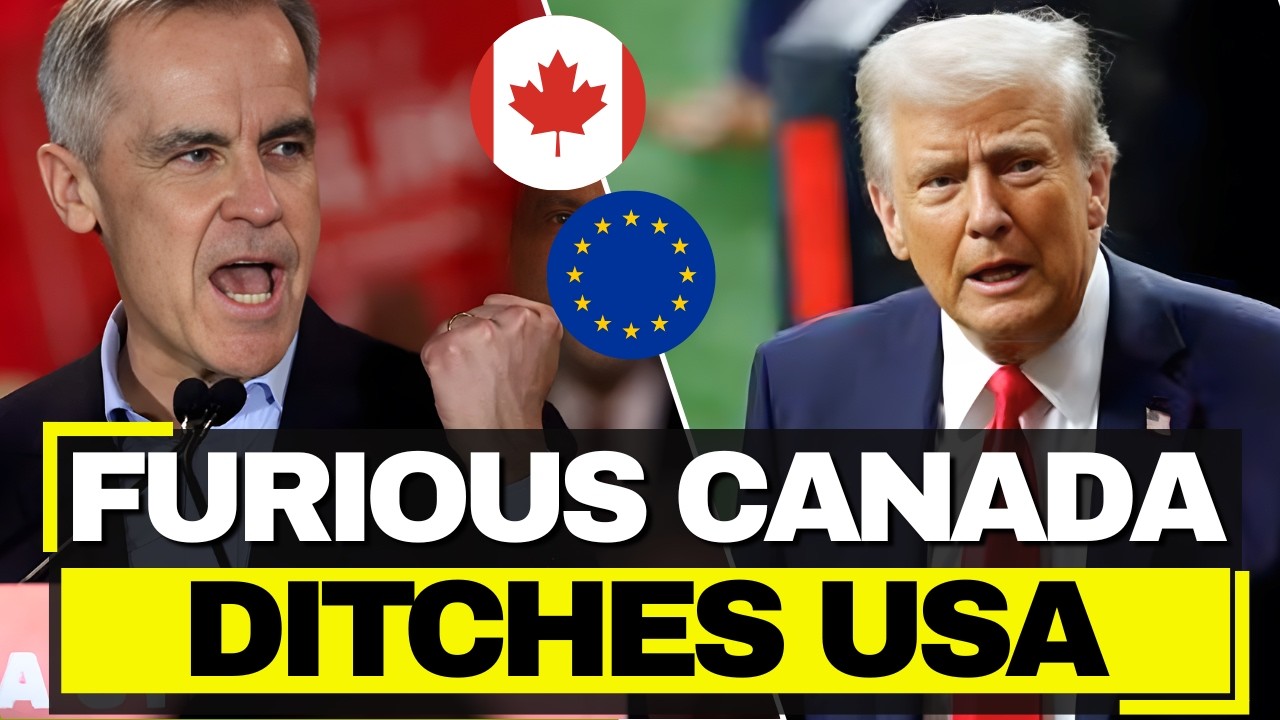
For the first time in modern history, Canada is no longer speaking about the United States as an unquestioned partner. It is openly talking about dependence on Washington as a strategic danger.
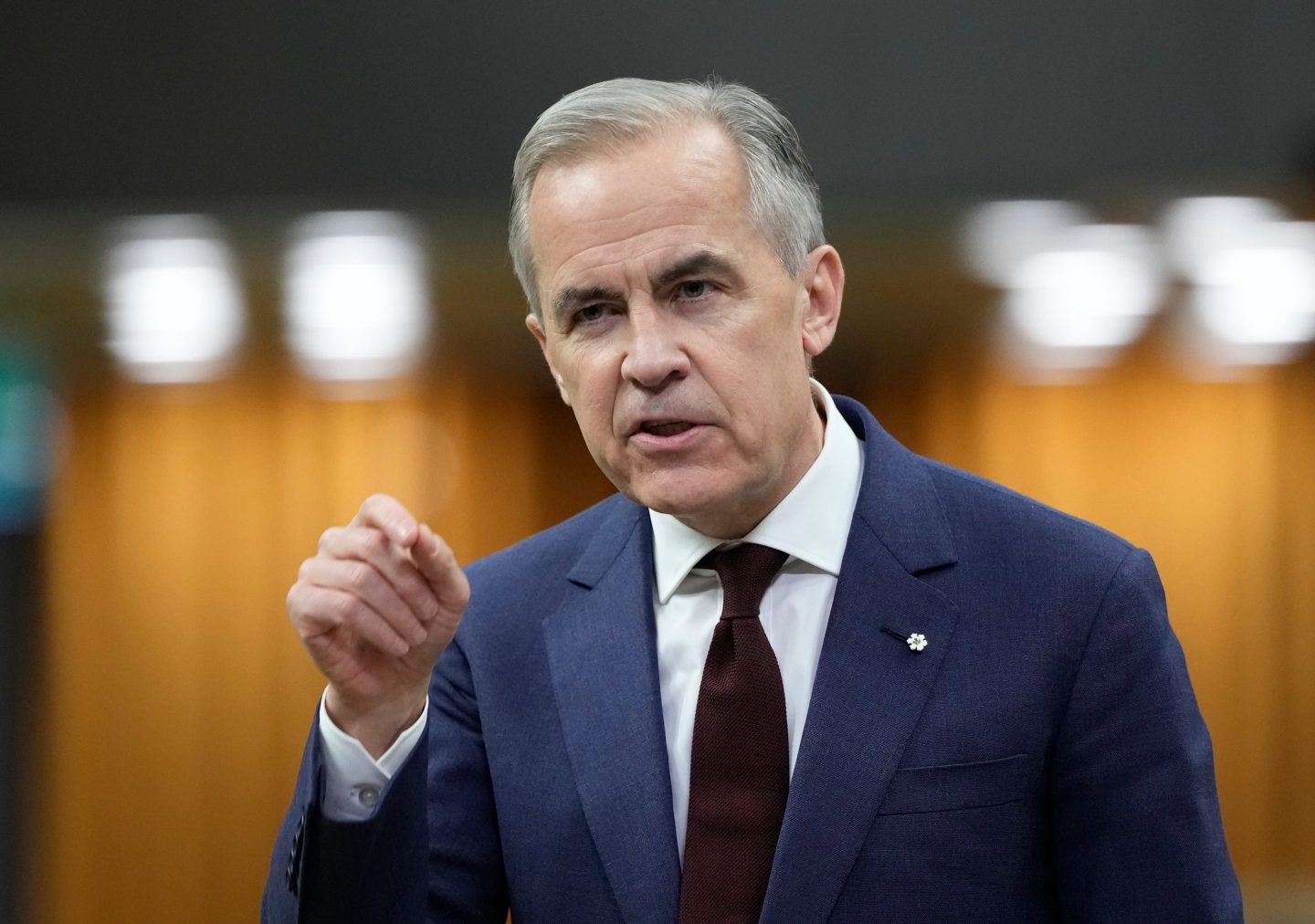
Prime Minister Mark Carney delivered a stunning 10-minute address Sunday that many analysts are calling a turning point in Western alliances. His message was blunt: the economic relationship that once made Canada stronger has now become a vulnerability that must be corrected.
Carney warned that the United States has “fundamentally changed” its approach to trade, pushing tariffs and economic pressure to levels not seen since the Great Depression. But what truly shocked observers was not the policy criticism — it was the tone. This was not the language of a cautious ally. It sounded more like a country preparing for a future where Washington can no longer be trusted.
“Hope is not a plan and nostalgia is not a strategy,” Carney declared. “The US has changed and we must respond.”
Behind the diplomatic wording was a much harsher reality: Canada believes America is increasingly weaponizing its economic dominance, even against allies.
The tension exploded after US Commerce Secretary Howard Lutnick attacked Canada’s trade strategy and suggested the USMCA trade pact should be “reconsidered and reimagined.” Soon after, Donald Trump responded to Carney’s Davos remarks with a statement that stunned international observers.
“Canada lives because of the United States,” Trump said. “Remember that.”
To many Canadians, the message sounded less like alliance diplomacy and more like a warning.
Carney’s response was subtle — but powerful. During the address, he referenced Major General Isaac Brock, the military figure who defended Canada during the War of 1812 against American invasion. Holding up a statue gifted by actor Mike Myers, Carney reminded viewers that Canada’s national identity was forged resisting American expansionism.
And this wasn’t just symbolic rhetoric. Canada is already moving aggressively to reduce dependence on the United States.
In Q4 2025 alone, Canada reportedly dumped a record $20.5 billion in US Treasury holdings. Canadian tourism to the US has collapsed, with car trips down 35% compared to two years earlier, contributing to an estimated $4.5 billion hit to the American economy. Nearly one quarter of Canadians reportedly canceled planned US travel altogether.
At the same time, Ottawa is accelerating what insiders call the “Third Option” strategy — a long-term effort to dramatically expand trade outside the American sphere. Canada now plans to double non-US exports by 2035.
That pivot is already underway.
Earlier this year, Carney met Chinese President Xi Jinping and signed agreements lowering tariffs on Chinese electric vehicles and Canadian canola exports. Days later, Canada and India announced a new energy arrangement focused on Canadian crude oil and natural gas.
Considering that 97% of Canadian energy exports currently go to the United States, the implications are enormous.
But Canada is not alone.
Across Europe, governments are quietly following the same path. Wind and solar power generated 30% of EU electricity in 2025, overtaking fossil fuels for the first time ever. Nine European nations signed the Hamburg Declaration, committing to massive North Sea wind expansion explicitly designed to reduce reliance on American LNG exports.
Meanwhile, global financial players are also shifting away from Washington. China’s US Treasury holdings have fallen nearly 48% since 2013. Gulf sovereign wealth funds are reviewing trillions in American investments. Saudi Arabia’s Public Investment Fund reportedly slashed US commitments by 70% in early 2024.
Individually, these moves may seem disconnected. Together, they reveal something much bigger: America’s allies are building escape routes.
For years, European leaders used soft phrases like “strategic autonomy” to avoid openly criticizing Washington. Carney just shattered that caution. He said publicly what many governments have only whispered privately — dependence on the United States is now viewed as a strategic risk.
The irony is impossible to ignore.
America’s “America First” pressure campaign may actually be accelerating the very thing it hoped to prevent: the gradual economic decoupling of allies once deeply tied to Washington.
Every tariff threat, every public humiliation of allied leaders, every warning about market access is pushing countries toward alternative trade corridors, alternative energy systems, and alternative financial networks.
Geography will not change. Canada will always border the United States.
But leverage can change — and according to Carney, that process has already begun.
Once allies stop seeing dependence as security and start seeing it as exposure, the entire structure of global power begins to shift.
And when America’s closest ally publicly calls US ties a “strategic weakness,” the rest of the world pays very close attention.






