The Archive of Silence: A New Ledger of Evidence in the Epstein Case
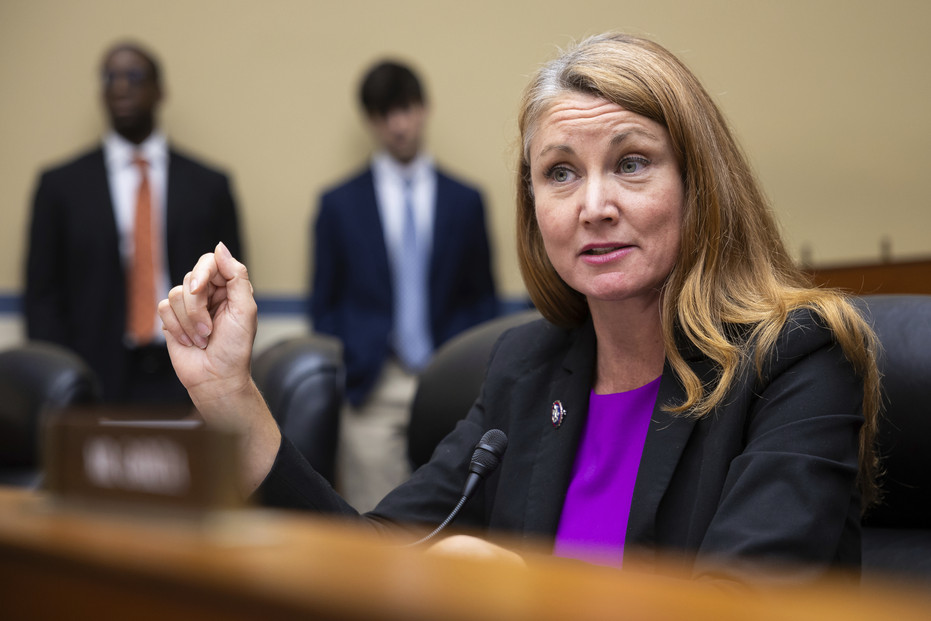
WASHINGTON — In the cavernous, wood-paneled hearing room of the House Judiciary Committee, where the business of government often grinds along with the dry precision of a clock, a sudden and sharp friction can occasionally set the room ablaze. On Tuesday, that spark was provided by Representative Melanie Stansbury of New Mexico, who transformed a routine Department of Justice oversight hearing into a searing interrogation of the nation’s chief law enforcement officer, Attorney General Pam Bondi.

The confrontation was not merely about the specifics of a case or the timeline of a document release. It was a fundamental clash over the identity of the Department of Justice itself. For Stansbury, the department has become a repository of withheld truths regarding the Jeffrey Epstein saga. For Bondi, it is an institution navigating a logistical and legal minefield where “pure transparency” must be balanced against the complexities of federal protocol.
The Statistic That Stopped the Room
The tension began not with an accusation, but with a number. Stansbury revealed that the House Oversight Committee had recently subpoenaed and received tens of thousands of documents directly from the Epstein estate—records including emails, financial ledgers, and litigation filings that had never before been reviewed in a public congressional forum.
Then came the figure that shifted the atmospheric pressure inside the chamber: the documents reportedly contain more than 1,600 references to Donald Trump. Stansbury was quick to offer a forensic caveat, noting that “references in documents don’t automatically mean wrongdoing.” However, the sheer volume of the material raised a haunting question for the committee: If this much documentation exists, why was it not at the center of the original federal investigation?
A Conflict of Testimony
The hearing also highlighted a growing rift between the newly acquired records and past sworn testimony. Stansbury pointed to documents in which Epstein himself appeared to assess that he faced a mandatory minimum of at least 10 years in prison. This internal assessment, she argued, stands in direct conflict with the narrative provided by former U.S. Attorney Alex Acosta, who famously defended the 2008 non-prosecution agreement by claiming that “credible evidence” for federal charges was insufficient.
“Justice matters because those who abused, enabled, financed, and protected this criminal enterprise must face the truth,” Stansbury said, her voice carrying a practiced, rhythmic weight. She framed the investigation as a “miscarriage of justice” conducted within the courts and the Department of Justice—a failure of the very institutions designed to protect the vulnerable from the powerful.
The Geography of Allegations
The geography of the claims discussed during the hearing centered heavily on Mar-a-Lago. Stansbury referenced sworn statements involving a then-16-year-old who alleged she was recruited at the Florida estate before being groomed and assaulted by Epstein and others.
The documents allegedly include emails and correspondence in which Epstein states that Trump was present at his residences on “numerous occasions” and that Epstein possessed photographs of the future president with young girls. In one of the more chilling phrases extracted from the files, Epstein allegedly described Trump as “the dog that hadn’t barked,” a cryptic reference Stansbury suggested implied potential silence regarding police activity.
The Paper Trail of Business
Beyond the graphic allegations of sexual violence, the hearing touched upon the granular mechanics of influence: the money. The committee is reportedly reviewing documents that reference financial transfers, property conversations, and discussions of business affairs between Epstein and Trump-related interests.
For critics of the original investigation, these financial connections represent the “missing link” that should have triggered deeper scrutiny years ago. Stansbury argued that the American people deserve to know whether individuals with significant influence were shielded from accountability through a web of real estate transactions and financial shielding. The focus on money laundering and property deals suggests that the investigation is broadening its lens from the acts of a single predator to the infrastructure that sustained him.
A Verdict Left to the Public
As the gavel fell, the hearing yielded no confessions and few new facts. Instead, it left behind two irreconcilable versions of the truth. To Stansbury and her supporters, the discovery of the estate documents is the first step toward a long-overdue accounting. To Bondi and her defenders, the focus on specific names represents a “partisan theater” designed to create headlines rather than uncover justice.
The questions that echoed through the room—about missing memos, 1,600 references, and the “dog that hadn’t barked”—remain unresolved. In the vacuum of those answers, the loud, competing narratives of Washington continue to fill the space. As the struggle moves from the committee room toward the potential release of the full, unredacted Epstein files, the American public is left to wonder if the truth is finally coming into the light, or if it is merely being moved from one secret archive to another.






