China’s Quiet Moon Strategy Is Starting to Look Less Like Exploration — and More Like Industrial Planning
For decades, the moon occupied a strange place in the global imagination. It was celebrated, photographed, romanticized — but largely treated as history. Humanity had gone there, planted flags, collected rocks, and moved on.
Then China changed the tempo.
Not with a dramatic speech. Not with a single Apollo-style spectacle. But through a sequence of missions so methodical that only recently has the larger pattern become impossible to ignore.
In June 2024, China’s Chang’e-6 mission returned 1,935.3 grams of rock and soil from the far side of the moon — the first time in human history material had ever been retrieved from that hemisphere. (Guinness World Records)
What initially looked like another milestone in prestige-driven space competition now appears to have been something more consequential: the unveiling of a long-term lunar infrastructure strategy.


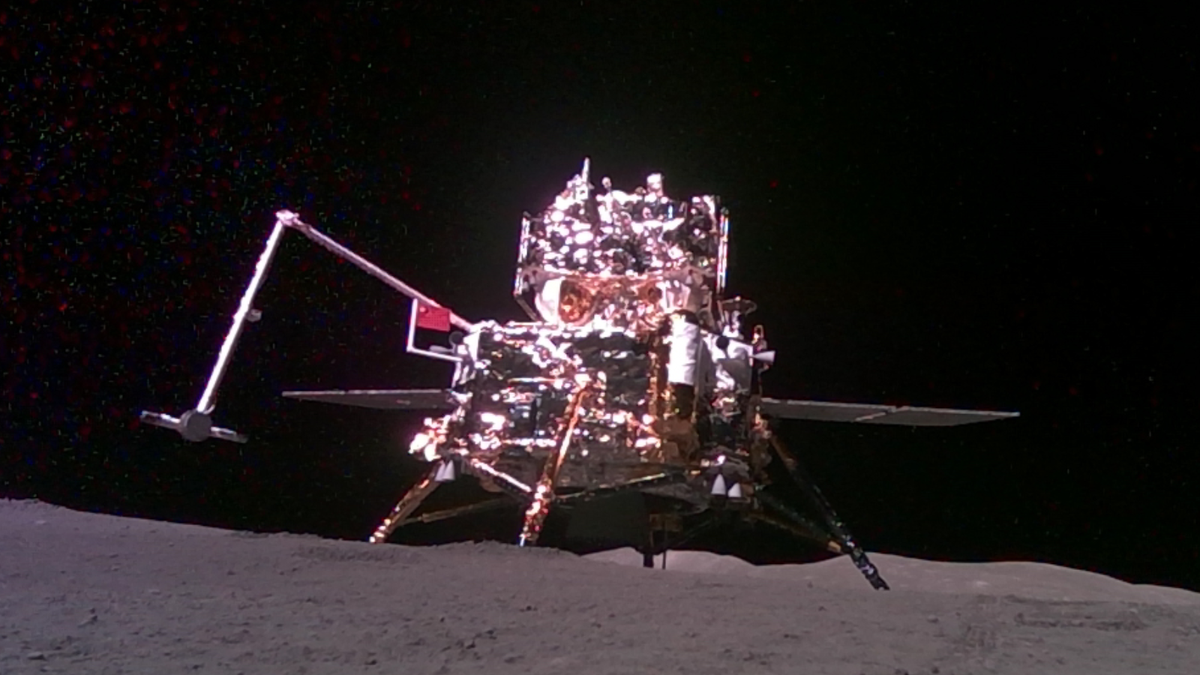
The samples came from the South Pole–Aitken Basin, one of the oldest and deepest impact structures in the solar system. Scientists believe the basin may expose material from deep inside the moon itself — material capable of reshaping long-standing theories about lunar formation and geological evolution. (PMC)
But the scientific implications may ultimately prove secondary to the strategic ones.
Because while much of the world still thinks about moon missions as isolated achievements, China appears to be approaching the moon as a system.
That distinction matters.
The architecture of Beijing’s lunar program has unfolded with unusual patience. Early missions focused almost entirely on mapping and reconnaissance. Chang’e-1 orbited the moon in 2007, collecting topographic and mineralogical data. Chang’e-2 sharpened imaging resolution and landing-site analysis. Chang’e-3 achieved a soft landing in 2013, reviving a capability no country had demonstrated since the Soviet era.
Then came the genuinely difficult leap.
In 2019, Chang’e-4 became the first spacecraft ever to land on the far side of the moon. The engineering challenge was not merely landing itself. Communication with Earth is impossible from the lunar far side without relay infrastructure.
China solved the problem by deploying the Queqiao relay satellite into a specialized orbit capable of simultaneously maintaining line-of-sight with both Earth and the lunar farside. (Guinness World Records)
That mission quietly demonstrated something larger than scientific competence: China was learning how to build permanent operational networks beyond Earth.
And once that capability exists, the moon ceases to be a destination. It becomes territory for logistics.
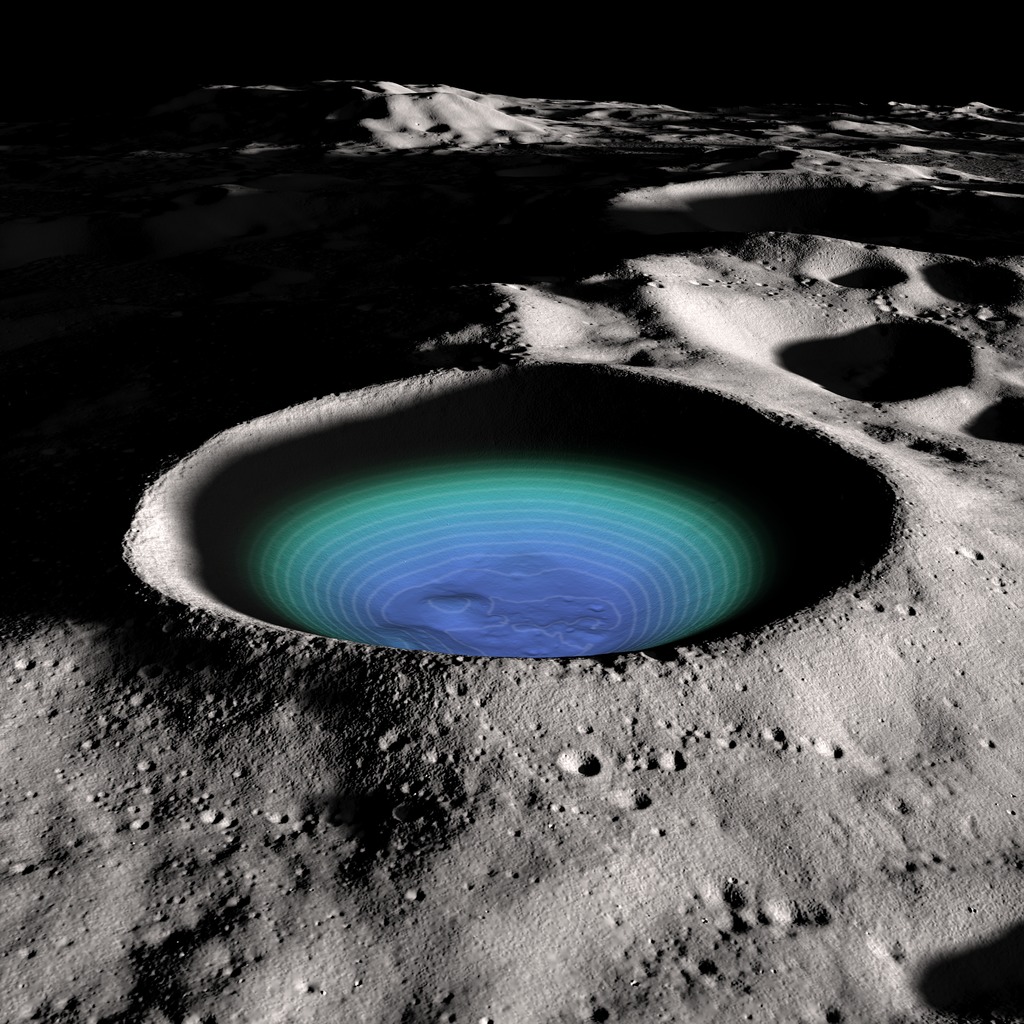
The center of gravity in this new lunar race is not the equator where Apollo astronauts once walked. It is the moon’s south pole.
The reason is not symbolism. It is water.
For billions of years, certain craters near the lunar poles have remained in permanent darkness. Because the moon tilts only slightly on its axis, sunlight never reaches the bottoms of some polar depressions. Temperatures there can plunge below minus 170 degrees Celsius.
Scientists increasingly believe these frozen regions contain massive deposits of ancient water ice delivered over eons by comets and asteroids.
In space economics, water changes everything.
Water can be separated into hydrogen and oxygen. Oxygen supports life. Hydrogen and oxygen together create rocket fuel. A sustained lunar water supply would allow spacecraft to refuel beyond Earth rather than carrying all propellant out of Earth’s gravity well — currently one of the most expensive barriers in spaceflight.
In practical terms, the moon could become a refueling station for missions deeper into the solar system.
That is why China’s upcoming Chang’e-7 mission matters so much.
Official plans describe an unusually complex robotic architecture: orbiter, lander, rover, and a hopping probe designed to descend into permanently shadowed craters where traditional wheeled vehicles may struggle to survive.
The hopping probe’s mission is straightforward in concept and extraordinarily difficult in execution: locate usable water ice.
The environment it will enter is among the harshest humanity has ever attempted to explore. No sunlight. Extreme cold. Jagged terrain untouched for geological ages. A place closer to cryogenic preservation than to any terrestrial landscape.
And China is building machines specifically designed to operate there.
That alone represents a strategic shift in how major powers now think about space.
For most of the Space Age, exploration meant brief visits. China’s model increasingly resembles industrial preparation.

The next phase of this strategy may prove even more important than the water search.
Construction.
Transporting building materials from Earth to the moon is prohibitively expensive at large scale. Every kilogram launched into space carries enormous cost penalties. Long-term settlement becomes economically unrealistic if every wall, landing pad, radiation shield, and habitat must originate on Earth.
China’s answer is in-situ resource utilization — the idea of manufacturing directly from lunar material itself.
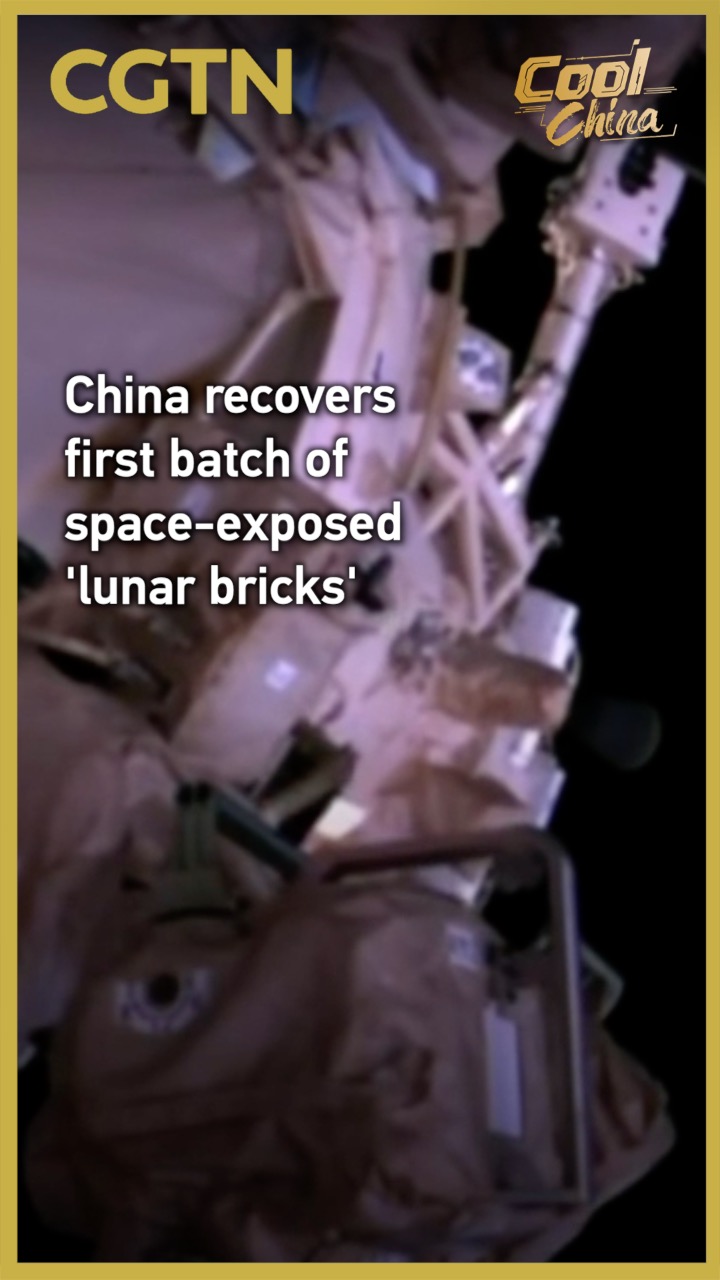
Chang’e-8, planned for the late 2020s, is expected to test systems capable of turning lunar regolith into structural material using concentrated solar heat. Chinese researchers are already exposing experimental “lunar bricks” to the vacuum and radiation environment outside the Tiangong space station to determine whether they can survive prolonged exposure in space conditions.
The implications are difficult to overstate.
If autonomous systems can manufacture roads, landing pads, shielding, and eventually habitats using local resources, the economics of lunar permanence shift dramatically.
Infrastructure no longer has to be imported. It can be produced.
This is where the conversation moves beyond science fiction.
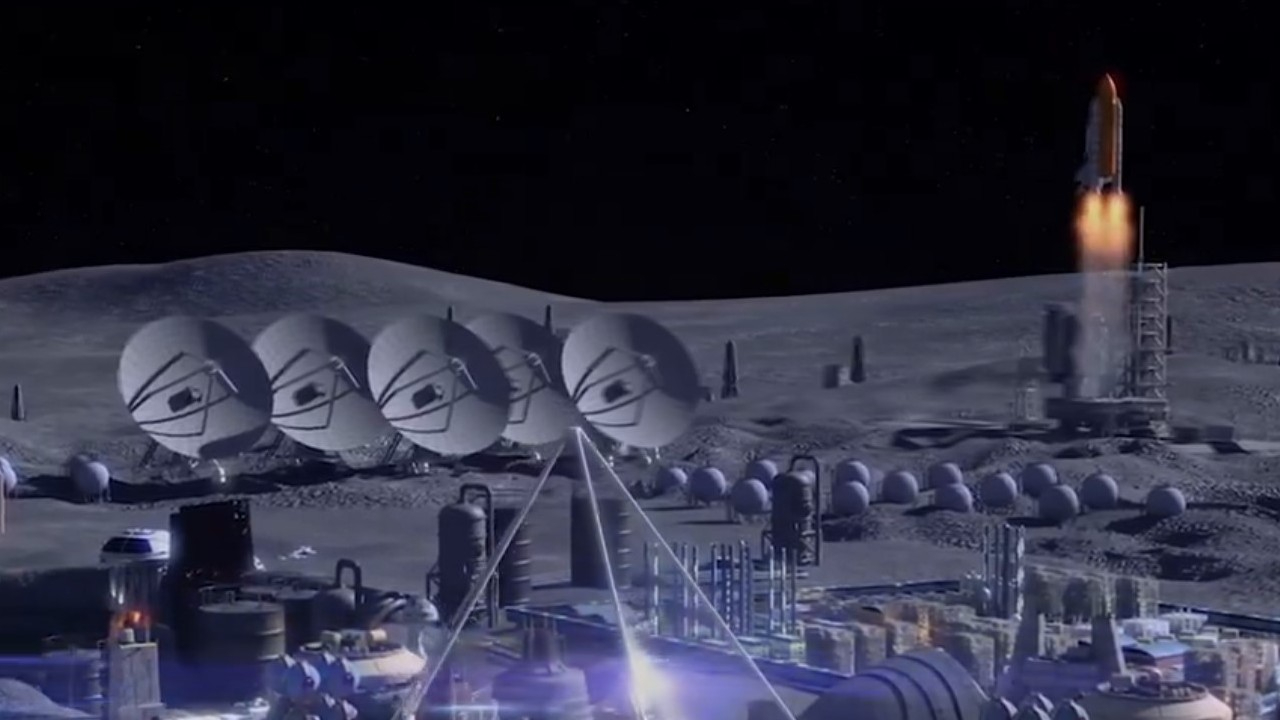
China and Russia have already publicly outlined plans for the International Lunar Research Station, or ILRS — a long-term base envisioned near the lunar south pole. Official timelines describe an initial operational framework by roughly 2035 followed by major expansion through mid-century.
The proposed system includes surface facilities, communication networks, transportation systems, orbital support infrastructure, and power generation.
Power may become the defining challenge.
The lunar night lasts roughly 14 Earth days. Solar energy alone becomes difficult in permanently shadowed environments. In 2025, Roscosmos and the China National Space Administration signed agreements exploring the deployment of a nuclear reactor on the moon during the 2030s to sustain future operations during prolonged darkness.
That development drew surprisingly little global attention considering what it implied.
Humanity is no longer discussing whether permanent lunar industry is theoretically possible.
Major powers are now debating what kind of power grid it will require.
The broader geopolitical implications are already emerging.
The United States still leads in many areas of space capability, particularly crewed missions and commercial launch systems. NASA’s Artemis program remains extraordinarily ambitious. Private American firms continue to dominate launch economics and satellite deployment.
But China’s advantage may lie elsewhere: institutional patience.
Its lunar program has advanced with unusually long planning horizons, integrating scientific missions, infrastructure testing, communications architecture, robotic construction research, and resource extraction into a coherent sequence.
The approach resembles civil engineering more than exploration theater.
And increasingly, the scientific results are reinforcing the value of that investment.
Analysis of Chang’e-6 samples suggests volcanic activity on the moon may have persisted far longer than many earlier models predicted. Other findings indicate major chemical differences between the lunar near side and far side, implying the moon may be more geologically asymmetric than previously understood. (PMC)
In other words, the moon is turning out to be more dynamic, more complex, and potentially more resource-rich than decades of assumptions suggested.
That realization changes the psychology of space strategy.
For most of modern history, the moon symbolized arrival — a final destination proving technological superiority.
Now it increasingly resembles something else entirely: infrastructure.
A logistics hub.
A fuel reserve.
A manufacturing site.
Perhaps even the first permanent industrial foothold beyond Earth.
The most revealing aspect of China’s lunar campaign may not be any single mission, rover, or scientific discovery. It is the fact that each mission appears designed to unlock the next one.
Mapping enabled landing.
Landing enabled sampling.
Sampling enabled geological prospecting.
Prospecting enabled resource targeting.
Resource targeting enabled construction planning.
Construction planning now points toward permanence.
The moon is no longer being treated as a place humans briefly visit before returning home.
It is being treated as a place where systems can remain.
And if those systems succeed, historians may eventually look back on the 2020s not as the decade humanity returned to the moon — but as the decade the moon stopped being wilderness. (Guinness World Records)






