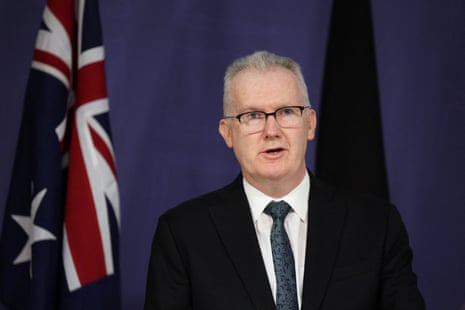
Australia has found itself at the center of a growing political storm after comments from Immigration Minister Tony Burke reignited one of the country’s most contentious debates: immigration, housing affordability, and the future of population growth.
What began as a discussion about visa policy has rapidly evolved into a broader national conversation about whether Australia’s migration settings are helping solve economic challenges or making existing problems worse.
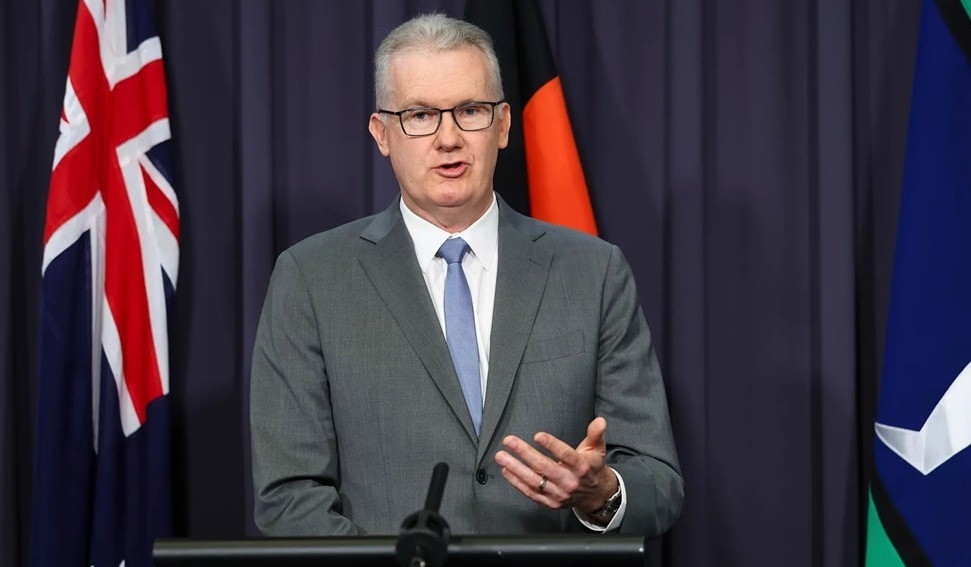
The controversy erupted after Burke suggested that Australia should ultimately create clearer pathways to citizenship for many of the nearly three million people currently living in the country on temporary visas.
His remarks immediately drew strong reactions from across the political spectrum.
For supporters, the proposal reflects Australia’s long-standing identity as a nation built by migration and recognizes the contributions made by temporary workers, international students, and skilled migrants.

For critics, however, the comments raised serious questions about whether the government understands the pressures facing ordinary Australians.
The timing of Burke’s remarks could hardly have been more sensitive.
Across the country, housing affordability has become one of the most pressing concerns for voters.
Rental vacancy rates remain historically low in many cities.
House prices continue to challenge first-home buyers.
Young Australians increasingly report feeling locked out of property ownership.
In major metropolitan areas such as Sydney, Melbourne, Brisbane, and Perth, competition for housing has intensified dramatically over recent years.
Families searching for rental properties often face dozens of competing applicants.
Some prospective tenants have reported offering above advertised rental prices simply to secure accommodation.
Against this backdrop, any discussion involving migration numbers inevitably attracts heightened scrutiny.
Critics quickly seized on Burke’s comments.
Several commentators argued that expanding citizenship pathways while maintaining relatively high migration levels could place additional pressure on housing demand.
They contend that increasing population growth without a corresponding increase in housing supply risks worsening affordability challenges already affecting millions of Australians.
Opposition politicians echoed similar concerns.
Some argued that infrastructure development, public transport networks, schools, hospitals, and housing construction have struggled to keep pace with population growth.
According to these critics, adding more residents without addressing supply constraints could deepen existing pressures rather than relieve them.
The government, however, rejects the notion that migration alone is responsible for Australia’s housing crisis.
Officials point to multiple factors contributing to housing shortages, including planning regulations, construction bottlenecks, labor shortages, rising building costs, and years of underinvestment in housing supply.
Supporters of migration policies argue that skilled migrants actually play an important role in solving some of these challenges.
Construction workers, engineers, architects, healthcare professionals, and other skilled migrants are frequently cited as essential contributors to Australia’s workforce.
Without sufficient migration, some economists argue, labor shortages could become even more severe.
Business groups have also weighed into the debate.
Many industry leaders warn that reducing migration significantly could create economic problems of its own.
Australia’s aging population, they note, means fewer workers are supporting a growing number of retirees.
Migration has long been viewed as a mechanism for helping maintain economic growth and workforce participation.
Employer organizations frequently argue that skilled migrants fill critical labor gaps that cannot always be met through the domestic workforce alone.
Universities have similarly emphasized the importance of international students.
The education sector remains one of Australia’s largest export industries.
International students contribute billions of dollars annually to the economy while supporting thousands of jobs.
Any major shift in migration policy could therefore have consequences extending far beyond housing markets.
Yet public frustration remains evident.
Recent polling has shown that housing affordability consistently ranks among the top concerns for Australian voters.
Many Australians increasingly associate rapid population growth with congestion, infrastructure strain, and rising living costs.
Whether those perceptions fully align with economic data remains a matter of ongoing debate among experts.
Housing analysts generally agree that Australia’s affordability crisis cannot be explained by a single factor.
Population growth contributes to demand.
However, supply constraints have also played a major role.
Planning approval delays, shortages of skilled construction workers, rising material costs, and limited land availability in some regions have all influenced housing outcomes.
Economists frequently note that housing markets are shaped by complex interactions between supply and demand.
Simply reducing migration would not automatically create enough homes to meet existing needs.
Likewise, increasing housing construction alone may not immediately resolve affordability issues if population growth continues to outpace supply.
The political implications of Burke’s comments could be significant.
Immigration has historically been a powerful issue in Australian politics.
Debates over border security, skilled migration, refugee policy, and population growth have repeatedly influenced election campaigns.
As the next federal election approaches, housing and migration are expected to remain central topics.
Some observers believe the controversy reflects broader anxieties about Australia’s future direction.
Questions surrounding national identity, economic growth, infrastructure capacity, and quality of life are increasingly intertwined.
Many Australians support migration in principle while simultaneously expressing concern about the pace of population growth.
Others argue that migration remains one of Australia’s greatest strengths and has contributed enormously to the country’s prosperity.
The challenge for policymakers lies in balancing these competing perspectives.
Finding solutions that address housing shortages while maintaining economic growth will likely require a combination of reforms rather than reliance on any single policy.
Building more homes, improving infrastructure, streamlining planning approvals, expanding workforce capacity, and carefully managing migration levels may all form part of the solution.
For now, however, Burke’s comments have succeeded in reigniting a debate that shows little sign of fading.
Supporters see an opportunity to modernize Australia’s immigration system and recognize the contributions of long-term temporary residents.
Critics see a government disconnected from the daily struggles of Australians facing record housing costs.
As the discussion intensifies, one question continues to dominate public conversation:
Can a country facing a housing shortage realistically solve that problem while simultaneously expanding pathways for millions of temporary residents to become permanent citizens?
The answer may shape Australia’s political and economic future for years to come.






