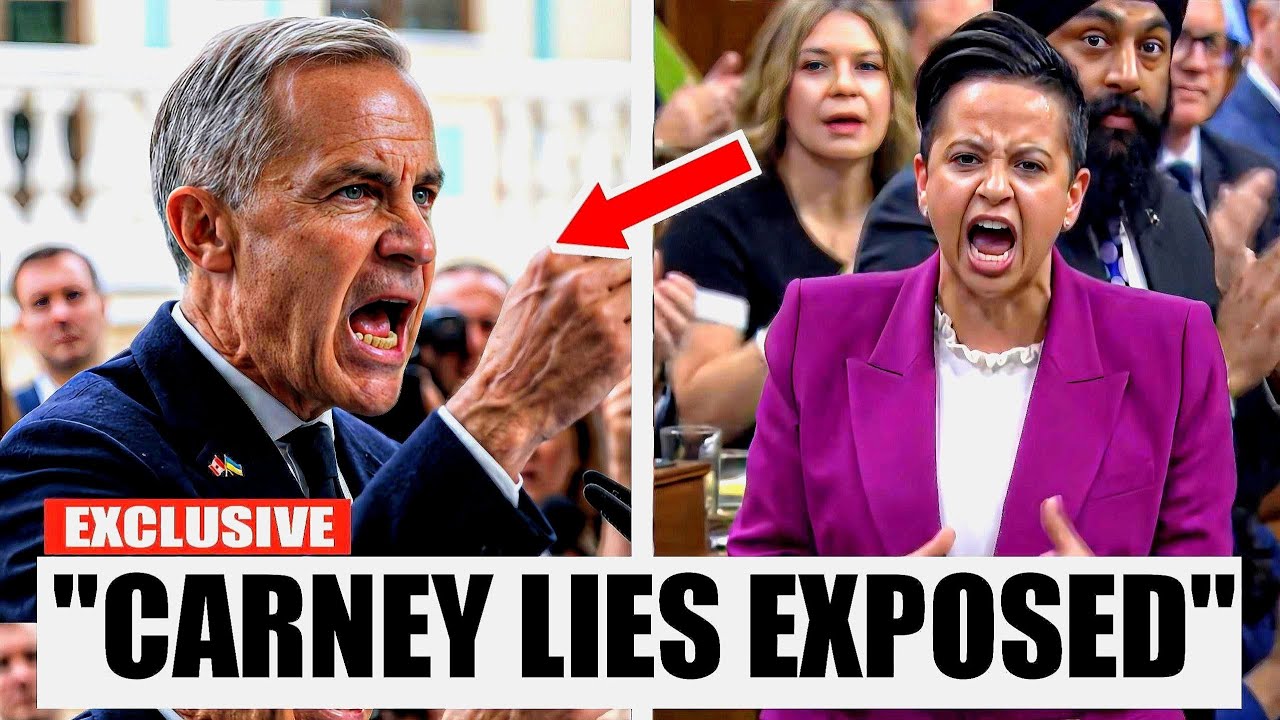
A tense exchange inside Canada’s House of Commons this week placed renewed attention on the federal government’s fiscal strategy, public spending levels, and broader concerns surrounding affordability as Conservative MPs sharply challenged the Liberal government over deficits, public safety policy, and economic management. The parliamentary confrontation quickly became one of the most closely watched political moments in Ottawa, with opposition figures accusing the government of failing to reconcile its public messaging on fiscal restraint with rising federal expenditures.
The debate unfolded during a series of exchanges involving Conservative MP Melissa Lantsman, members of the Liberal cabinet, and representatives speaking on behalf of Prime Minister Mark Carney. Discussions touched on a range of contentious federal issues, including firearm policy, border enforcement, public spending, affordability pressures, and concerns over national debt levels.
Early in the session, opposition MPs focused heavily on the government’s firearm buyback initiative, questioning both its projected effectiveness and overall cost. Critics argued that significant federal resources were being directed toward programs they claimed would have limited participation while broader public safety concerns, including illegal firearms trafficking and violent crime, continued to generate concern across Canadian communities.
Conservative MPs repeatedly questioned the government’s priorities, arguing that public resources should instead be directed toward policing, border security, and enforcement measures. During the exchange, government representatives defended the buyback program as part of a broader national strategy that also includes border investments, additional law enforcement recruitment, and legislative measures tied to Bill C-2.
Government ministers maintained that the Liberal administration remains committed to reducing gun violence through a combination of confiscation programs, expanded border scanning capabilities, and increased staffing for the Canada Border Services Agency and the Royal Canadian Mounted Police. Officials argued that the firearm strategy forms part of a larger effort to improve national security and public safety across the country.
As the debate continued, the political focus shifted toward broader questions surrounding federal finances. Opposition MPs accused the government of dramatically increasing spending despite previous public commitments emphasizing restraint and fiscal discipline. Conservatives repeatedly referenced growing deficits, inflation pressures, and affordability concerns affecting households nationwide.
During one exchange, Lantsman questioned whether the government would commit to preventing the federal deficit from exceeding previous spending levels established under former Prime Minister Justin Trudeau. She argued that rising federal expenditures were contributing to broader economic strain felt by Canadian families dealing with housing costs, grocery prices, and debt burdens.
Government representatives responded by defending Canada’s economic position relative to other G7 nations. Liberal officials highlighted metrics including debt-to-GDP ratios, wage growth, and economic performance indicators, arguing that Canada continues to maintain comparatively strong fiscal fundamentals despite global economic pressures.
The Commons confrontation reflected increasingly sharp divisions between the governing Liberals and Conservatives over economic management. Liberal ministers argued that federal investments in child care, infrastructure, apprenticeships, Indigenous programs, housing, and school nutrition initiatives remain necessary to support long-term economic growth and social stability.
Conservative MPs, however, argued that government spending has expanded too rapidly while affordability conditions for ordinary Canadians have continued to deteriorate. They pointed to rising household debt, housing affordability challenges, food bank usage, and inflation-related pressures as evidence that current fiscal policy is failing to produce meaningful relief for many families.
The exchange also underscored how affordability concerns continue shaping Canada’s political environment. Housing prices and rental costs remain among the most significant issues facing younger Canadians, while inflationary pressures over recent years have intensified scrutiny of federal economic decisions and spending priorities.
Several opposition members argued that the government’s language surrounding fiscal restraint no longer aligns with the realities facing households across the country. Critics maintained that Canadians increasingly expect greater transparency regarding deficits, borrowing levels, and long-term economic planning as cost-of-living pressures persist.
The parliamentary session additionally touched on internal Conservative Party dynamics and leadership support. During media remarks referenced in the transcript, party representatives emphasized unity within the Conservative movement and highlighted support from party members following recent internal votes. Speakers framed the party’s agenda around affordability, crime reduction, and economic accountability.
At the same time, national security concerns also surfaced during debate involving questions about foreign influence and the presence of individuals connected to the Islamic Revolutionary Guard Corps in Canada. Opposition MPs pressed ministers regarding the implementation of foreign registry measures and broader enforcement policies tied to national security legislation.
The broader tone of the debate reflected an increasingly combative political atmosphere in Ottawa, where both government and opposition parties are attempting to position themselves as defenders of economic stability and public confidence. Exchanges frequently moved beyond technical policy disagreements into broader arguments over competence, trust, and political credibility.
Attention quickly centered on the role of Prime Minister Mark Carney, whose economic background and reputation as a former central banker continue to shape public expectations regarding fiscal management. Opposition critics argued that the government’s current deficit trajectory raises additional questions about whether promised restraint measures have been effectively implemented.
Supporters of the government, meanwhile, contend that continued investment remains necessary during a period of economic transition and global uncertainty. Liberal representatives argued that major public expenditures tied to housing, infrastructure, social supports, and law enforcement are intended to strengthen long-term economic resilience rather than simply expand bureaucracy.
The parliamentary confrontation also highlighted the growing role of digital political commentary platforms in shaping public narratives surrounding federal politics. Commentary surrounding the exchange quickly circulated online, where competing interpretations of the debate reflected broader ideological divides already present within Canadian political discourse.
Political analysts increasingly note that debates over deficits and affordability are likely to remain central issues for Parliament moving forward. Rising household costs, housing availability, and economic uncertainty continue generating political pressure on all federal parties as Canadians evaluate competing approaches to fiscal policy and government spending.
For opposition Conservatives, the exchange represented an opportunity to frame the government as disconnected from the financial realities facing ordinary Canadians. For Liberals, the challenge remains balancing continued public investment with growing scrutiny surrounding deficits and federal borrowing during a period of economic anxiety.
The debate ultimately revealed how questions surrounding affordability, public trust, and government accountability are becoming increasingly interconnected in Canada’s political landscape. While both parties continue presenting sharply different interpretations of the country’s fiscal condition, the intensity of this week’s Commons exchange suggests that economic management will remain one of the defining political battlegrounds in Ottawa in the months ahead.






