OTTAWA, Canada — A dramatic geopolitical realignment is unfolding across the North Atlantic, triggered by a sudden diplomatic rupture between Washington and Ottawa. European defense leaders have moved aggressively to exploit this gap, offering Canada an unprecedented military partnership that threatens to bypass decades of American strategic dominance.
The catalyst for this shift occurred just two weeks ago when the United States abruptly suspended the Permanent Joint Board on Defense. This eighty-six-year-old bilateral military partnership had operated continuously since World War II, serving as the foundational bedrock for continental defense cooperation throughout the Cold War era.

Pentagon officials reportedly suspended the historic institution via social media, following a speech delivered at the World Economic Forum in Davos by Canada’s prime minister. In that address, the prime minister championed the rising geopolitical role of “middle powers” collaborating independently, a rhetorical stance Washington deemed insufficiently deferential.
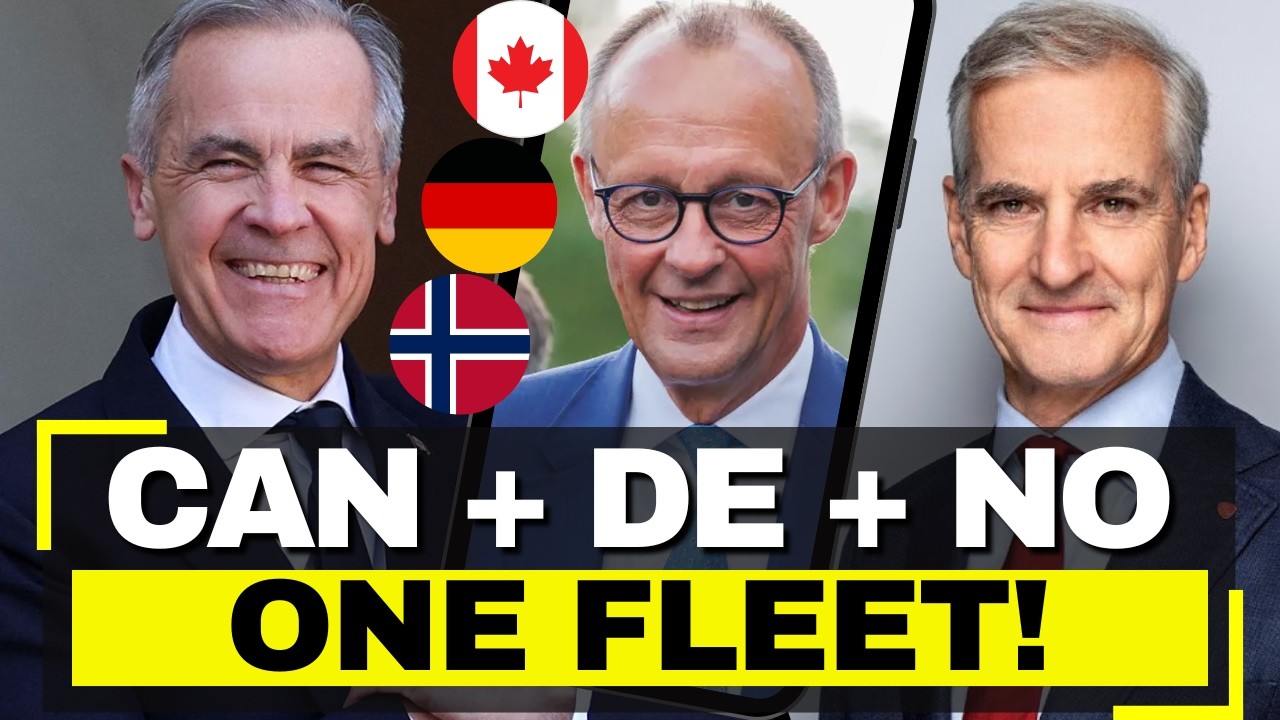
The response from northern Europe was immediate and extraordinarily bold. Recognizing a historic strategic opening, Germany’s defense minister flew directly to Ottawa alongside Norway’s deputy defense minister. They presented a defense package that departs fundamentally from traditional, transactional military procurement and resembles a permanent structural alliance declaration.
At the core of the European diplomatic offensive is an extraordinary proposal regarding the Canadian Patrol Submarine Project. Ottawa urgently needs twelve next-generation conventional submarines to replace its aging, British-built Victoria-class fleet, a procurement program valued at sixty billion Canadian dollars, potentially reaching one hundred twenty billion over its full life cycle.
Rather than offering standard commercial delivery dates scheduled far into the future, Berlin and Oslo offered to temporarily surrender their own existing production slots. This unprecedented mechanism ensures Canada receives four advanced submarines by 2036, avoiding the severe delays usually associated with building new shipyard manufacturing capacity from scratch.
Norway’s defense leadership explicitly articulated the broader strategic vision behind the move, publicizing what had previously been discussed only in private. European officials are no longer viewing their respective naval assets as separate entities, but are instead proposing a unified, shared European-Canadian submarine force patrolling the Arctic.
This projected twenty-four-ship fleet of Type 212 CD submarines would operate under a shared command framework, featuring interoperable crews, synchronized logistics, and joint maintenance infrastructure. If finalized, this arrangement would effectively establish a robust, highly capable NATO submarine community operating entirely outside the traditional sphere of American institutional influence.
The Type 212 CD platform represents a pinnacle of modern non-nuclear naval engineering, utilizing a sophisticated hydrogen fuel cell air-independent propulsion system. This advanced technology allows the vessel to remain submerged for weeks without snorkeling, making it uniquely suited for stealth operations beneath Arctic ice sheets.
Furthermore, the submarine features a specialized hull coated in radar-absorbent material and is engineered to run completely silent. These design characteristics render it virtually invisible to underwater magnetic sensors, providing exactly the type of high-end acoustic stealth required to counter intensifying Russian naval activity in the High North.
To sweeten the geopolitical arrangement, Germany’s bid includes an economic package calculated to boost Canada’s gross domestic product by eighty-six billion dollars. The proposal guarantees an average of fifty thousand jobs annually over five years, spanning shipyards, critical minerals, missile production, and dual-coast maintenance facilities.
German Defense Minister Boris Pistorius highlighted these massive economic projections directly during his appearance at Canada’s premier defense trade show in Ottawa. His physical presence alongside his Norweigan counterpart underscored the immense diplomatic weight Western Europe is placing on drawing Canada away from its traditional dependence on Washington.
However, the European coalition faces formidable competition from South Korea’s Hanwha Ocean, which has submitted a highly competitive rival bid. Demonstrating remarkable operational capability, Hanwha recently sailed its advanced KSS-III submarine fifteen thousand kilometers across the Pacific Ocean to dock at a Canadian naval base, completing a historic voyage.
The South Korean corporation is promising to deliver four vessels by 2035—a full year earlier than the German timeline—backed by seventy billion dollars in promised domestic economic benefits. The KSS-III is a larger, four-thousand-ton boat equipped with lithium-ion batteries and a vertical launch system for heavy missile integration.
While Ottawa initially considered a compromise option of splitting the lucrative twelve-ship contract between both international bidders, strategic realities complicate that approach. Operating two entirely distinct submarine classes severely penalizes naval logistics, doubles training burdens, and undermines the cost efficiencies inherent in maintaining a single, standardized fleet.
The German-Norwegian proposition offers a distinct foreign policy alignment that South Korea simply cannot replicate: deep integration with established NATO allies defending identical maritime approaches. Consequently, prominent geopolitical analysts expect Prime Minister Mark Carney to formally select the European Type 212 CD design before the self-imposed end-of-June deadline.
This impending procurement decision carries profound implications for the broader Western alliance, arriving five years after Canada was visibly excluded from the AUKUS nuclear submarine pact. That snub by Washington, London, and Canberra deeply wounded Ottawa, signaling a changing hierarchy of trust among traditional Five Eyes intelligence partners.
The current rift marks a significant escalation, illustrating how quickly long-standing institutional partnerships can fracture in an era dominated by nationalist foreign policy. By using a social media platform to pause an eighty-six-year-old defense board, Washington inadvertently accelerated the very diversification it sought to discourage.
Prime Minister Carney’s subsequent political messaging has carefully avoided panic or capitulation, deliberately shifting Canada’s strategic focus toward multilateral networks. In recent public statements, he has pointedly emphasized direct cooperation with Ukraine and European NATO structures, conspicuously omitting the United States as the central axis of Canadian security.
Data analysts tracking international relations observe that this defense dispute fits into a broader, well-documented pattern of European decoupling from American systems. Over the past several years, continental leaders have steadily rebuilt sovereign capacity across critical sectors, including digital payments, cloud infrastructure, artificial intelligence, semiconductors, and international trade networks.
What differentiates this submarine development is that Europe is no longer merely building self-sufficiency within its own geographic borders. Instead, European capitals are actively reaching across the Atlantic to pull a foundational G7 partner into their orbit, systematically filling the precise geopolitical vacuum exposed by Washington’s erratic diplomacy.
If the Type 212 CD agreement is signed this month, it will likely form the cornerstone of a formal Canada-Germany-Norway Arctic Security Partnership. This emerging mini-alliance would function autonomously in the North Atlantic, establishing a precedent for medium-sized democracies seeking to build defense capabilities independent of the American military-industrial complex.
Intelligence experts predict that within eighteen months of a Canadian signature, additional European maritime nations will seek integration into the program. The Netherlands and Denmark, both facing identical strategic challenges regarding Arctic security and North Atlantic sea lines of communication, are viewed as the most logical candidates to join.
The unfolding situation reveals a striking historical irony: Washington’s heavy-handed attempt to penalize Canada for its “middle power” rhetoric has instead validated the concept. The economic and military alternatives offered by Europe prove that diversified partnerships are readily available to nations willing to look beyond traditional cross-border dependencies.
The ultimate test of this strategic decoupling will soon extend from beneath the ocean to the skies above. Canada is currently reviewing its highly controversial political commitment to purchase eighty-eight American-made F-35 fighter jets, a procurement process that is rapidly becoming a focal point for domestic sovereignty advocates.
Should Ottawa decide to reconsider or scale back its multi-billion-dollar fighter jet acquisition from the United States, it would signal a complete systemic realignment. Such a move would confirm that Canada’s diversification strategy is not a temporary diplomatic maneuver, but a permanent structural shift in its global alignment.
For intellectual leaders exploring these systemic shifts, the transition underscores the necessity of rigorous critical thinking in an increasingly fragmented world. As outlined in recent geopolitical literature, understanding the difference between a transactional arms deal and a permanent structural realignment requires looking past rhetoric to analyze industrial integration.
The mathematical reality facing Ottawa decision-makers is no longer confined to line-item budgets or technical submarine specifications. The choice before the cabinet is fundamentally constitutional and external, determining whether Canada will remain a subordinate neighbor or emerge as a self-directed leader of a diversified multilateral coalition.
As the critical end-of-June deadline approaches, intense bureaucratic deliberations continue behind closed doors in both Ottawa and European capitals. The final contract layout may include minor industrial compromises designed to preserve South Korean diplomatic relations, but the strategic core will undoubtedly orient toward Europe’s naval architecture.
Ultimately, the decisions made in Ottawa this month will reverberate far beyond the shipyards of Halifax and Esquimalt. They will signal to the global community that the traditional architecture of Western security is fracturing, giving way to a more decentralized, multi-polar order where middle powers dictate their own terms.






