A dramatic new political modelling report has triggered intense debate across Australia after projections suggested One Nation could be on the verge of its biggest electoral breakthrough in modern history.
According to modelling conducted by Redbridge Group and Accent Research, Pauline Hanson’s party could potentially win between 46 and 59 seats in the House of Representatives if an election were held today — with a median estimate of 53 seats.
Such an outcome would completely reshape Australia’s federal political system and potentially force the Albanese government into minority rule while devastating support for both major parties.
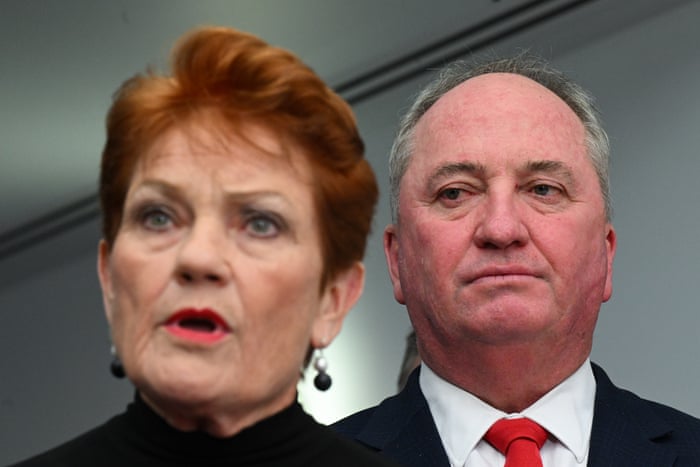
Barnaby Joyce said the results “corroborate” what he believes is a growing shift in voter sentiment toward One Nation, arguing the numbers reflect rising public frustration with the political establishment.
Joyce stressed the modelling is not a formal election prediction, but rather “an indication” of changing political expectations and growing dissatisfaction among voters struggling with economic pressure, housing affordability and cost-of-living concerns.
Meanwhile Pauline Hanson welcomed the figures, saying they demonstrate that One Nation is increasingly being viewed as a mainstream political force rather than a protest movement.
The strongest projected gains for One Nation reportedly appear in Queensland, where the party could secure as many as 21 seats, many classified in the modelling as highly competitive or likely victories.
If realised, such a shift would represent one of the most extraordinary electoral transformations in Australian federal history.
The projections also paint a catastrophic picture for the Coalition. Under the most severe scenario, the Liberal-National alliance could collapse to between just seven and 21 seats nationally.
Several high-profile conservative figures are reportedly identified as vulnerable in the modelling, including Opposition Leader Angus Taylor and Liberal MP Andrew Hastie.
Perhaps most strikingly, the report suggests the National Party of Australia could potentially lose every lower house seat under the worst-case outcome.
The polling sample reportedly included more than 6,000 voters and was conducted between late April and mid-May, with much of the data collected before the federal budget announcement.
Political analysts say the modelling reflects a rapidly changing electoral environment driven by deep voter frustration toward both Labor and the Coalition.
Housing affordability, migration pressures, rising electricity costs, economic anxiety and declining trust in political institutions are all believed to be contributing factors behind the surge in support for smaller parties and outsider movements.
Separate polling trends also show both major parties sitting at historically weak primary vote levels, fuelling speculation that Australia may be entering a far more fragmented and unstable political era.
Some analysts caution that modelling of this kind often reflects protest sentiment rather than final election behaviour. They argue smaller parties can poll strongly between elections but face greater challenges converting broad frustration into seats under Australia’s preferential voting system.
Others, however, believe the political environment is fundamentally changing.

For decades, Australian federal politics has largely operated as a two-party contest dominated by Labor and the Coalition. But growing disillusionment with establishment politics, combined with economic pressure and social division, has opened space for alternative political movements.
The rise of One Nation also mirrors trends seen across parts of Europe and North America, where populist and nationalist parties have gained support by focusing heavily on migration, national sovereignty, energy prices and cost-of-living pressures.
Supporters of Hanson argue her party is connecting with voters who feel ignored by the political mainstream, particularly in regional communities and outer suburban areas.
Critics, meanwhile, warn that populist politics can deepen social division and oversimplify complex economic and policy challenges.
The modelling has already intensified discussion inside both major parties about electoral strategy, leadership stability and the growing collapse of traditional voter loyalties.
For Labor, the prospect of a minority government could create major governing challenges even if the party remains the largest bloc in parliament.
For the Coalition, the projections raise deeper existential questions about whether the conservative vote is fracturing beyond repair.
Some conservative strategists believe the Coalition must move harder on issues like migration, energy and national identity to stop losing voters to One Nation. Others fear shifting too far right could alienate moderate urban voters and accelerate electoral decline in key city seats.
The report has also reignited debate over whether Australia is heading toward a genuine multi-party political system for the first time in modern federal history.
If support for minor parties continues growing while trust in major parties declines, future governments may increasingly depend on coalitions, crossbench negotiations and unstable parliamentary alliances.
Political observers say that would fundamentally alter how Australian governments operate, negotiate legislation and maintain authority.
For now, analysts stress that polling models are snapshots rather than guarantees.
But one thing is becoming increasingly clear: voter anger, economic pressure and political fragmentation are reshaping Australian politics faster than many expected.
And if current trends continue, the next federal election could become one of the most unpredictable contests the country has seen in generations.






