ONE NATION LEADER PAULINE HANSON FACES SCRUTINY OVER UNCOSTED POLICIES AND PARTY TURMOIL
Australia’s political landscape has been stirred by fresh controversy surrounding One Nation leader Pauline Hanson, who has come under fire over claims that she misled voters regarding the status of several key party policies.
The criticism intensified after political opponents and commentators questioned why One Nation has yet to release detailed costings for a number of major promises that have featured prominently in its public campaign messaging.
For months, Hanson has promoted her party’s agenda as a solution to some of Australia’s most pressing challenges, particularly those related to housing affordability and the rising cost of living.
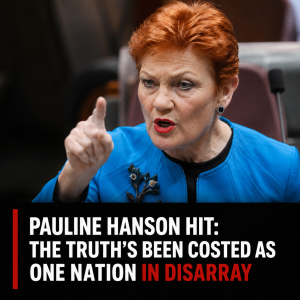
However, when pressed for specifics about how these proposals would be funded, the party has struggled to provide clear financial details, prompting concerns about whether its plans can realistically be implemented.
Critics argue that Hanson’s recent explanations may have created a misleading impression among voters about how prepared One Nation is to govern and deliver on its commitments.
Political analysts note that releasing policy costings is a fundamental step for any party seeking public trust, as it demonstrates both transparency and an understanding of the financial implications of proposed reforms.
Against this backdrop, One Nation’s continued delay in publishing comprehensive financial figures has fueled questions about whether the party is ready to take on a larger governing role.
The controversy has been compounded by reports of internal instability within the party. Observers suggest that Hanson’s team has faced difficulties maintaining a consistent message and coordinating its election strategy.
Particular attention has focused on a major component of One Nation’s housing policy, which has reportedly become a source of disagreement within the party itself.
According to reports, some members have expressed concerns about the practicality of certain housing and property market proposals, while others have pushed for revisions to better reflect current economic conditions.
The apparent lack of unity has provided ammunition for political rivals, who accuse One Nation of making attractive promises without presenting a credible financial framework to support them.
Critics also warn that repeatedly delaying policy explanations or altering key details can undermine voter confidence, especially at a time when economic issues remain a top priority for many Australians.
Supporters of Hanson, however, have defended her position and rejected suggestions that the party is unprepared. They argue that One Nation is still finalizing its calculations before releasing a complete financial plan.
They also point out that major political parties have faced similar criticism in previous election campaigns and contend that delayed costings do not automatically mean a policy lacks credibility.
Even so, pressure on Hanson continues to grow. As she seeks to expand One Nation’s influence across the country, she faces increasing demands to demonstrate that the party is capable of governing rather than simply criticizing the political establishment.
Many political observers believe the coming weeks could prove crucial for Hanson’s public image. Any further confusion or inconsistency surrounding policy details may have a significant impact on voter perceptions.
In today’s highly competitive political environment, transparency and credibility are often viewed as essential qualities for parties seeking broader support. Voters are increasingly looking for detailed plans rather than broad promises.
As debate over One Nation’s policies continues, attention remains firmly focused on Hanson and her leadership team. Whether the party can address growing concerns with a clear and convincing policy framework—or whether internal disputes will continue to overshadow its ambitions—may play a decisive role in shaping its political future.






