One Nation has once again reignited one of Australia’s most controversial political debates after declaring it would ban the burqa if given the opportunity, arguing the garment is incompatible with Australian values and acts as a barrier to social integration.
The statement immediately triggered strong reactions.
Supporters called it a necessary conversation about national identity and community cohesion.
Critics described it as divisive and discriminatory.
But the political significance of the debate may now extend far beyond the burqa itself.
Because the biggest question emerging from the controversy is not simply about clothing.
It is about what kind of country Australians believe they are building.

One Nation’s renewed push for a burqa ban has reignited national debate about immigration, integration, religious freedom and Australia’s cultural identity.
The party has long advocated restrictions on face-covering garments, particularly the burqa and niqab.
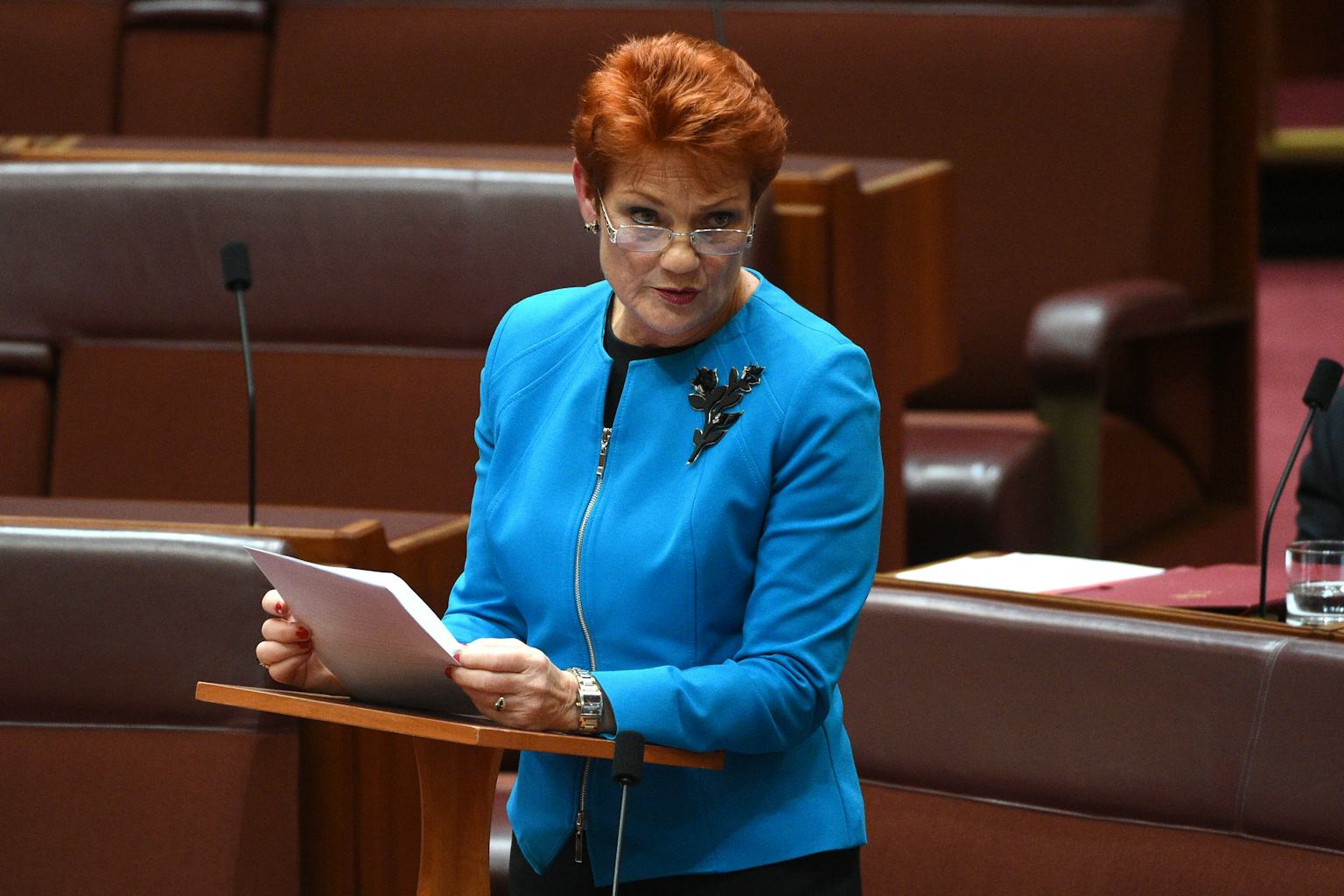
Party leader Pauline Hanson has repeatedly argued that full-face coverings create barriers to social integration and raise concerns surrounding security, transparency and community cohesion.
The issue has remained a recurring part of One Nation’s broader immigration platform for years.
Previous attempts to introduce legislation banning the burqa in public places have failed to secure parliamentary support.
Yet the debate continues returning.
That alone is significant.
Because issues that repeatedly re-emerge in politics often tap into concerns that go far beyond the policy itself.
And that appears to be exactly what is happening here.
For supporters of a ban, the argument is often framed around integration.
They argue successful multicultural societies require shared public norms, visible participation and a common civic identity.
From that perspective, face-covering garments are viewed as symbols of separation rather than inclusion.
Some also argue the issue intersects with security concerns because facial identification is increasingly important across modern public systems.
Critics reject those arguments.
They argue such proposals unfairly target a small minority of Muslim women and risk increasing social division rather than reducing it.
Religious freedom advocates have repeatedly argued that governments should not determine how individuals express their faith in public life.
That disagreement is what keeps the issue politically explosive.
Because both sides claim they are defending Australian values.
They simply define those values differently.
One side emphasises integration, shared identity and cultural cohesion.
The other emphasises liberty, religious freedom and individual choice.
That tension sits at the centre of many modern Western political debates.
And increasingly, it is becoming tied to wider concerns about immigration itself.
Australia is already experiencing intense discussion around population growth, housing pressure and the long-term impact of migration policy.
Questions about infrastructure, affordability and social cohesion continue appearing across public debate.
Against that backdrop, the burqa discussion often becomes a symbol for larger anxieties already sitting beneath the surface.
That is why the conversation rarely stays focused on clothing.
Very quickly, it shifts toward identity.
Who integrates?
What does integration mean?
Can multiculturalism succeed without shared expectations?
And who decides where those expectations begin and end?
Those questions help explain why the issue continues generating such strong reactions.
People are not only debating a garment.
They are debating competing visions of Australia.
That is where fairness becomes central.
Supporters of a ban often argue fairness means everyone following the same visible social standards.
Critics argue fairness means protecting the rights of minorities even when their practices differ from the majority.
Both arguments appeal to fairness.
They simply prioritise different principles.
That is what makes the issue difficult to resolve politically.

Because there is no universal agreement on which version of fairness should prevail.
Recent political developments have added further momentum to the discussion.
One Nation’s growing polling support has increased attention on policies that may once have remained on the political fringe.
As support grows, debates surrounding immigration, integration and cultural identity are receiving greater visibility.
That does not necessarily mean broader public consensus exists.
But it does mean these conversations are becoming harder for mainstream politics to ignore.
The political risk for all sides is obvious.
Identity debates rarely remain contained.
They often spill into discussions about religion, ethnicity, national belonging and social trust.
That is why reactions become so intense.
People often view these issues through deeply personal experiences and beliefs.
Some see threats to cohesion.
Others see threats to freedom.
Both believe something important is at stake.
That may ultimately explain why the burqa debate continues returning despite repeated political battles over the issue.
Because underneath the argument sits a much larger national conversation.
A conversation about identity.
A conversation about integration.
A conversation about the balance between diversity and shared expectations.
And a conversation about what Australians believe their society should look like in the decades ahead.
That is where the debate becomes far larger than a single piece of clothing.

It becomes a debate about the future shape of the country itself.