Australian politics has entered a volatile new phase after senior One Nation strategist James Ashby issued a direct warning to Liberal frontbencher Andrew Hastie over his involvement in matters connected to decorated war veteran Ben Roberts-Smith.
What began as a legal and military controversy has now transformed into a deeply emotional political conflict inside Australia’s conservative movement — one that is exposing fractures between former allies, veterans, political parties, and even sections of the defence community itself.
At the centre of the storm stands Andrew Hastie, a former Special Air Service Regiment officer who once served alongside Roberts-Smith in Afghanistan and who is now facing mounting backlash from nationalist and conservative voices over his willingness to provide evidence linked to the war crimes proceedings involving the Victoria Cross recipient.
The tension escalated dramatically after James Ashby, one of Pauline Hanson’s closest political advisers and one of the key strategic figures behind One Nation’s election operations, publicly revealed that the party was preparing to target Hastie politically in his Western Australian electorate of Canning.
Speaking during a televised Sky News appearance, Ashby delivered a statement that immediately reverberated across Australian political circles.
“We stand by all of our defence force members, and that is one thing Andrew Hastie is forgetting,” Ashby declared.
He then revealed that One Nation currently has 430 registered members inside Hastie’s electorate and strongly suggested the party was preparing a serious campaign against him at the next federal election.
The message was unmistakable.
For One Nation, the issue is no longer simply about Roberts-Smith’s legal troubles. It has become symbolic of a broader narrative about loyalty to military personnel, distrust toward elite institutions, and anger over what some conservatives view as the public abandonment of Australian soldiers who served in Afghanistan.
Ben Roberts-Smith remains one of the most controversial figures in modern Australian public life.
Once celebrated nationally as a war hero after receiving the Victoria Cross for his actions in Afghanistan, Roberts-Smith later became the subject of explosive allegations involving unlawful killings during military operations.
The controversy intensified after his high-profile defamation case against several newspapers collapsed in devastating fashion, with the Federal Court finding that multiple allegations against him were substantially true on the balance of probabilities.
Now facing criminal charges involving five counts of murder, Roberts-Smith remains under strict legal conditions while Australia continues to debate not only his future, but the legacy of the country’s military operations overseas.
For Andrew Hastie, the political danger lies in the deeply personal nature of the dispute.
Unlike many politicians commenting from a distance, Hastie actually served within the SAS and was present during one of the operational missions now under scrutiny.
That experience placed him in an extraordinarily difficult position: balancing loyalty to former comrades with his obligations under Australian law and military ethics.
When Roberts-Smith was formally charged, Hastie released a carefully worded public statement emphasizing his duty to provide truthful testimony under oath while also calling for respect for the legal process and the presumption of innocence.
But in today’s political climate, neutrality itself has become controversial.
Within sections of Australia’s conservative grassroots, especially among nationalist voters and military supporters, any perceived cooperation with investigations into decorated soldiers is viewed by some as betrayal.
That sentiment has become particularly powerful online, where social media campaigns targeting Hastie have intensified over recent months.
Some critics accuse him of turning against fellow veterans.
Others claim he represents a new type of Liberal politician more concerned with institutional approval than solidarity with military personnel.
Meanwhile, supporters of Hastie argue the opposite — that his willingness to respect the judicial system demonstrates integrity, discipline, and commitment to the rule of law even under enormous personal pressure.
The internal divide is becoming increasingly uncomfortable for the Liberal Party.
Hastie has long been viewed as a possible future leader of the federal Liberals. Young, articulate, experienced in national security matters, and popular among many conservative voters, he emerged after the Morrison era as one of the party’s most recognisable figures.
But the Roberts-Smith controversy has complicated that trajectory.
Some Liberal members fear the issue could alienate conservative and veteran communities in Western Australia, particularly if One Nation aggressively campaigns against him in marginal areas.
Others believe backing away from legal accountability would create even greater long-term damage to Australia’s institutions and military credibility.
Pauline Hanson’s One Nation appears determined to exploit that tension.
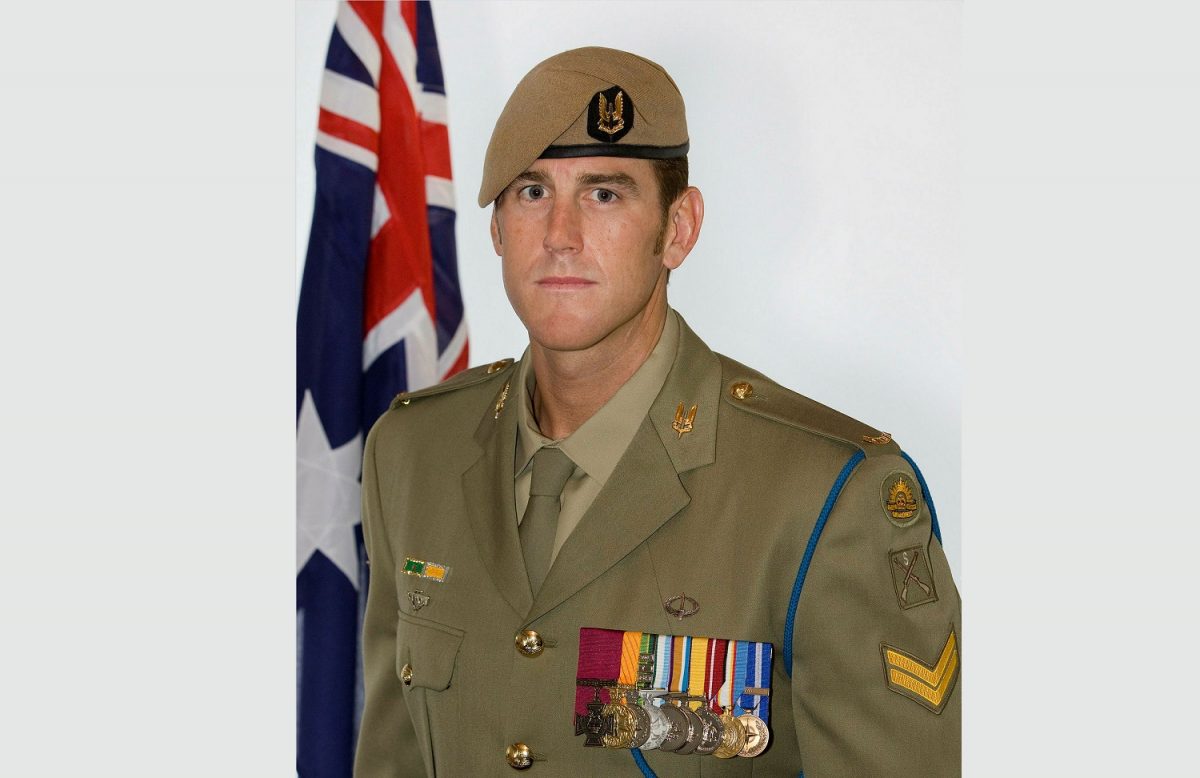
The party has increasingly positioned itself as the defender of disillusioned veterans, nationalist voters, and Australians frustrated with mainstream political elites.
During the recent Farrer byelection campaign, One Nation distributed campaign material openly supporting Roberts-Smith, including signs declaring: “HE FOUGHT FOR US. ONE NATION STANDS WITH HIM.”
The slogan resonated emotionally with sections of the electorate who see the prosecutions and investigations surrounding Afghanistan veterans as politically motivated or unfairly selective.
Ashby reinforced that position again during his media appearances, insisting the party would stand by Roberts-Smith “right to the very end, despite what the allegations are.”
Even speculation surrounding whether Roberts-Smith himself could one day enter politics briefly circulated within conservative circles, although Ashby dismissed suggestions he would run as a One Nation candidate.
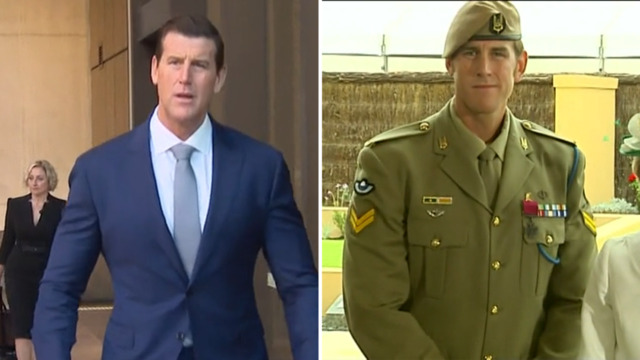
Still, the very existence of such speculation reveals how deeply the issue has penetrated Australian political culture.
This is no longer simply a criminal trial.
It has become a national argument about patriotism, accountability, military sacrifice, media power, and political identity.
Complicating matters further is the emotional fracture within the SAS community itself.
Former soldiers who once fought together are now divided over the allegations, the investigations, and the appropriate public response.
Some former personnel support scrutiny and accountability processes.
Others believe the investigations have unfairly targeted soldiers placed in impossible wartime situations.
That division has spilled into politics, media, and public debate with increasing intensity.
For Andrew Hastie personally, the pressure is extraordinary.
Unlike commentators speaking from television studios or political offices, he remains directly connected to the people, operations, and experiences now at the centre of Australia’s most sensitive military controversy in decades.
Yet despite mounting attacks, Hastie has refused to retreat.
Responding to Ashby’s political threat, he declared publicly that he did not “live in fear of threats made by political operatives.”
He also questioned why One Nation would target a centre-right Liberal MP instead of focusing on defeating the Albanese Labor government.
“If One Nation shares the same mission, why are they targeting a centre-right MP like me?” Hastie asked.
“Who is pulling the strings in the background?”
The comment hinted at broader suspicions inside conservative politics that personal rivalries, factional calculations, and ideological battles may now be driving decisions as much as principle.
Behind the scenes, Liberal strategists are increasingly nervous about what this conflict could mean for the next election cycle.
Western Australia already represents difficult territory for the federal Liberals after heavy losses in recent years.
A sustained One Nation campaign targeting Hastie could split conservative votes, weaken the Liberal primary vote, and create unpredictable electoral consequences.
At the same time, openly attacking One Nation risks alienating voters sympathetic to Roberts-Smith and broader nationalist themes.
The Albanese government has largely avoided becoming directly involved in the dispute, allowing conservative parties and commentators to battle internally over the issue.
But politically, Labor may ultimately benefit from the fragmentation occurring on the right.
Every public clash between One Nation and Liberal figures further complicates conservative unity ahead of future elections.
Meanwhile, the Roberts-Smith legal proceedings continue moving slowly through Australia’s judicial system, ensuring the controversy will remain alive for months — possibly years.
Each new court development risks triggering fresh political reactions, renewed media scrutiny, and deeper ideological conflict.
For many Australians, the situation now represents something larger than the fate of any individual figure.
It raises uncomfortable national questions.
How should democracies judge the actions of soldiers during war?
Can military heroism coexist with allegations of criminal wrongdoing?
What obligations do former comrades owe each other?
And how should political leaders respond when loyalty, justice, patriotism, and public accountability collide?
Those questions have no simple answers.
But one thing is already clear: the battle surrounding Andrew Hastie, Ben Roberts-Smith, and One Nation is rapidly evolving into one of the most emotionally charged political confrontations in modern Australian conservative politics.
And as the legal proceedings continue, the pressure on everyone involved is only getting heavier.






