Australia’s political climate erupted into chaos this week after a fiery exchange between Senator Fatima Payman and One Nation leader Pauline Hanson triggered a nationwide debate over identity, immigration, loyalty, and the future of the country itself.
What began as a television interview quickly transformed into one of the most controversial political confrontations of the year — and with a federal election approaching, many believe this clash could become a defining moment in Australian politics.
The drama started during a weekend interview with 7News, where Fatima Payman delivered a direct message aimed at Pauline Hanson. Speaking about Hanson’s political alignment and repeated praise for Donald Trump-style politics, Payman suggested that if Hanson disliked the direction Australia was taking, then perhaps she should “pack her bags and go to the US.”
The comment exploded instantly across social media.
Supporters of Payman praised her for standing up against divisive rhetoric and confronting what they described as fear-based politics. Critics, however, accused the senator of hypocrisy and disrespect, arguing that telling another Australian politician to leave the country crossed a dangerous line.
But the real political firestorm began only hours later.
Pauline Hanson responded publicly and aggressively, rejecting the criticism and turning the spotlight back onto Payman’s background. Hanson questioned Payman’s dual Afghan citizenship and raised concerns about national loyalty, later escalating the situation by filing a parliamentary petition connected to the matter.
The move immediately intensified tensions.
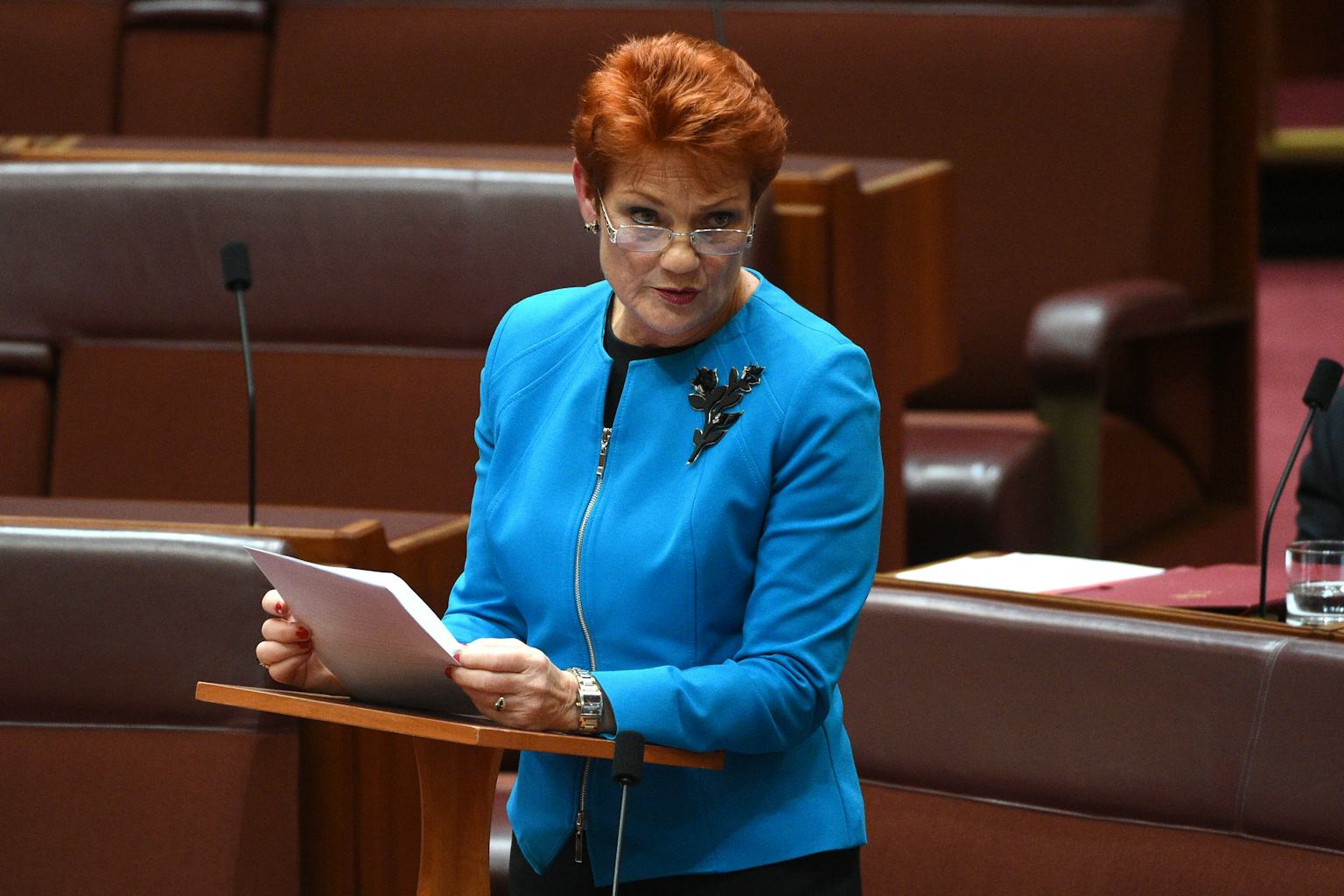
Political commentators described Hanson’s response as strategic but highly inflammatory. Others warned that the argument was no longer simply about two politicians insulting each other — it had evolved into a much larger national conversation about who gets to define Australian identity.
For many Australians, the exchange reopened old wounds surrounding immigration and multiculturalism.
Fatima Payman, who made history as the first hijab-wearing Muslim woman elected to Australia’s federal parliament, has long been a polarizing figure for conservative groups. Admirers see her as a symbol of modern multicultural Australia. Critics argue that some of her political positions place identity politics ahead of national unity.
The citizenship issue became central to the controversy almost immediately.
Payman has previously explained publicly that she attempted to renounce her Afghan citizenship. However, according to her statements, the process became delayed and complicated after the Taliban regained control of Afghanistan and government systems collapsed.
Her supporters argue that the situation was entirely outside her control.
Critics, however, claim the issue raises broader questions about political transparency and eligibility. Legal experts quickly entered the debate, with some pointing out that Australia’s constitutional rules surrounding dual citizenship have caused major political crises in the past, forcing several politicians to resign from parliament.
Social media transformed the dispute into a full-scale culture war within hours.

Hashtags supporting both women began trending across Australian platforms. Some users defended Payman as a courageous progressive voice confronting nationalism and xenophobia. Others rallied behind Hanson, portraying her as someone willing to speak openly about concerns many Australians are allegedly afraid to discuss publicly.
Television networks and radio stations dedicated entire segments to the feud.
Opinion columns appeared almost instantly, with commentators deeply divided over who crossed the line first. Some argued Payman’s “go to America” remark was provocative and unnecessary. Others countered that Hanson’s response targeting citizenship was far more dangerous because it questioned whether migrants and dual nationals can ever truly belong in Australia.
The timing could not be worse for Prime Minister Anthony Albanese.
Already facing political pressure over cost-of-living issues, housing shortages, energy policy, and voter dissatisfaction, Albanese now finds himself pulled into another explosive identity-based national argument just months before a critical federal election cycle intensifies.
During separate remarks, Albanese criticized One Nation directly, accusing the party of focusing on division rather than real policy solutions.
The Prime Minister’s comments added another layer of political tension.
Conservative voices immediately accused Albanese of siding politically with Payman and ignoring concerns raised by ordinary Australians. Progressive supporters, meanwhile, praised the Prime Minister for condemning what they view as inflammatory populism.
Behind the scenes, political strategists from every major party are reportedly watching the fallout carefully.
Why? Because this controversy touches on issues that consistently ignite emotional reactions among voters: immigration, patriotism, religion, race, and national identity.
These debates have reshaped politics across Europe and North America in recent years. Now many analysts fear Australia may be entering a similar period of polarization.
One Nation, founded by Pauline Hanson, has built much of its political identity around skepticism toward immigration and multicultural policies. Hanson herself remains one of the most controversial figures in modern Australian politics, capable of generating enormous media attention with almost every public statement.
Her supporters say she speaks uncomfortable truths ignored by mainstream parties.
Her critics say she deliberately fuels fear and division for political gain.
Fatima Payman represents almost the complete opposite political image.
Young, Muslim, progressive, and outspoken on social justice issues, Payman has become a rising figure among left-leaning voters and younger Australians who see diversity as central to the country’s future identity.
That contrast is exactly why this confrontation exploded so dramatically.
To many observers, the argument was never just about one comment during a television interview. Instead, it became symbolic of two competing visions of Australia itself.
One vision emphasizes traditional nationalism, tighter immigration controls, and cultural assimilation.
The other promotes multiculturalism, diversity, and a more globally connected national identity.
Neither side appears willing to back down.
Political insiders say tensions inside parliament have grown increasingly hostile since the exchange went public. Several MPs reportedly fear the debate could spiral further as media outlets continue amplifying the conflict daily.
Some analysts believe both politicians may actually benefit politically from the controversy.
Hanson thrives during moments of national outrage and media confrontation. Payman, meanwhile, may strengthen support among progressive voters who view attacks on her citizenship and identity as unfair or discriminatory.
In other words, the political incentives for escalation remain extremely high.
Meanwhile, ordinary Australians appear deeply divided.
Online discussions reveal sharp disagreements not only about the politicians themselves, but also about broader questions concerning migration, belonging, free speech, and whether political rhetoric in Australia has become dangerously toxic.
Some citizens argue the country is becoming more polarized every year.
Others insist these tensions have existed for decades and are only now becoming impossible to ignore.
International observers have also begun paying attention.
Several foreign media outlets highlighted the confrontation as another example of growing populist-versus-progressive political battles occurring across Western democracies. Comparisons have already been made to similar culture-war disputes in the United States, Britain, France, and Canada.
The most surprising aspect of the entire saga may be how quickly it escalated.
Within less than 48 hours, a single television remark evolved into a national political controversy involving citizenship questions, parliamentary action, prime ministerial intervention, and a fierce online ideological war.
And many believe the conflict is only beginning.
With election season approaching, every public appearance, interview, and parliamentary debate involving either Payman or Hanson is now likely to attract massive scrutiny. Political parties are already calculating how the controversy could influence key voting blocs across suburban and regional Australia.
Some fear the debate could further fracture social cohesion.
Others argue these conversations are necessary and overdue.
Either way, one thing has become undeniable: the clash between Fatima Payman and Pauline Hanson has exposed tensions inside Australia that run far deeper than a single political insult.
What happens next could shape not only the upcoming election — but also the national conversation about identity, citizenship, and belonging for years to come.






