Parliamentary Clash Over Property Rights and Economic Policy Deepens Pressure on Carney Government
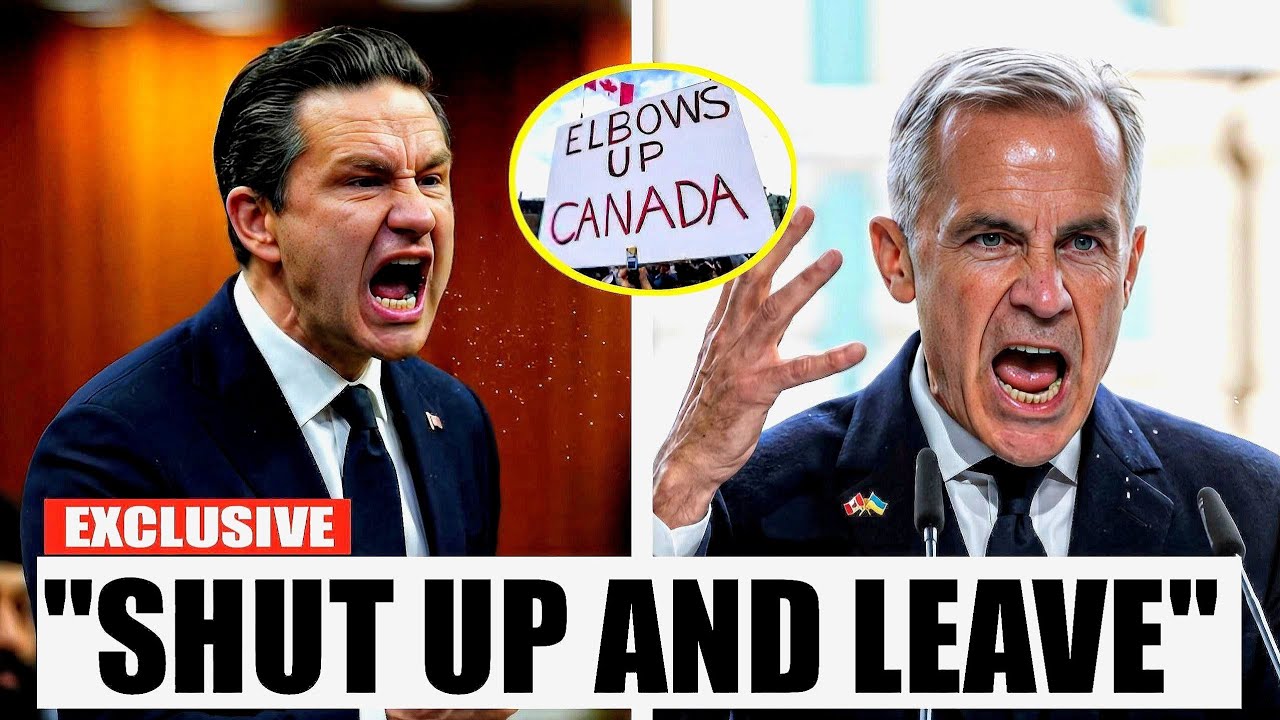
A heated exchange in Canada’s House of Commons this week once again highlighted the growing political divide between Prime Minister Mark Carney and Conservative leader Pierre Poilievre, as debates over property rights, economic policy, affordability, and national sovereignty intensified in Ottawa. The confrontation reflected broader tensions shaping the country’s political landscape as Canadians continue facing persistent concerns over housing costs, inflation, investment uncertainty, and federal regulation.
The parliamentary exchange began with Poilievre accusing the Liberal government of failing to adequately defend property rights in relation to the Cowichan case in British Columbia. He argued that federal litigation directives had instructed government lawyers not to prioritize certain property claims, raising concerns among homeowners and residents affected by the dispute.
Prime Minister Carney rejected the accusation, stating that private property rights remain fundamental in Canada and emphasizing that the federal government had already appealed the Cowichan decision alongside the Province of British Columbia, Indigenous groups, and municipal authorities. Carney also used the moment to reference Indigenous rights and broader reconciliation issues, particularly on Red Dress Day.
The Commons debate quickly evolved beyond legal questions into a much broader argument over the direction of Canada’s economy and the role of government intervention. Poilievre delivered an extended critique of Liberal economic policy, arguing that excessive taxation, regulatory barriers, and lengthy project approval processes have weakened investment and slowed economic growth across multiple sectors.
During his remarks, Poilievre compared Liberal economic management to creating problems that government later attempts to solve through subsidies, agencies, and intervention programs. He argued that policies tied to housing, resource development, investment, and inflation have increased costs for ordinary Canadians while expanding the size and influence of government institutions.
The Conservative leader specifically pointed to permitting delays, restrictions affecting energy projects, and federal spending programs as examples of what he described as an increasingly centralized and interventionist economic model. He argued that such policies discourage private investment while limiting Canada’s ability to fully develop its natural resources and industrial capacity.


Poilievre also framed affordability as one of the defining political issues facing Canadians today. He argued that homeownership, fuel, food, and everyday necessities should be significantly more affordable in a country with Canada’s natural resources and economic potential. His remarks focused heavily on themes of economic freedom, deregulation, and reducing government involvement in business activity.
Conservative MPs increasingly positioned their economic message around the idea of restoring individual autonomy and reducing federal control over economic decision-making. Poilievre stated that Canadians should have greater freedom to make decisions regarding work, investment, family life, and personal finances without what he described as excessive government interference.
The broader political debate also touched on national unity and identity. During remarks outside the Commons exchange, Poilievre argued that Canada’s unity should be rooted in shared freedoms rather than divisions based on region, race, gender, or political identity. He criticized what he described as efforts to divide Canadians along ideological or demographic lines.
At the same time, much of the political attention surrounding the exchange focused on the growing use of the phrase “elbows up,” which has increasingly appeared in discussions surrounding Canada’s response to international economic pressure, including trade tensions and tariff concerns involving the United States.
The transcript repeatedly referenced criticism aimed at Carney’s political messaging, particularly attempts to present a more populist and economically nationalist tone despite his long-standing background in international finance. Critics argued that slogans alone are insufficient without accompanying policy changes that directly address affordability, housing access, and industrial competitiveness.
Debate surrounding economic credibility became central to the broader confrontation. Supporters of Carney frequently point to his experience as former governor of both the Bank of Canada and the Bank of England as evidence of his expertise in managing financial crises and economic policy.
Opponents, however, argued that Carney’s international financial background raises questions about whether his policies adequately reflect the economic realities facing ordinary Canadian households. The discussion repeatedly returned to concerns about housing affordability, inflation, energy policy, and the rising cost of living.
Conservative commentators also emphasized Poilievre’s long-standing focus on affordability and government spending, arguing that his positions on inflation, taxation, and housing predated many recent shifts in political messaging among Liberal figures. The exchange highlighted how both parties are attempting to position themselves as defenders of working- and middle-class Canadians during a period of prolonged economic uncertainty.


Questions over Canada’s economic direction have become increasingly politically sensitive as Canadians continue grappling with high housing prices, elevated debt levels, and broader affordability pressures. The House of Commons debate reflected how these concerns are now shaping nearly every major political discussion in Ottawa.
The exchange additionally revealed competing visions for the country’s economic future. Conservatives promoted a model emphasizing deregulation, resource expansion, tax reduction, and market-driven growth, while Liberals have continued defending targeted public investment, regulatory oversight, and climate-related economic transition policies.
Political analysts note that the clash between Carney and Poilievre increasingly represents more than a personal rivalry. It reflects a deeper ideological divide over globalization, federal intervention, energy development, and the balance between social policy objectives and economic competitiveness.
Several moments during the debate underscored the extent to which public trust has become a central issue in Canadian politics. Both sides accused the other of presenting misleading narratives regarding affordability, economic performance, and national priorities, while appealing directly to Canadians frustrated by rising costs and political polarization.
The confrontation also highlighted the evolving communications strategies of federal leaders. Conservatives have increasingly focused on emotionally resonant themes tied to affordability, sovereignty, and economic frustration, while Liberals continue emphasizing stability, institutional experience, and long-term economic planning.
Observers suggest that debates surrounding housing, energy policy, and government spending are likely to remain dominant political issues heading into future parliamentary sessions. Public dissatisfaction over affordability continues generating pressure across the political spectrum, particularly among younger Canadians struggling with housing access and economic insecurity.
The political implications may prove significant for both parties as they attempt to consolidate support among voters increasingly skeptical of traditional political messaging. While Conservatives are seeking to frame themselves as advocates for economic freedom and working Canadians, Liberals continue presenting themselves as defenders of institutional stability and national cohesion.
For now, the parliamentary exchange leaves many of the underlying disputes unresolved. Questions surrounding property rights, affordability, energy policy, and Canada’s broader economic direction remain deeply contested issues that are likely to continue shaping national political debate in the months ahead.






