Pauline Hanson Set to Address National Press Club for the First Time in Historic Political Milestone
Pauline Hanson is preparing to make a significant appearance at Australia’s National Press Club, marking a moment that many political observers view as a milestone in the nation’s political landscape.
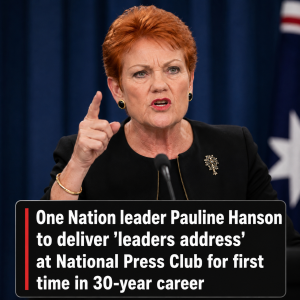
The veteran politician and founder of One Nation will deliver the prestigious “Leaders Address to the National Press Club” on June 17, becoming one of the latest political figures to speak at one of Australia’s most respected public forums.
For Hanson, the invitation carries particular significance. Despite spending nearly three decades in Australian politics and becoming one of the country’s most recognizable political personalities, she has never previously addressed the National Press Club.

The event highlights the growing influence of One Nation, a party that has experienced a remarkable political resurgence in recent years. Once considered a protest movement on the fringes of politics, the party has gradually strengthened its position in national debates.
Founded by Hanson in the late 1990s, One Nation emerged during a period of widespread voter dissatisfaction with traditional political parties. The movement quickly gained attention for its outspoken views on immigration, national identity, and economic policy.
Over the years, Hanson has remained one of the most controversial and enduring figures in Australian politics. Her political career has been marked by both intense criticism and strong support from voters who feel disconnected from mainstream political institutions.
The National Press Club has long been regarded as a central platform for Australia’s political leadership. Since the 1960s, it has hosted speeches from prime ministers, opposition leaders, cabinet ministers, and influential policymakers.
For many politicians, speaking at the National Press Club is considered an opportunity to outline major policy priorities, present a vision for the future, and engage directly with the national media.
The institution’s history reflects its importance. Every Australian prime minister and opposition leader over the past four decades has appeared before the club, making it one of the country’s most influential political stages.
Hanson’s upcoming address therefore represents more than a routine speaking engagement. It serves as recognition of her continued relevance within Australia’s evolving political environment.
Political analysts suggest that the invitation reflects the growing electoral strength of minor parties and independents across the country. Voters have increasingly demonstrated a willingness to support alternatives to the major political parties.
One Nation has benefited from this trend, particularly in regional and rural communities where concerns about cost-of-living pressures, infrastructure, and government policies have become key election issues.
The party’s ability to maintain voter support over an extended period has surprised many political commentators. While numerous minor parties have appeared and disappeared from the political scene, One Nation has remained a consistent presence.
Supporters argue that Hanson has successfully connected with Australians who feel their concerns are overlooked by traditional political leaders. They view her longevity as evidence of a genuine grassroots movement.
Critics, however, continue to challenge many of her policies and public statements. Hanson has frequently been at the center of heated national debates, generating strong reactions from both supporters and opponents.
Regardless of political opinion, few would dispute Hanson’s impact on Australian politics. Her influence has shaped discussions on immigration, multiculturalism, economic nationalism, and government accountability for nearly thirty years.
The June 17 address is expected to attract significant media attention, with journalists likely to question Hanson about current political challenges, the future direction of One Nation, and the broader state of Australian politics.
As the date approaches, the event stands as a symbolic moment in Hanson’s career and in the story of One Nation’s political journey. Whether viewed as a sign of mainstream acceptance or simply recognition of enduring political influence, the National Press Club appearance marks another notable chapter in one of Australia’s most remarkable political careers.






