Pauline Hanson has never been known for modest ambitions.
But in a wide-ranging interview that is already sending shockwaves through Australian politics, the One Nation leader openly outlined what she would do if she ever became Prime Minister — and her vision would dramatically transform almost every corner of Australian life.
With recent polling suggesting One Nation is enjoying some of the strongest support in its history, Hanson appeared more confident than ever as she laid out a political agenda built around slashing migration, dismantling climate policies, cutting government bureaucracy, overhauling welfare programs, and challenging institutions she says have failed ordinary Australians. mm The interview began with a provocative question.
If Australia is facing economic hardship, rising homelessness, soaring power bills, and growing public frustration with the major parties, why not make Pauline Hanson Prime Minister?
Rather than dismissing the suggestion, Hanson embraced it.
While noting that the next federal election could still be more than a year away, she argued that Australians are increasingly turning away from Labor and the Coalition because they feel neither party is addressing the country’s most urgent problems.
According to Hanson, two issues stand above all others.
The first is immigration.
The second is climate policy.
“The country needs time to recalibrate,” Hanson said, arguing that migration levels have placed enormous pressure on housing, infrastructure, and public services.
She pointed to Australia’s growing homelessness crisis, claiming that more than 130,000 people currently lack stable housing.
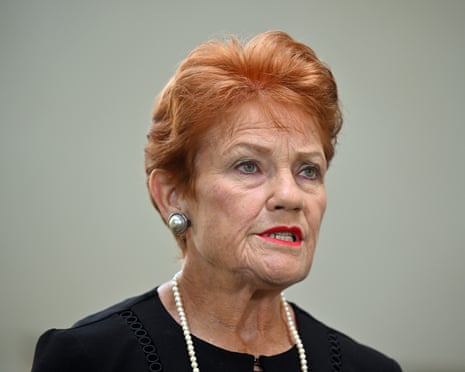
In her view, dramatically reducing migration numbers would allow governments to focus on housing Australians already living in the country before bringing in hundreds of thousands of newcomers.
But if her comments on immigration were controversial, her views on climate policy were even more explosive.
Hanson declared that she would immediately shut down the climate change department if given the power to do so.
She described net-zero policies as economically destructive and argued that renewable energy projects are causing lasting damage to Australia’s economy.
According to Hanson, billions of dollars are being spent pursuing environmental targets while ordinary Australians struggle with rising electricity costs.
She said coal-fired power stations should be expanded and existing energy infrastructure reactivated to bring power prices down as quickly as possible.
“Stop it straight away,” she said when discussing wind turbines and large-scale renewable energy projects.
The remarks come as debate over Australia’s energy future continues to intensify, with critics arguing that abandoning climate commitments could damage Australia’s international reputation and investment prospects.
Supporters, however, say Hanson is speaking for Australians who feel the economic costs of the energy transition have been ignored.
The interview then turned toward One Nation itself.
For years, Hanson has faced criticism over a series of internal party disputes, defections, resignations, and former MPs who later broke away from the party.
Several former One Nation representatives have publicly clashed with Hanson after entering Parliament.
When challenged about that history, Hanson acknowledged that past conflicts had occurred but insisted the party of today is very different from the movement she | returned to lead more than a decade ago.
According to Hanson, One Nation was virtually starting from scratch when she resumed leadership.
She said there was no functioning organisation, no substantial membership base, and few resources.
Now, she claims, the party has built a much stronger structure and is attracting unprecedented interest from potential candidates.
Hanson revealed that approximately 1,500 people have expressed interest in standing for One Nation at the next federal election.
She described the current candidate selection process as rigorous and said many applicants come from professional backgrounds including law, medicine, business, and skilled trades.
“We’ve got very, very good candidates coming forward,” she said.
Another topic generating headlines was the controversy surrounding newly elected One Nation MP David Farley.
Media reports suggested Farley had indicated support for displaying multiple flags Ị at his parliamentary office, including Indigenous flags.
Hanson moved quickly to distance the party from that interpretation.
She insisted that One Nation remains committed to the principle of “one flag” and said she had personally spoken to Farley about the issue.
According to Hanson, the Australian flag should remain the primary national symbol and she made clear that multiple flags would not be displayed on the floor of Parliament under One Nation’s banner.
“There is only one flag,” she declared.
The conversation later shifted toward the possibility of recruiting politicians from Labor or the Liberal Party.
Surprisingly, Hanson appeared largely uninterested.
Despite suggestions that experienced MPs might strengthen a future One Nation government, she argued that many established politicians had already been given opportunities to fight for Australians and failed to do so.
Instead, Hanson said she prefers grassroots candidates with no ties to the political establishment.
She questioned whether politicians seeking to switch parties are motivated by principle or simply trying to save their political careers.
“I’ve got too many great Australians coming forward,” she said.
The interview became even more controversial when discussion turned to government spending and welfare.
Hanson argued that Australia’s welfare system has become unsustainable and claimed some families have remained dependent on government assistance for multiple generations.
While she stressed that pensioners should continue receiving support, she proposed allowing retirees to work unlimited hours without affecting their pension entitlements.
At the same time, she criticised aspects of childcare subsidies, arguing taxpayers should not be funding childcare for families who are not participating in the workforce.
She also called for major reforms to the National Disability Insurance Scheme, claiming fraud and abuse are costing taxpayers billions of dollars. I “There is so much rorting,” Hanson said.
One of her most pointed attacks was directed at what she described as government waste.
She criticised spending on foreign aid, overseas projects, and various public programs, arguing that governments should focus first on the needs of Australian citizens.
“Australians first,” she said repeatedly throughout the interview.
Hanson also took aim at the size of Australia’s public service, arguing that excessive regulation has created an unnecessary expansion of bureaucracy.
According to her, reducing government departments and cutting regulations would allow substantial savings while helping businesses operate more efficiently.
Among the institutions she specifically targeted was the Human Rights Commission, which she suggested should be abolished entirely.
The ABC was another major focus.
Hanson repeated her long-held criticism of Australia’s national broadcaster, arguing that taxpayers should not be forced to fund television services they do not watch.
While she expressed support for maintaining some regional broadcasting services, she suggested most ABC operations should eventually be funded through subscriptions rather than public money.
Perhaps the most revealing moment came when Hanson was asked directly whether she believes she could lead the country.
Instead of avoiding the question, she answered with unusual certainty.
“I believe that | have the ability to do it,” she said.
Although she stopped short of formally declaring prime ministerial ambitions, the comment represented one of the clearest indications yet that Hanson sees herself as more than simply a protest politician.
As the interview drew to a close, Hanson painted a bleak picture of modern Australia.
She spoke of struggling families, rising homelessness, declining manufacturing, overwhelmed farmers, growing debt, and a political establishment she believes has lost touch with ordinary voters.
Whether Australians view her as a champion of forgotten communities or one of the country’s most divisive political figures, one thing became unmistakably clear during the interview:
Pauline Hanson is not moderating her message.
If anything, she appears more determined than ever to challenge the political mainstream. | And with One Natiorrs polling numbers climbing, Australia’s political establishment may no longer be able to dismiss her as easily as it once did.






