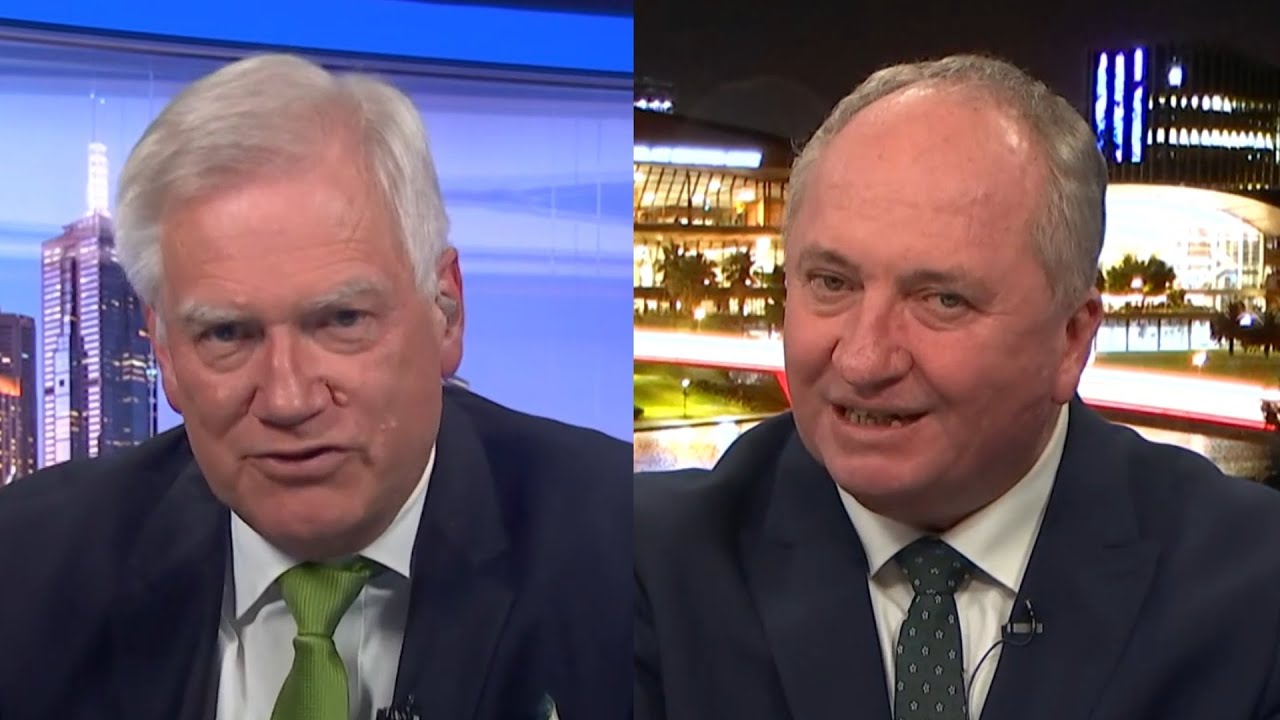
Today, both Resources Minister Madeleine King and Pauline Hanson fronted Sky News, creating one of the most revealing political clashes in recent Australian energy debates. Maddy King went first, with Treasurer Jim Chalmers grinning behind her, and proceeded to accuse One Nation of not understanding gas or politics. Then Pauline Hanson stepped up in Adelaide and delivered a detailed policy response that many believe completely dismantled Labor’s position.
The exchange has ignited fierce discussion across the country about who actually has a credible plan for Australia’s gas future. With energy prices still painfully high for households and businesses, and Australia exporting massive volumes of gas overseas, the public is demanding answers about why ordinary Australians are not seeing a fair return from the nation’s resource wealth.
Madeleine King began her segment by dismissing One Nation’s ideas outright. She claimed the party lacked understanding of Australia’s gas system and tried to paint Pauline Hanson’s position as simplistic or uninformed. With visible confidence, she told viewers that Labor’s policies were focused on Australia, not Norway, attempting to shut down any comparison with the highly successful Norwegian model.
However, Pauline Hanson’s response was far more comprehensive than many expected. In Adelaide, she outlined a bold new plan that goes well beyond simple reservation schemes or tax tweaks. Her proposal aims to give Australians genuine ownership and a direct financial return from the country’s gas resources. The contrast between the two approaches could not have been clearer.
Let’s break this down point by point so you can decide who truly understands gas.

Point 1: Who Is This For?
Minister King said: “We develop our policies with the focus on Australia, not Norway.”
This was presented as a clever rebuttal, but it conveniently avoided the core issue. One Nation never suggested Australia should become Norway. Pauline Hanson referenced Norway simply because it is the clearest global example of a gas-rich country that secures a fair return for its own citizens. Australia sits on enormous gas reserves, yet ordinary Australians see very little benefit in the form of cheaper power, lower taxes, or better services.
Pauline Hanson’s plan directly addresses this. She pointed out that Australia has just 0.3% of the world’s population but produces nearly 10% of the world’s exported gas. Despite this immense wealth, families see almost none of it returned in affordable energy or improved public services.
Point 2: The Federation Dodge
King argued that Norway’s system works because it is a unitary state, not a federation like Australia. This was her main attempt to dismiss the Norwegian model.
The facts, however, do not support this excuse. Most of Norway’s success comes from direct government ownership in gas fields through its sovereign wealth fund and state-owned companies. You do not need a special constitution to own equity in resources — you simply need the political will to create a vehicle for public participation. Australia already does this with Snowy Hydro and the NBN. The federation is not an insurmountable barrier; it is being used as a convenient excuse.
Pauline Hanson’s plan proposes a genuine partnership with industry. The Commonwealth would take up to 30% equity in production licences, pay its share of costs, and receive its share of gas and profits. This is the real Norway model adapted for Australia’s federal system.
Point 3: Where the Gas Actually Comes From
King claimed most east coast gas is coal seam gas from northern Queensland. This statement was inaccurate on multiple levels. Queensland’s gas comes primarily from the Surat and Bowen Basins in the south and centre of the state. More importantly, much of it is exported as LNG rather than supplied to domestic users. The largest source for east coast households and industry is actually Bass Strait off Victoria.
Pauline Hanson’s plan cuts through the confusion. She wants to direct a share of all gas to critical domestic industries first — fertiliser production, energy generation, and fuel refining — before any surplus is exported. This prioritises Australian needs without destroying the export industry that generates significant revenue.

Point 4: The Gaslighting
King repeatedly suggested One Nation doesn’t understand the gas industry. Yet One Nation has consulted extensively with producers and developed a detailed policy. The accusation appears to be an attempt to deflect from Labor’s own weak record on securing fair returns for Australians.
Point 5: The Tiny Labor Tax
King pointed to the Petroleum Resource Rent Tax (PRRT) as evidence the system works. In reality, the PRRT raised just $1.48 billion in 2023-24 while the gas export industry earned around $65 billion. That’s roughly two cents in every dollar — hardly a strong return for the Australian people.
Pauline Hanson’s plan addresses this directly by creating a sovereign wealth fund through public equity participation. Profits would be held in a new body called the Australian National Wealth Investment Corporation, protected from future governments raiding it for short-term spending.
Point 6: Affordable for Who?
King claimed Labor is focused on affordable gas for Australians. However, Labor has been in power since 2022 and only announced a reservation scheme in late 2025 that won’t start until 2027 — and even then, it exempts major existing export contracts. After years of high prices, this response has been widely criticised as too little, too late.
One Nation’s model is more flexible. It prioritises domestic supply without the blunt instrument of forced reservation that could harm onshore producers.
Point 7: The “Ship Has Sailed” Excuse
King suggested it’s too late to change course because the best time to invest was decades ago. Pauline Hanson rejected this defeatist view, pointing out that Norway continues to invest and take ownership stakes in new fields even today. The opportunity to secure a better deal for Australians is still very much alive.
Point 8: The Hypocrisy Smear
King tried to paint One Nation as hypocritical for supporting gas development while opposing fracking in certain sensitive areas like the Limestone Coast in South Australia. One Nation has consistently said it supports gas where risks are manageable, but refuses to gamble prime agricultural land and water supplies. This is responsible policy, not hypocrisy.
The three options now on the table are clear. Labor wants to force some gas to stay through reservation but gives the public no ownership. The Greens want heavy taxes that risk killing investment. One Nation wants real public equity, shared risk and reward, and a protected sovereign wealth fund for future generations.
This debate is about more than gas. It is about whether Australia will continue exporting its wealth while its own people struggle, or finally demand a fair share that can fund better services, lower taxes, and long-term prosperity. Pauline Hanson has put forward a bold, practical vision. The question now is whether enough Australians are ready to support real change.






