PM’s Cabinet Owns Hundreds of Properties Yet Escapes Crackdown Amid Housing Crisis Debate
Australia’s Political Elite Faces Fresh Questions Over Property Wealth
Australia’s growing housing affordability crisis has taken another dramatic turn after reports revealed that at least 20 out of 23 members of the Labor cabinet collectively own hundreds of properties while continuing to benefit from tax arrangements available to landlords. The revelation has sparked widespread public debate about fairness, political privilege, and whether the nation’s leaders are disconnected from the financial realities facing ordinary Australians.
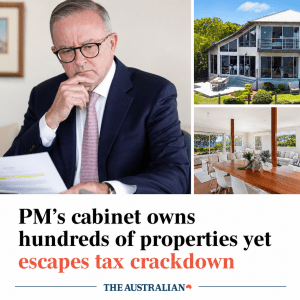
As millions of Australians struggle with soaring rents, rising mortgage repayments, and shrinking housing availability, scrutiny is intensifying around lawmakers who personally profit from the country’s overheated property market. Critics argue the situation exposes a major contradiction at the heart of national housing policy.
Negative Gearing Debate Returns to Center Stage
At the center of the controversy is the long-running issue of negative gearing, a tax policy that allows property investors to offset rental losses against their taxable income. For many Australians, the policy has become symbolic of a system that favors wealthy investors while locking younger generations out of home ownership.
According to the reports, senior cabinet members earning six-figure parliamentary salaries will still be able to reduce their tax burden through property-related deductions despite mounting calls for reform. Economists and housing advocates say the issue has become increasingly politically sensitive as housing costs continue climbing across major cities.
Public Anger Builds Over Housing Inequality
The revelations arrive at a time when frustration over inequality is growing nationwide. Across Sydney, Melbourne, Brisbane, and Perth, average house prices remain far beyond the reach of many first-home buyers. Rental vacancy rates have plunged to historic lows, forcing families into fierce competition for available housing.
For struggling Australians, the optics are difficult to ignore. Many see a widening divide between political leaders who benefit from property investment and citizens battling the cost-of-living crisis every day. Social media platforms erupted with criticism after details of cabinet property holdings became public.
Government Defends Existing Tax Framework
Government supporters insist that cabinet ministers are complying fully with disclosure rules and existing tax laws. They argue property investment is common among Australians and should not automatically disqualify politicians from participating in housing policy discussions.

Officials also maintain that broader economic pressures, including inflation, supply shortages, and rising construction costs, are driving the housing crisis more than tax incentives alone. However, critics counter that lawmakers who personally benefit from the system may have little incentive to pursue meaningful reform.
Calls for Transparency Intensify
Transparency advocates are now demanding deeper disclosure requirements for elected officials with large property portfolios. Some analysts argue Australians deserve to know whether policymakers making housing decisions stand to gain financially from rising property prices and investor-friendly legislation.
Political opponents claim the controversy highlights a conflict of interest that could damage public trust in government. Questions are being raised over whether ministers with extensive property investments can objectively design policies intended to improve affordability.
Housing Affordability Becoming Defining Political Issue
Housing affordability has rapidly evolved into one of Australia’s most explosive political battlegrounds. Younger voters, in particular, increasingly view the housing market as structurally unfair. Many believe the dream of home ownership is slipping further away despite full-time employment and years of saving.
Recent surveys suggest dissatisfaction with housing policy is becoming a major electoral issue ahead of future national campaigns. Analysts warn that governments ignoring public frustration risk severe political backlash from renters and first-home buyers.
Critics Say Political Class Is Shielded From Economic Reality
Opposition figures and housing campaigners argue Australia’s political elite operates within a vastly different economic reality from ordinary citizens. While average households struggle to cover rent increases and utility bills, many lawmakers reportedly continue building wealth through expanding property portfolios.
This perception has fueled accusations that policymakers are insulated from the hardships experienced by working Australians. Critics argue meaningful housing reform becomes difficult when many decision-makers benefit directly from maintaining high property values.
Property Investment Remains Deeply Embedded in Australian Culture
Despite the controversy, property investment remains one of Australia’s most popular wealth-building strategies. Decades of rising home values have encouraged generations of Australians to treat real estate as both financial security and retirement planning.
Supporters of negative gearing claim removing the policy could destabilize the housing market, reduce rental supply, and punish middle-class investors. Financial experts remain divided over whether major tax reforms would genuinely improve affordability or simply create new economic risks.
Economic Pressures Continue to Mount
The broader economic environment is intensifying public anxiety. Interest rates have sharply increased borrowing costs for homeowners, while inflation continues impacting household budgets nationwide. Construction delays and labor shortages have also slowed new housing supply, worsening the imbalance between demand and availability.
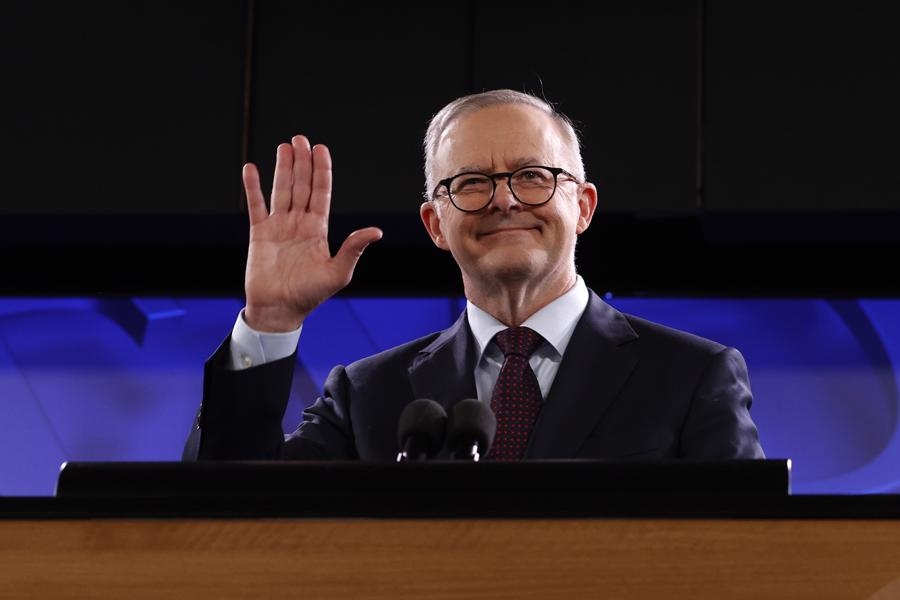
As affordability deteriorates, public patience is wearing thin. The cabinet property controversy has therefore become more than a political story—it has become a symbol of deeper frustrations surrounding wealth inequality and access to opportunity.
Analysts Warn of Long-Term Social Consequences
Housing experts warn that prolonged affordability problems could reshape Australian society for decades. Younger Australians are increasingly delaying marriage, family planning, and long-term financial decisions due to housing insecurity.
Some economists fear growing intergenerational inequality could create permanent social divisions between those who entered the housing market years ago and those locked out today. The political implications of such divisions may continue intensifying in future elections.
Media Spotlight Intensifies Pressure on Government
The growing media attention surrounding cabinet property ownership has placed additional pressure on the government to explain its housing strategy. Investigative reporting into politicians’ financial interests has become a powerful driver of public debate.
Political commentators note that perception often matters as much as policy detail. Even if ministers acted within legal boundaries, critics argue the situation reinforces the belief that Australia’s housing system disproportionately benefits wealthy insiders.
Opposition Seizes Opportunity to Attack Labor Leadership
Opposition parties have wasted little time using the revelations to attack Labor’s credibility on affordability issues. Rival politicians accuse the government of hypocrisy for publicly discussing housing pressures while privately benefiting from investor-friendly policies.
The controversy may provide powerful political ammunition in upcoming parliamentary debates. Housing policy is expected to dominate future discussions surrounding taxation, economic fairness, and cost-of-living relief.
Australians Demand Solutions Instead of Political Arguments
For many citizens, the ongoing political conflict matters less than finding practical solutions. Renters facing weekly increases and first-home buyers struggling to secure loans are increasingly demanding immediate action from Canberra.
Proposals ranging from housing supply expansion to tax reform and rental protections continue circulating among policymakers. Yet skepticism remains high about whether meaningful bipartisan cooperation is possible in such a politically charged environment.
Confidence in Institutions Faces New Test
The cabinet property issue has also triggered broader questions about trust in political institutions. Public confidence can quickly erode when voters believe leaders are disconnected from everyday struggles.
Analysts warn that perceived inequality between politicians and citizens may fuel political cynicism, lower civic engagement, and increase support for outsider movements promising radical change.
Debate Over Fairness Likely Far From Over
As Australia’s housing crisis continues worsening, debates surrounding political privilege and property ownership are unlikely to disappear anytime soon. The issue touches on some of the country’s deepest anxieties about opportunity, fairness, and economic security.
Whether the controversy ultimately results in policy reform remains uncertain. What is clear, however, is that housing affordability has become more than an economic issue—it has evolved into a defining national conversation about power, wealth, and who truly benefits from Australia’s property boom.
Political Pressure Expected to Grow in Coming Months
With public scrutiny intensifying, pressure on the government is expected to grow throughout the coming months. Housing advocates, economists, and frustrated voters will likely continue demanding stronger accountability from political leaders with substantial property holdings.
The controversy surrounding cabinet property ownership may ultimately become a pivotal moment in Australia’s broader housing debate, shaping both public trust and future policy decisions for years to come.






