Parties clash over priorities after Government unveils 2026 Budget
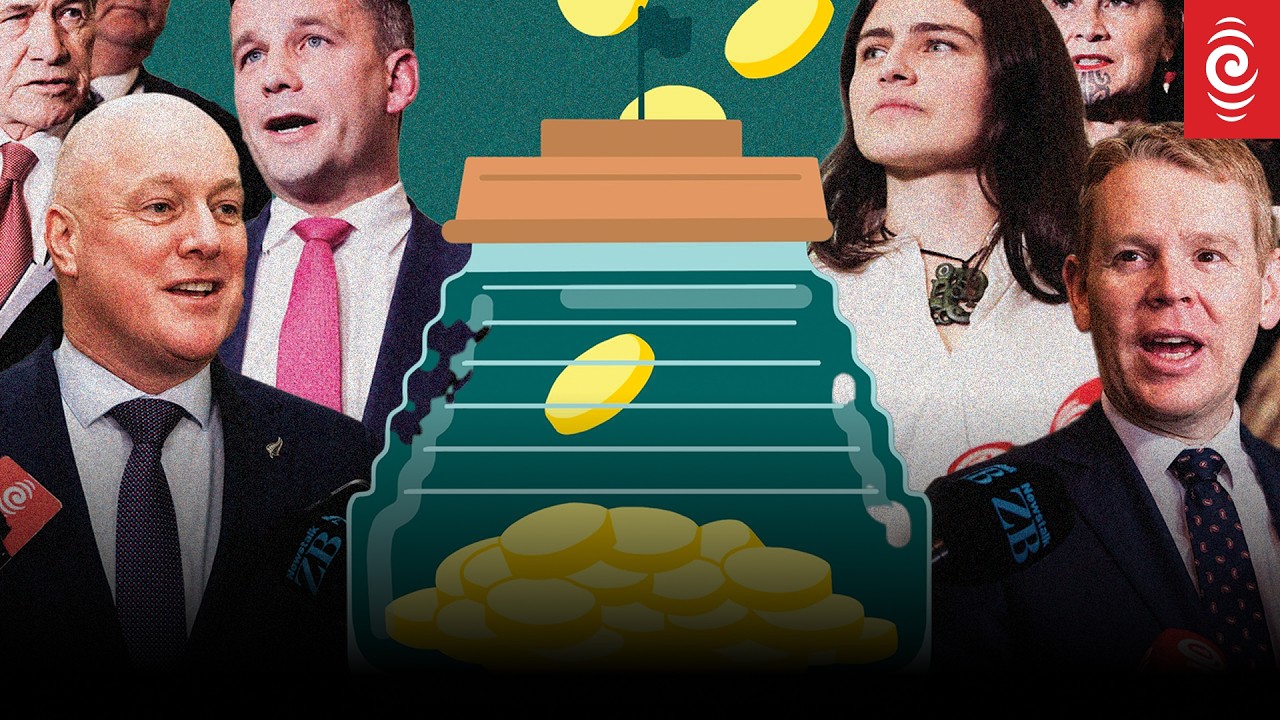
The Government’s 2026 Budget has prompted immediate political reaction across Parliament, with coalition ministers defending spending priorities while opposition parties questioned whether the package would adequately address pressure on households, healthcare, housing, and public services. Debate intensified shortly after Finance Minister Nicola Willis presented the Budget, with political leaders offering sharply different interpretations of its economic direction and long-term implications for New Zealanders.
Prime Minister Christopher Luxon described the Budget as focused on economic discipline, targeted investment, and long-term growth. Government MPs argued the package aimed to balance fiscal restraint with selective spending commitments designed to improve infrastructure, strengthen frontline services, and support business confidence during a period of ongoing economic uncertainty and elevated living costs.


The Budget included funding commitments across healthcare, education, infrastructure, and law and order, while also maintaining emphasis on controlling public expenditure and reducing fiscal pressure over time. Ministers said the Government remained focused on restoring economic stability following years of inflationary pressure, higher borrowing costs, and slowing international growth. Coalition representatives argued the Budget reflected a measured approach rather than large-scale expansionary spending.
Opposition parties immediately criticised aspects of the Budget, arguing it failed to provide sufficient relief for households experiencing financial pressure. Labour leader Chris Hipkins said several communities would continue facing challenges relating to healthcare access, housing affordability, and public transport costs despite the Government’s spending announcements. Opposition MPs argued the Budget placed too much emphasis on fiscal restraint and insufficient focus on social investment.
The Green Party and Te Pāti Māori also expressed concern about the Government’s broader economic strategy. Green representatives argued environmental and climate-related investment remained underdeveloped relative to the scale of future challenges. Te Pāti Māori MPs meanwhile questioned whether the Budget adequately addressed inequality, Māori development priorities, and long-term social wellbeing outcomes across vulnerable communities.
Coalition ministers defended the Budget’s overall framework, saying careful spending decisions were necessary to maintain economic credibility and limit inflationary pressures. Finance Minister Nicola Willis argued that sustainable economic growth required disciplined management of public finances alongside targeted investment in areas expected to improve productivity and service delivery. Ministers also emphasised the importance of avoiding excessive borrowing during uncertain global economic conditions.
Political analysts noted that Budget reactions often reflect broader ideological divisions regarding the role of government spending, taxation, and fiscal management. Supporters of the coalition argued the Budget demonstrated financial responsibility, while critics maintained that the Government risked underinvesting in key public systems. Analysts suggested the debate would likely shape political narratives heading toward the next election cycle.
The healthcare sector received significant attention following the Budget announcement. Government ministers highlighted funding directed toward hospitals, workforce support, and healthcare delivery improvements. However, health sector representatives and opposition MPs questioned whether allocations would fully address workforce shortages, waiting times, and operational pressures affecting hospitals and primary care services nationwide. Some aspects of implementation remain under scrutiny and require further clarification.
Education funding also became a major point of political debate. The Government announced targeted investment for school infrastructure, learning support, and classroom initiatives, arguing the measures would improve educational outcomes and reduce system pressures. Opposition representatives acknowledged some positive elements but questioned whether funding levels would sufficiently address teacher shortages, growing student needs, and long-term educational inequality. Education sector groups offered mixed feedback regarding the scale and priorities of the funding package.
Business organisations generally welcomed the Government’s emphasis on economic stability and investment confidence. Several industry groups said predictable fiscal management remained important for supporting investment decisions and maintaining business certainty during uncertain international conditions. However, some commentators argued additional support for productivity growth, innovation, and infrastructure development may still be necessary over the longer term to improve economic performance.
Public reaction to the Budget was mixed, reflecting broader divisions regarding economic priorities and government spending. Some households welcomed targeted relief measures and investment commitments, while others expressed concern that living costs would remain difficult despite Government initiatives. Analysts noted that public interpretation of Budgets often depends less on technical fiscal detail and more on perceptions of fairness, economic confidence, and practical day-to-day impact.
Housing policy also attracted significant scrutiny following the Budget announcement. Ministers argued that broader economic management and infrastructure investment would support housing supply and market stability over time. Opposition parties countered that affordability pressures remained severe for many renters and first-home buyers. Housing advocates said further policy detail and implementation plans may still be required before the full effects of Budget measures become clear.
Political commentators observed that the 2026 Budget reflects the coalition’s broader governing philosophy, combining selective investment with fiscal restraint and an emphasis on economic management. Analysts suggested the Government is attempting to position itself as disciplined and stable while also responding to voter concerns regarding public services and cost pressures. However, they noted that balancing these objectives remains politically difficult during periods of economic uncertainty.
Questions also remain regarding how quickly announced funding will translate into measurable outcomes across sectors such as healthcare, transport, and education. Public service leaders and policy experts argued implementation capacity may become a key issue, particularly given workforce shortages and rising operational costs. Ministers stated departments would continue working through delivery plans and monitoring processes over the coming financial year.
Regional infrastructure spending formed another significant aspect of the Budget debate. Coalition MPs argued targeted infrastructure investment would support productivity, regional growth, and resilience against future economic disruptions. Some local government representatives welcomed additional commitments while also warning that long-term infrastructure pressures continue affecting transport networks, water systems, and public facilities throughout the country.
Opposition figures maintained that the Government’s economic narrative may not align with experiences faced by households managing rising living expenses. Labour and Green MPs argued stronger intervention and broader social investment may still be necessary to reduce inequality and strengthen public services. Coalition ministers rejected those criticisms, saying uncontrolled spending risked worsening inflation and undermining long-term fiscal sustainability.
Several economists suggested the Budget represented a politically cautious approach shaped by uncertain global conditions, inflation concerns, and expectations surrounding future economic growth. Analysts noted that governments internationally are facing similar tensions between fiscal restraint and public demand for investment. As a result, New Zealand’s Budget debate reflects wider international economic and political pressures rather than uniquely domestic circumstances.
Media coverage following the Budget focused heavily on competing political interpretations and sector-specific funding announcements. Journalists examined whether the Government had successfully balanced economic restraint with social expectations, while commentators debated the likely electoral implications of the package. Analysts suggested public opinion regarding the Budget may evolve over time depending on economic performance and visible policy outcomes.
Parliamentary debate is expected to continue in coming weeks as select committees, sector groups, and political parties examine details of the spending package more closely. Several policy areas remain under consideration, and further clarification is expected regarding implementation timelines, departmental priorities, and projected fiscal impacts. Political scrutiny is therefore likely to remain intense across multiple sectors.
Ultimately, the 2026 Budget has reinforced clear political divisions over economic strategy, public investment, and the role of government during challenging economic conditions. Coalition leaders argue the package provides stability and disciplined growth, while opposition parties maintain it does not go far enough in addressing pressure on households and public services. As implementation begins, the effectiveness of the Budget is likely to remain central to political debate throughout the coming year.






