Political Storm Erupts Over Anthea Harris’ Million-Dollar Pay Packet
A fierce political controversy has erupted in Canberra after Liberal senator Dave Sharma questioned the extraordinary salary being paid to government-appointed fuel taskforce coordinator Anthea Harris.
The debate intensified after Senate estimates hearings revealed Harris had been contracted to receive more than $233,000 for just over three months of work.
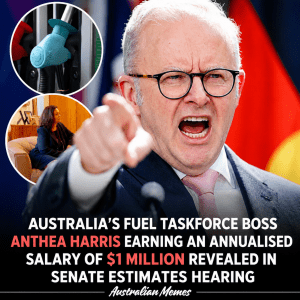
According to Senator Sharma, the short-term contract effectively places Harris on an annualized salary approaching $1 million, a figure that shocked many observers across Australia’s political landscape.
Sharma argued that the payment was “four times any member of parliament” and nearly equal to the salary of Michele Bullock, one of the country’s most senior economic officials.
The revelation immediately sparked questions about government spending priorities at a time when Australians continue to struggle with inflation, rising energy costs, and economic uncertainty.
Critics say the enormous contract reflects a growing culture of excessive consultancy and executive-level government appointments that are disconnected from the financial pressures faced by ordinary citizens.
Supporters of the appointment, however, insist the fuel security crisis demanded urgent action and highly specialized expertise, particularly during ongoing geopolitical instability linked to Middle East tensions.
Harris was appointed earlier this year as the Albanese government confronted growing concerns about Australia’s fuel reserves and supply vulnerabilities during the Iran conflict.
Government officials defended the arrangement by arguing that the position required rapid strategic coordination involving fuel logistics, national supply chains, and emergency preparedness planning.

The issue exploded during Senate estimates when Sharma pressed officials over the extraordinary remuneration package and compared it to salaries across the Commonwealth public service.
During the heated exchange, Sharma stated that very few public servants receive compensation at a comparable level, with the Reserve Bank governor being one of the rare exceptions.
The comparison to Michele Bullock drew particular attention because the RBA governor oversees Australia’s monetary policy and interest rate decisions affecting millions of households and businesses nationwide.
Political analysts say the symbolism of the salary comparison may prove more damaging than the actual cost itself, particularly as voters increasingly scrutinize government expenditure.
The controversy also arrives at a difficult time for the Albanese government, which has repeatedly argued that fiscal discipline remains essential in controlling inflationary pressures.
Opposition figures claim the Harris contract undermines that message and opens the government to accusations of hypocrisy regarding public spending restraint.
Meanwhile, Labor representatives insist the fuel taskforce plays a critical national security role and argue that exceptional circumstances sometimes require exceptional contracts.

The broader debate has reignited public frustration over the growing reliance on consultants, contractors, and temporary executive appointments across federal agencies.
Some economists warn that political outrage may oversimplify the issue, noting that crisis-management expertise in energy security and logistics often commands premium compensation internationally.
Still, the optics remain politically explosive. At a moment when Australians are carefully managing household budgets, headlines about near-million-dollar government contracts are likely to fuel public anger and intensify parliamentary battles in the months ahead.






