Prime Minister Mark Carney has outlined an ambitious, multi-decade strategy to strengthen Canada’s presence in the Arctic, combining enhanced military capabilities with large-scale civilian infrastructure and clean energy initiatives. Speaking in the Northwest Territories, the prime minister described the plan as a response to longstanding calls for greater ambition in the region, which encompasses 40 percent of Canada’s land mass and more than 70 percent of its coastline.
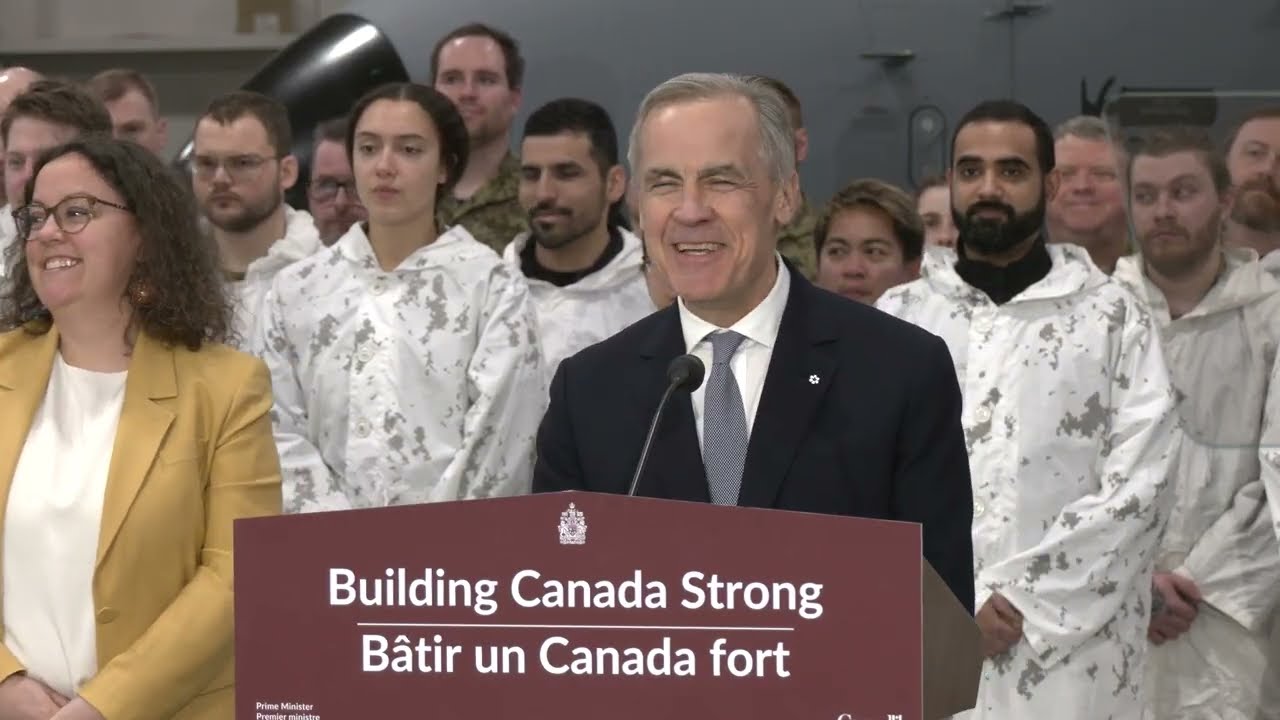
The announcement builds on earlier commitments made shortly after the government’s formation, including the establishment of year-round Canadian Armed Forces patrols under Operation Nanook and the launch of a $1 billion Arctic Infrastructure Fund. The new package totals more than $40 billion in combined investments, aimed at defending sovereignty, connecting isolated communities, and creating sustainable economic opportunities for the approximately 140,000 residents of Canada’s northern territories.
Central to the defence component is the construction of four new northern operational support hubs in Whitehorse, Resolute Bay, Rankin Inlet, and Cambridge Bay, alongside upgrades to existing facilities in Yellowknife, Inuvik, Iqaluit, and Goose Bay. These sites are designed to improve the military’s ability to deploy aircraft and personnel across remote Arctic areas. The prime minister emphasised that these defence investments will require complementary civilian infrastructure, including energy systems, broadband connectivity, telecommunications, and wastewater services, creating dual-use benefits for surrounding communities.
The plan draws historical parallels to former Prime Minister John Diefenbaker’s 1958 “roads to resources” vision, which sought to integrate the North more fully into national life. Carney noted that while subsequent governments made incremental investments in mines, ports, roads, and satellite systems, progress has often been cautious, delayed, or insufficiently coordinated. The current approach seeks to address those shortcomings through a more integrated, partnership-driven model involving Indigenous rights holders, territorial governments, federal departments, and the private sector.
A flagship civilian project is the Mackenzie Valley Highway, a long-discussed all-season road that has faced repeated delays due to environmental assessments, funding challenges, and permafrost instability. Construction is set to begin this summer on the first phase, spanning more than 800 kilometres from Wrigley to Norman Wells, with a second phase extending to Inuvik. When completed, the highway will link Yellowknife and Inuvik, significantly reducing travel times, improving access to essential supplies and medical services, and supporting year-round reliability amid changing climate conditions. The project will be developed in close collaboration with territorial and Indigenous governments to ensure direct community benefits.

Another major infrastructure element is the Grays Bay Port and Road project in Nunavut. The plan includes a new deep-water port on the Arctic Ocean connected by a 230-kilometre all-season road to the territorial border. This facility would provide Canada’s first deep-water Arctic port, facilitating the export of critical minerals and other resources while enhancing trade linkages. The initiative will proceed in partnership with the Kitikmeot Inuit Association, with further efforts to integrate the corridor into broader northern networks, including connections toward Yellowknife.
To support resource development in the mineral-rich Slave Geological Province, the government is referring a new Arctic Economic and Security Corridor to the Major Projects Office. This corridor would feature a 400-kilometre all-season road linking the province to Nunavut’s border, creating the first all-season road connection between Nunavut and Canada’s national highway system. Officials project that these transportation links will enable expanded exploration and development, improve access to international markets, and leverage recent trade agreements.
Energy security forms a critical pillar of the strategy. High fuel costs in the North — often six to ten times mainland levels — underscore the need for reliable, affordable, and low-emission power. The government is advancing two major hydroelectric projects. The Anowak New Qikqautit hydro project in Nunavut, the territory’s first 100 percent Inuit-owned initiative, has been referred to the Major Projects Office and is expected to displace nearly $2 billion in diesel costs over 50 years while delivering clean electricity. In the Northwest Territories, the Taltson Hydro Expansion Project will add 60 megawatts of capacity, doubling the existing system, linking 11 communities, and supplying clean power to about 70 percent of the territorial population.
Collectively, the civilian projects referred to the Major Projects Office represent around $10 billion in investment and are projected to generate more than 10,000 construction jobs, separate from employment created by defence-related works. The prime minister described these initiatives as “force multipliers,” designed to stimulate broader economic activity, higher wages, improved connectivity, and stronger communities while enabling large-scale private investment.
The strategy aligns with the government’s broader objectives of reinforcing Canadian sovereignty and strategic autonomy in the Arctic. Carney highlighted the importance of taking responsibility for defending national territory and reducing reliance on external partners for security and economic development. New trade and defence relationships with allied nations are expected to complement these domestic efforts.
The announcement has been framed as a response to input from Indigenous rights holders, territorial governments, and other stakeholders. Partnership is presented as essential to sustainable development and equitable distribution of benefits. Indigenous leaders from across the North were present at the event, and their ongoing involvement is described as integral to project success.
Climate change considerations run throughout the plan. Warming temperatures and thawing permafrost have made traditional seasonal transport routes — winter ice roads and summer barge resupply — increasingly unreliable. The proposed all-season infrastructure aims to build resilience against these changes while supporting adaptation in remote communities.
The plan’s scale and integration distinguish it from previous efforts, which often proceeded in isolation or with limited follow-through. By combining defence requirements with civilian needs, the government seeks efficiencies and shared benefits. Success will depend on effective coordination across federal, territorial, and Indigenous partners, timely permitting processes, and sustained funding.
As implementation begins, attention will turn to project timelines, environmental assessments, community consultations, and economic impact monitoring. The initiatives represent one of the most comprehensive attempts in recent decades to address the North’s strategic, economic, and social challenges simultaneously. Whether they deliver the promised transformation will shape Canada’s northern policy for generations.






