Growing Tensions Around Tusk’s Government After Bogucki’s Speech and the Dispute Over President Nawrocki’s Role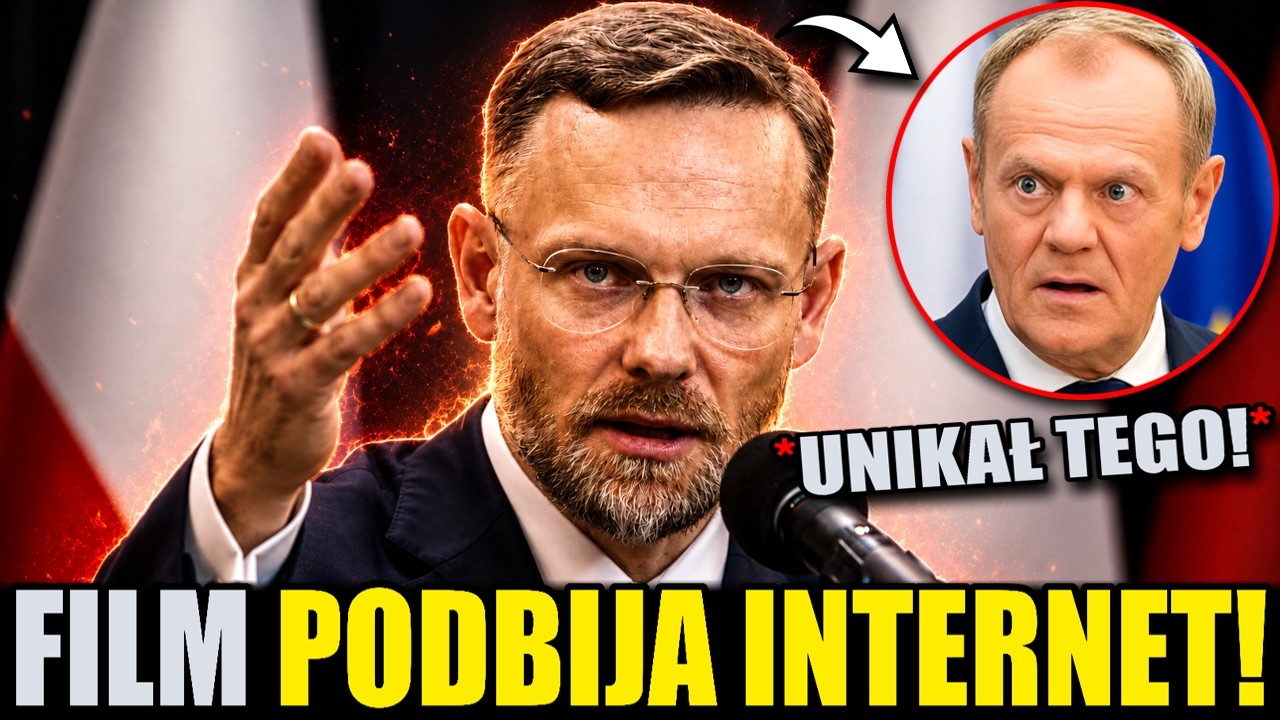
The debate surrounding relations between the ruling camp and the political circle of President Karol Nawrocki once again moved to the center of Polish politics following a widely discussed appearance by Zbigniew Bogucki. During the interview, both the actions of prosecutors toward officials connected to the presidential office and the political significance of recent statements by U.S. President Donald Trump regarding an increased American military presence in Poland became major topics of discussion.
Bogucki argued that the decision announced by the American administration had been clearly linked by Trump to the figure of Karol Nawrocki. In his view, the statement published by the American president left little room for alternative interpretations because it directly pointed to the relationship between Washington and Poland’s new president.
At the same time, the discussion quickly evolved into strong criticism of the current government’s actions. The politician repeatedly suggested that some prosecutorial measures targeting individuals connected to the presidential office carried a political character and that interrogations were being conducted in a manner exceeding normal administrative and legal standards.
At the center of the political debate were also questions regarding the questioning of individuals who were allegedly not directly connected to the investigated matters. Bogucki emphasized that some inquiries reportedly concerned his wife, which he described as an example of authorities crossing the boundaries of private life. According to him, such actions reflected growing political pressure directed at the presidential camp.
The conversation repeatedly returned to the case of former Justice Minister Zbigniew Ziobro. In the speakers’ opinion, actions taken against Ziobro had been conducted in a highly demonstrative manner and served more as political messaging than as genuine legal clarification. Particular criticism was directed at earlier house searches and public statements concerning efforts to bring the politician back to Poland.


Later in the discussion, accusations were also aimed at the minister overseeing prosecutorial activities. Bogucki suggested that some remarks made by government representatives evoked associations with political practices from previous eras. He argued that the rhetoric used by certain politicians deepened tensions and made calm public debate increasingly difficult.
Strong criticism also emerged regarding the functioning of the Constitutional Tribunal and the procedures connected with the swearing-in of judges. The speakers claimed that actions taken by the parliamentary majority could weaken the authority of state institutions and further intensify the conflict between the government and the president.
Increasing controversy surrounded suggestions that some political circles were attempting to limit the powers of the head of state. Participants stressed that the president held a democratic mandate granted by voters and argued that undermining his position could be interpreted as disregarding the decision of millions of citizens.
Throughout the interview, references were repeatedly made to alleged attempts to invalidate the presidential election or reduce the influence of the new president over state affairs. Although the participants stated they did not expect such scenarios to materialize, they nevertheless pointed to an atmosphere of deep political conflict and growing distrust between state institutions.
Considerable attention was also devoted to Poland’s relationship with the United States. Bogucki argued that the announcement concerning additional American troops should be interpreted as a clear sign of political trust between the Trump administration and Karol Nawrocki.
According to some commentators, Prime Minister Donald Tusk responded more cautiously and attempted to distribute credit for the diplomatic success among several officials, including representatives of the defense and foreign affairs ministries. Bogucki, however, maintained that Trump’s statement mentioned only Nawrocki by name, which in his view carried major political significance.
Further into the conversation, references were made to the activities of Roman Giertych. Bogucki suggested that messages coming from some members of the ruling coalition were designed both to soften the government’s official position and to mobilize more radical political groups against the president.
The speakers argued that a similar mechanism had already appeared during earlier disputes surrounding the presidential inauguration and the functioning of state institutions. In their assessment, some politicians were deliberately maintaining a climate of permanent political conflict in order to preserve the mobilization of their electoral base.
Strong emotions were also triggered by comparisons involving Poland’s relations with the American administration in contrast to other European countries. Bogucki suggested that, thanks to the current president, Poland could strengthen its strategic position in the region while some Western European states faced more strained ties with Washington.
An important part of the discussion also focused on criticism of Prime Minister Tusk’s communication style. The speakers accused him of prioritizing media messaging and political public relations over building stable international partnerships. In this context, they contrasted him with Nawrocki, portraying the president as a leader focused on national security issues.
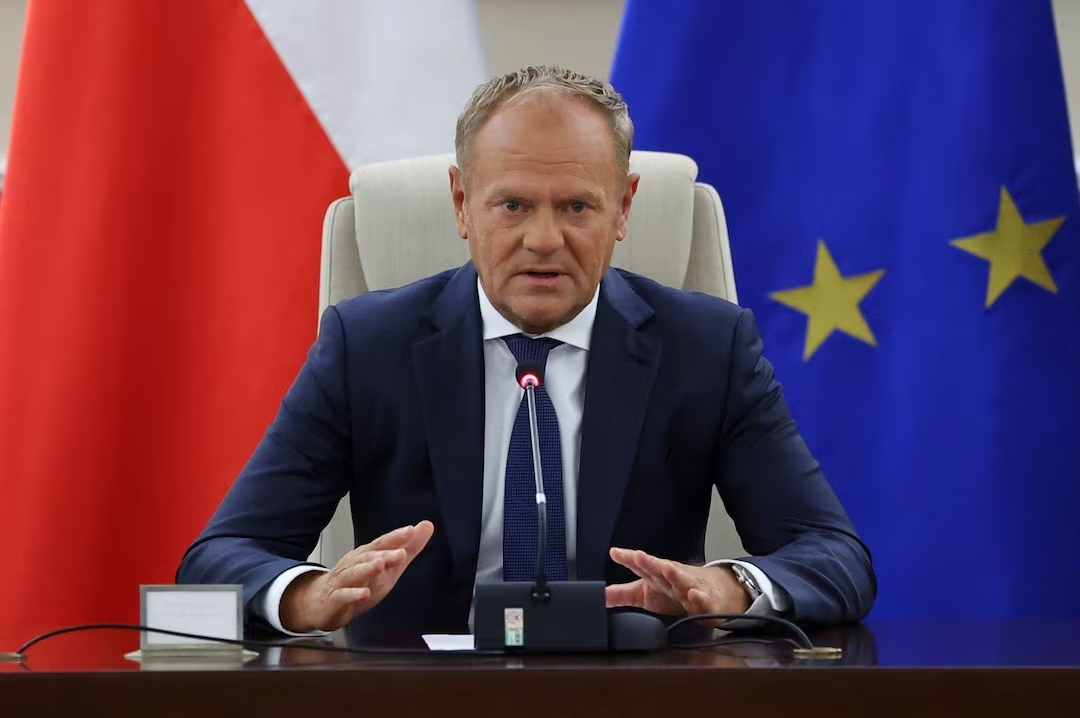
Bogucki argued that the decision concerning additional American troops was not merely symbolic politics but rather a concrete outcome of relations built between Warsaw and the Trump administration. In his opinion, this represented an important element of Poland’s security in the current international environment.
Toward the end of the program, comments also appeared regarding public sentiment. The hosts noted that many citizens were increasingly tired of prolonged political conflicts, institutional disputes, and continuous attempts to settle scores with previous governments.
Many observers of the political scene now emphasize that the conflict between the ruling coalition and the president’s camp could become one of the defining features of Polish politics in the coming months. Particular attention is likely to focus on further prosecutorial actions and on how disputes concerning institutional powers are handled.
At the same time, some commentators argue that the dispute over interpreting relations with the Trump administration reveals a deeper problem concerning political divisions within Poland. Nearly every international development immediately becomes part of the domestic political struggle, making it increasingly difficult to build cross-party consensus on national security matters.
Bogucki’s appearance generated significant reactions across social media and among supporters of both sides of the political divide. Supporters of the presidential camp viewed his remarks as evidence of mounting pressure against the opposition and the presidential office, while critics accused him of escalating political tensions.
The entire controversy demonstrates that disputes over the president’s role, prosecutorial actions, and relations with the American administration remain among the most sensitive issues in Polish politics. At this stage, however, it remains unclear whether these tensions will significantly weaken Donald Tusk’s government or simply become another chapter in the long-running confrontation between Poland’s major political camps.






