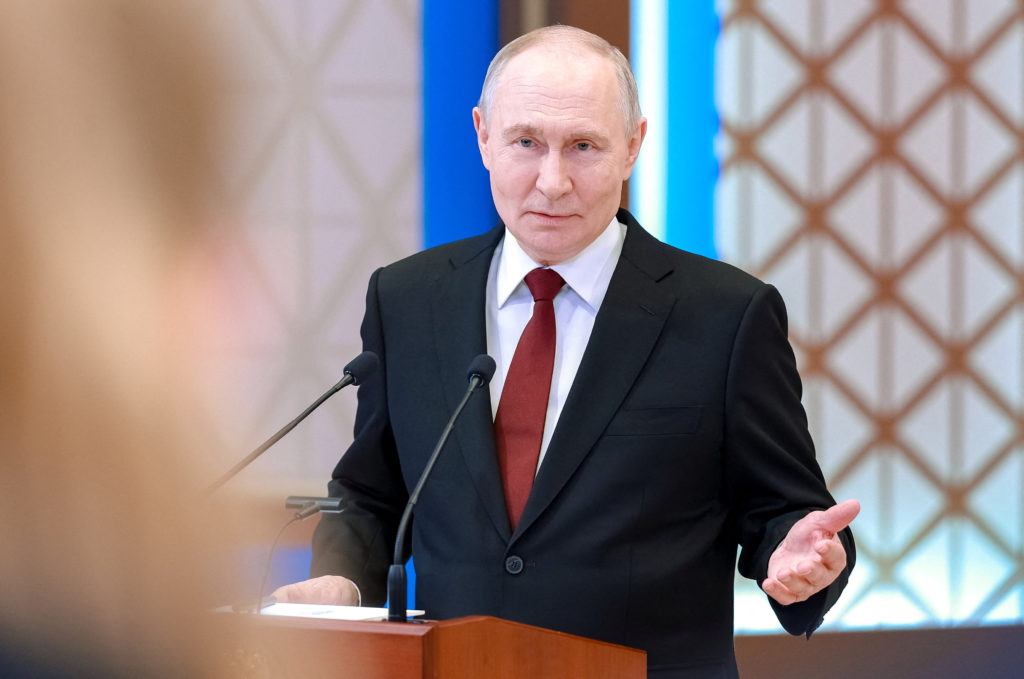
The atmosphere inside the United Nations Security Council turned unusually tense after Russian representatives delivered one of Moscow’s strongest warnings in recent months, accusing Western governments of pushing the international system toward a level of confrontation not seen since the Cold War.
According to Russian officials, the foundations of the post-World War II order are being steadily undermined by what Moscow describes as selective application of international law, expanding military blocs, growing sanctions regimes, and increasing geopolitical intervention. The message was clear: Russia believes the current trajectory is becoming increasingly dangerous.
At the center of the dispute was a deadly incident in the city of Starobilsk, located in territory currently controlled by Russian forces.
Russian representatives accused Ukraine of carrying out a drone attack against a pedagogical college and dormitory building, claiming the strike killed 21 people and injured dozens more. Moscow described the incident as a deliberate act of terrorism and argued that Western governments and media organizations were ignoring the tragedy because it did not fit their preferred narrative.
The accusations quickly became one of the most controversial moments of the Security Council session.
Russian diplomats argued that if a similar attack had occurred elsewhere, Western governments would have immediately demanded investigations, issued condemnations, and dominated international headlines with coverage of the event. Instead, Moscow claimed the response was largely muted.
That accusation became a recurring theme throughout Russia’s presentation.
According to Russian officials, the conflict has exposed what they view as a growing pattern of double standards in international politics. Moscow repeatedly questioned why some civilian casualties receive global attention while others appear to attract significantly less scrutiny.
The criticism was not directed solely at governments.
Russian representatives also accused international organizations, including parts of the United Nations system, of being reluctant to investigate incidents occurring in territories controlled by Russian forces. Moscow argued that observers have been offered opportunities to visit certain regions but have not fully taken advantage of them.
Those allegations were immediately challenged by other speakers during the session.
Several Western representatives emphasized that the broader context remains Russia’s military operation in Ukraine and argued that civilian casualties have occurred on both sides of the conflict. They also stressed the importance of respecting international humanitarian law regardless of which side is responsible for a particular attack.
The debate highlighted how deeply divided the international community remains.
More than three years into the war, nearly every major incident now generates competing narratives, accusations, and interpretations. Establishing universally accepted facts has become increasingly difficult as information warfare grows alongside military operations.
The Security Council discussion became even more heated when attention shifted toward recent Russian military strikes.
United Nations officials reported that large-scale Russian missile and drone attacks had struck multiple areas across Ukraine, including regions around Kyiv. Diplomatic facilities and buildings connected to UN operations were reportedly affected by falling debris, although no UN personnel were injured.
These developments intensified concerns about escalation.
UN representatives warned that threats of further systematic strikes against Ukrainian targets could increase civilian casualties and further complicate efforts to achieve a negotiated settlement. Calls for restraint, de-escalation, and renewed diplomacy were repeated throughout the session.
Yet Russia’s position remained firm.
Moscow argued that recent military actions were a direct response to attacks carried out by Ukrainian forces and claimed that continued Western military assistance to Kyiv was encouraging escalation rather than promoting peace.
Russian officials went even further.
They accused European governments of encouraging what they described as increasingly reckless policies while warning that some Western leaders appear more interested in weakening Russia than in ending the conflict itself. According to Moscow, this approach risks creating a much broader confrontation with consequences that could extend far beyond Ukraine.
The rhetoric reflected a growing concern that the war is entering a new phase.
For months, analysts have observed increasing signs of military exhaustion, economic pressure, and political frustration on all sides. Yet instead of moving closer to compromise, both camps continue investing heavily in military capabilities and preparing for prolonged confrontation.
This reality has raised alarms among international observers.
Many experts fear that repeated cycles of retaliation are creating conditions where miscalculations become increasingly likely. In highly tense environments, even limited incidents can rapidly escalate into broader crises if communication channels break down.
Russia repeatedly returned to this warning during its presentation.
Officials argued that the combination of expanding military commitments, rising political hostility, and increasingly aggressive rhetoric is creating a strategic environment that resembles some of the most dangerous periods of the twentieth century.
Whether that comparison is justified remains the subject of intense debate.
Supporters of Ukraine argue that Russia itself bears responsibility for much of the current instability and that Western support is necessary to defend Ukrainian sovereignty. Russian officials, meanwhile, insist that NATO expansion and Western intervention have fundamentally altered the security balance in Europe.
The result is a geopolitical standoff with few signs of resolution.
Both sides continue presenting dramatically different explanations for the origins, conduct, and future of the conflict. Each major event becomes another battleground not only for military forces but also for international public opinion.
What made this latest Security Council session particularly significant was the tone.
Rather than focusing solely on battlefield developments, Russian representatives framed their arguments within a much broader narrative about the future of the international system itself. They suggested that the conflict in Ukraine is only one manifestation of a larger global struggle over power, sovereignty, and the rules governing international relations.
That message resonated with some countries while drawing skepticism from others.
Yet regardless of perspective, one reality is becoming increasingly difficult to ignore: tensions between Russia and the West remain extraordinarily high, and neither side appears willing to significantly alter its strategic course.
As the Security Council session concluded, calls for diplomacy were once again repeated.
United Nations officials emphasized that no military solution is likely to produce lasting stability and urged all parties to pursue negotiations. Similar appeals have been made countless times since the conflict began.
For now, however, the gap between those calls and political reality remains enormous.
And as accusations, retaliatory strikes, and geopolitical tensions continue to intensify, many observers fear the world may be moving deeper into an era of confrontation whose final destination remains impossible to predict.






