London Mayor Sadiq Khan has repeatedly described the UK capital as a city “for everybody”, emphasising that its diversity represents a core strength rather than a weakness. In recent public statements he has highlighted Britain’s Christian heritage while stressing neighbourly respect across faiths, and has defended large-scale religious gatherings such as the annual Iftar in Trafalgar Square as symbols of inclusion open to all Londoners.
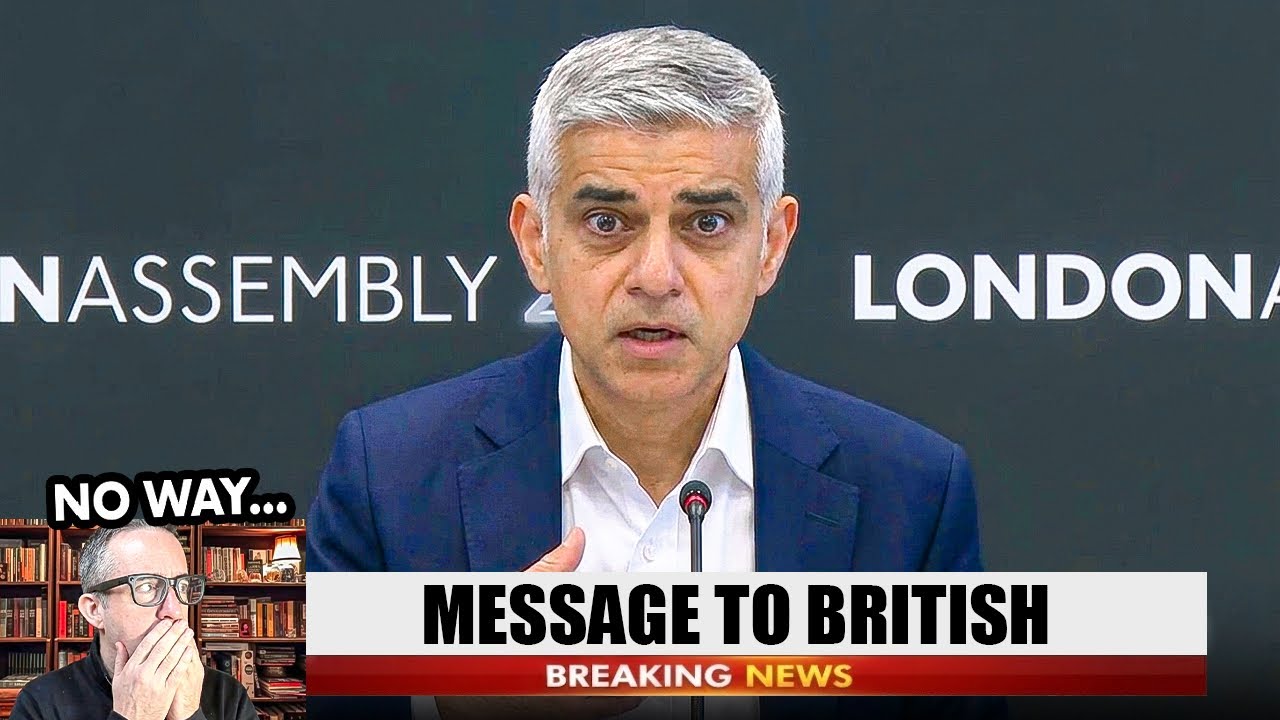
The comments come against a backdrop of renewed debate about immigration, cultural integration and the changing character of London. Khan, who secured a historic third term as mayor in 2024 with 44 per cent of the vote on a turnout of 40.5 per cent, maintains that Londoners have chosen him three times precisely because they value a diverse, progressive city. He has argued that phrases such as “stronger together” and “diversity is our strength” reflect a positive, inclusive vision that has long been promoted by Labour and progressive movements.
Khan has acknowledged that the United Kingdom is historically a Christian country. In one widely circulated clip he noted that “Christians that I meet love their neighbour — their Muslim neighbour”, framing interfaith tolerance as a shared British value. At the same time he has pushed back against criticism of public expressions of faith, insisting that Trafalgar Square — a major public space — must remain open to everyone. During the March 2026 Open Iftar event, which drew thousands and was attended by Khan himself, he described the gathering as a celebration of London’s inclusive ethos. He later condemned remarks labelling the prayers an “act of domination”, calling such language divisive and harmful to community relations.
The Iftar controversy erupted after Conservative shadow justice secretary Nick Timothy posted images of the mass prayer and described it as an “act of domination”. The comments triggered a sharp political reaction. Prime Minister Keir Starmer and Khan both condemned the rhetoric, with Khan stating that such criticism risked making British Muslims feel targeted. Supporters of the event pointed out that it was multi-faith, peaceful and part of an established annual tradition reflecting London’s demographic reality. Critics, however, argued that large-scale public displays of one faith in iconic national spaces raised legitimate questions about integration and cultural balance in a country whose institutions and calendar remain rooted in Christian tradition.
The debate extends beyond a single event. Khan has long positioned diversity as central to London’s success, arguing that immigration has made the city more vibrant, economically dynamic and culturally rich than it was four decades ago. Official data supports the scale of change: London’s population includes a high proportion of foreign-born residents, and the capital continues to see significant net inward migration even as national figures have moderated. The Greater London Authority’s own diversity reports document a broad range of ethnic and religious communities, with Khan repeatedly stating that this mix is “our greatest strength”.
Opponents counter that rapid demographic shifts have strained social cohesion. Some residents and commentators describe a London that feels markedly different from the one remembered from previous generations — a city once defined by traditional markets, corner shops and a predominantly local population. They argue that phrases such as “London is for everybody” overlook practical challenges, including pressure on housing, public services and community identity. Concerns are frequently raised about areas where new arrivals appear to cluster and, in some cases, seek to reshape local norms rather than integrate fully into existing British customs. Low voter turnout in mayoral elections — around 40 per cent in 2024 — has also been cited by critics as evidence that Khan’s mandate may not fully reflect broader public sentiment.
Khan has rejected such characterisations, accusing critics of resorting to “dog-whistle politics” or far-right narratives. He has said he receives daily reports of positive integration stories alongside isolated problems, and insists that the vast majority of newcomers contribute and wish to acclimatise to British life. In response to questions about uncontrolled immigration, he has pointed to record numbers of international visitors, students and investors choosing London, arguing that negative perceptions risk damaging the city’s global reputation. He has also highlighted the role of social media in amplifying isolated incidents while downplaying the everyday reality of a functioning, diverse metropolis.
The mayor’s office has worked with the Metropolitan Police and the Foreign, Commonwealth and Development Office to equip diplomats with data rebutting what it calls misinformation about London. Khan has described his job as both promoting the city’s strengths and countering narratives that could deter tourism, study or investment. Supporters note that London remains a global financial centre and cultural hub precisely because of its openness. Detractors maintain that official statistics on economic contribution do not capture qualitative changes in day-to-day life, neighbourhood character or public confidence in shared spaces.

The phrase “stronger together” has featured in progressive political messaging for decades, though some historians trace similar slogans to earlier left-wing movements. Khan and his allies present it as a forward-looking ideal; critics sometimes portray it as an imported concept disconnected from traditional British identity. The mayor has consistently rejected the latter view, insisting that British people are “decent” and “accept others” provided there is mutual respect and integration. He has warned that framing diversity debates in adversarial terms only deepens division.
Underlying the rhetoric are measurable demographic trends. Net international migration to the UK has fluctuated but remains a primary driver of population growth, with London absorbing a disproportionate share. Projections suggest that from 2026 onward, natural population change (births minus deaths) will be negative, making migration the sole source of growth for the foreseeable future. Within London, ethnic and religious diversity continues to increase, prompting both celebration from multicultural advocates and anxiety from those who fear erosion of a cohesive national culture.
Khan has framed his approach as pragmatic mayoral leadership for a global city. He has pledged to keep public spaces such as Trafalgar Square accessible to all faiths and none, while urging integration and contribution from new residents. At the same time, he has criticised aspects of national immigration policy, arguing that longer waits for settled status undermine incentives for newcomers to put down roots.
The controversy shows no sign of abating. In early 2026 Khan used a Fabian Society speech to call for an end to the “demonisation of immigrants”, while continuing to champion EDI strategies across the Greater London Authority. Conservative and Reform voices have used the Iftar episode to highlight what they see as a pattern of progressive reluctance to address integration failures openly. Public opinion remains split: polls and social-media reactions suggest a significant portion of the population supports diversity in principle but expresses unease about its pace and visible manifestations in public life.
As London navigates these tensions, the mayor’s insistence that “perception can become reality” underscores the challenge. Whether the city’s diversity continues to be presented as an unqualified asset or whether greater emphasis is placed on integration and cultural continuity will shape political discourse in the capital — and potentially beyond — throughout 2026 and into the next electoral cycle. The exchange between Khan and his critics reflects deeper questions about identity, belonging and the limits of multiculturalism in a nation still anchored by its Christian heritage and historic institutions.






