A Trade Rift Over Bourbon Reveals Deeper Fault Lines Between the United States and Canada
The sudden disappearance of thousands of American alcohol products from Canadian shelves may seem, at first glance, like a narrow dispute over bourbon and whiskey. But what has unfolded in recent months between United States and Canada suggests something far more consequential: a shifting economic relationship in which consumer behavior, supply chains and political trust are being quietly redefined.
The controversy escalated after Chris Swonger, head of the Distilled Spirits Council of the United States, publicly criticized Canada’s boycott of American liquor. In a televised interview, he argued that removing U.S. spirits from provincial stores was economically self-defeating, estimating that Canadian governments could lose hundreds of millions in revenue.

The claim, while seemingly straightforward, quickly drew scrutiny from Canadian analysts and economists. Critics argued that the framing of the issue obscured a more complex reality—one that challenges the assumption that Canada is heavily dependent on American alcohol imports.
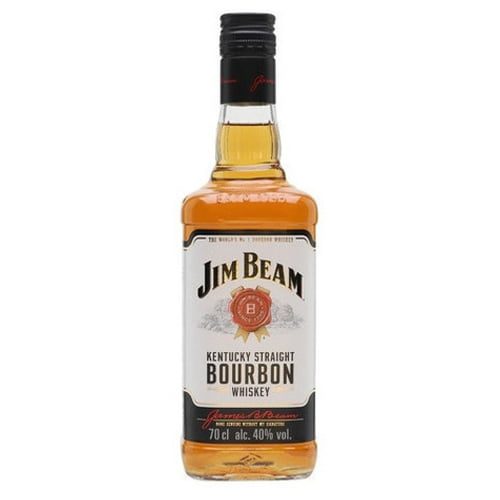
Emerging retail data appears to support that skepticism. Despite the removal of more than 3,500 American alcohol products, overall alcohol sales in Canada have remained remarkably stable, declining by only a marginal percentage. The explanation lies in substitution. Canadian consumers, rather than reducing consumption, have shifted toward domestic brands and alternative imports.
Canadian distilleries, many of which had long struggled to compete against the global marketing power of American bourbon, have reported sharp increases in demand. Some smaller producers have seen revenue growth exceed 100 percent. At the same time, imports from Europe and Asia—particularly Scotch, Irish and Japanese spirits—have surged, rapidly filling the vacuum left by U.S. products.
This adjustment has exposed a critical miscalculation within parts of the American spirits industry: the belief that brand dominance would translate into consumer dependence. In reality, the Canadian market has proven more flexible, and more responsive to changing conditions, than anticipated.
For the United States, however, the consequences have been more immediate and more visible. Exports of American spirits to Canada have plummeted, with warehouses in Kentucky reportedly holding tens of millions of unsold cases. The disruption has rippled outward through supply chains—affecting barrel makers, glass manufacturers and transportation companies tied to cross-border trade.
Yet the bourbon dispute is only the most visible symptom of a broader economic shift.
Tourism, a critical but often overlooked component of the bilateral relationship, has also declined sharply. Canadian travel to the United States has fallen by more than a third in some estimates, threatening billions in annual spending. Border communities—particularly in states like New York and Michigan—have begun to feel the impact through reduced retail traffic and hotel occupancy.
Investment patterns are shifting as well. Canadian institutional investors have reportedly begun reallocating capital away from sectors of the American economy that depend heavily on cross-border activity. While these changes remain gradual, they suggest a growing reassessment of economic exposure to the United States.
Taken together, these developments point to a deeper structural question: how resilient is one of the world’s most integrated economic partnerships?
The scale of the relationship makes even small changes significant. Each year, more than $900 billion in goods and services flows between the two countries. Canada alone imports over $400 billion in American products annually, making it the United States’ largest trading partner.
In that context, the alcohol dispute represents less than a fraction of total trade. But economists warn that it may signal something more important—a shift in sentiment. If Canadian consumers and businesses begin to systematically diversify away from American suppliers, even modest percentage changes could translate into tens of billions in lost demand.
Equally important is the role of trust. Trade relationships are not governed solely by price and logistics; they depend on predictability and confidence. When political tensions spill into consumer markets, they can alter perceptions in ways that outlast the original dispute.
This is where the controversy surrounding Mr. Swonger’s remarks takes on broader significance. Critics argue that focusing narrowly on short-term revenue losses risks overlooking the longer-term adjustments already underway. By framing the boycott as economically damaging to Canada, they say, the discussion may have missed the more consequential question: who stands to lose market share over time?
For now, the answer remains uncertain. Much will depend on whether current patterns—shifting consumer preferences, diversified supply chains and reduced cross-border engagement—persist beyond the immediate dispute.
What is clear, however, is that the bourbon boycott has become a lens through which a larger transformation is coming into view. Beneath the surface of a seemingly localized trade conflict, the foundations of a deeply interconnected economic relationship are being tested.
And as history has often shown, it is not the initial shock that defines such moments, but the adjustments that follow.






