What was supposed to be a routine parliamentary committee appearance quickly turned into one of the most uncomfortable political moments the Carney government has faced in months.

Canada’s new Environment Minister, Julie Dabrusin, appeared before the House Standing Committee on Environment and Sustainable Development expecting questions about climate policy, emissions targets, and Canada’s role at international environmental conferences.
Instead, she found herself trapped between angry Conservatives, a collapsing Liberal climate agenda, and the shadow of former minister Steven Guilbeault — who had resigned only one day earlier after publicly breaking with the government.
By the end of the hearing, political observers across Ottawa were asking the same question:
Does Mark Carney’s government even know what its climate policy is anymore?
The most explosive exchange came when Conservative MP David Bezan repeatedly pressed Dabrusin on one simple issue.
Pipelines.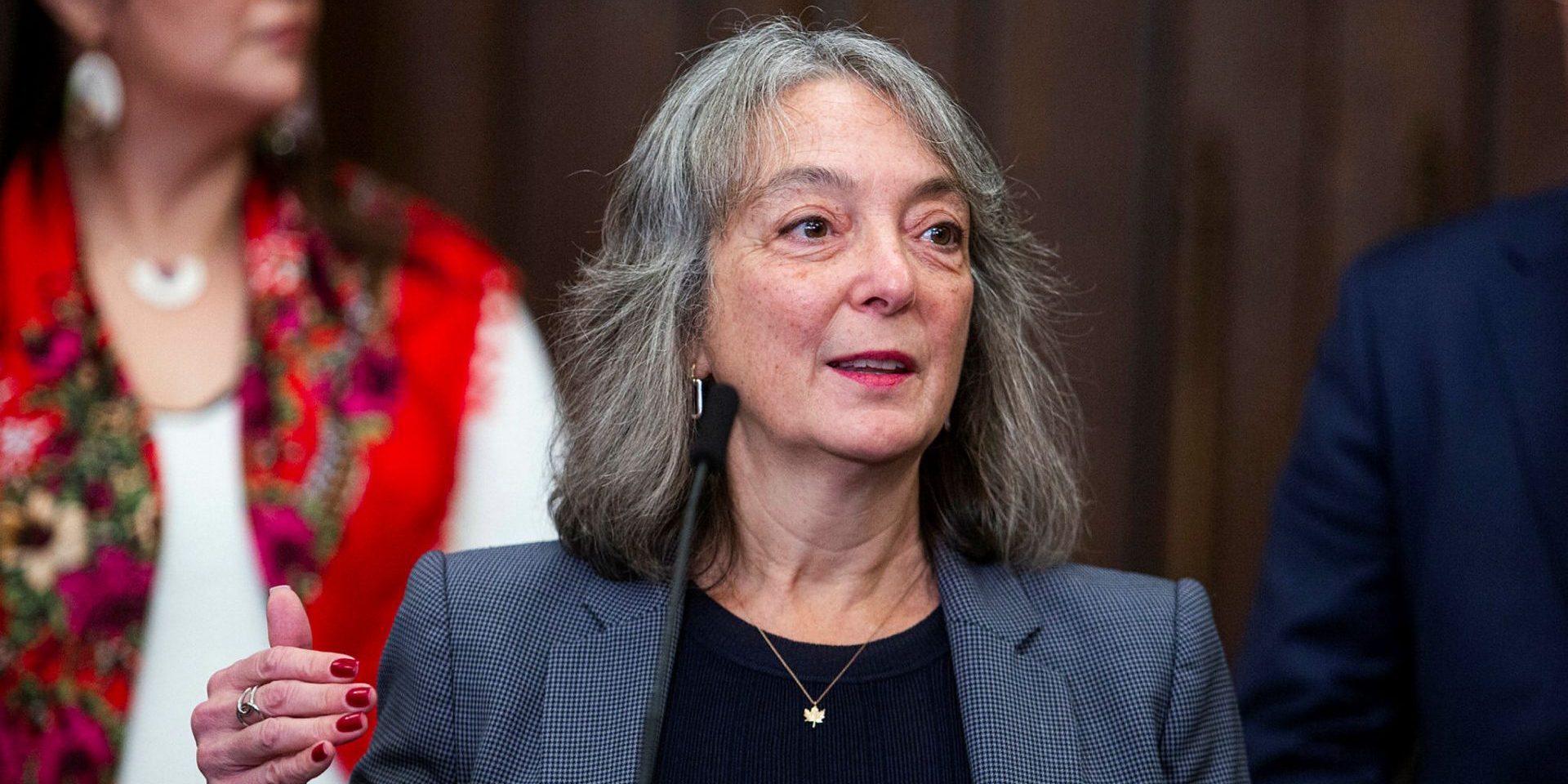
Not technical regulations.
Not procedural frameworks.
Not consultation pathways.
Just a direct yes-or-no question:
Does the government support building a new oil pipeline?
What followed instantly began spreading across political circles online.
Dabrusin hesitated.
Pivoted.
Talked about Indigenous consultation.
Talked about provincial cooperation.
Talked about processes and engagement.
But she never clearly answered the question.
At one point, Bezan appeared visibly frustrated and sarcastically asked whether the minister was “constitutionally impaired” from even saying the words “oil pipeline.”
The room laughed.
Even Dabrusin laughed awkwardly.
But the exchange immediately became symbolic of a deeper political problem inside the Liberal government.
Because this was not just a random cabinet minister struggling through a difficult interview.
This was Canada’s Minister of Environment and Climate Change.
And she appeared unable — or unwilling — to clearly explain where the government stands on one of the country’s biggest economic and political issues.
For Conservatives, the moment was devastating.
For Liberals, it was deeply embarrassing.
And for Mark Carney, it created a new headache at exactly the wrong time.
The hearing took place only hours after former Environment Minister Steven Guilbeault formally announced he was leaving Parliament altogether.
Guilbeault had already been removed from the environment portfolio months earlier after tensions reportedly exploded inside government over energy policy and pipeline negotiations involving Alberta.
But his resignation speech transformed internal Liberal tensions into a full public crisis.
Guilbeault openly warned that Canada was “backsliding” on climate action.
He argued the government was abandoning key environmental commitments.
And he strongly criticized concessions made to Alberta regarding energy development and emissions regulations.
For years, Guilbeault had been one of the strongest climate voices inside the Liberal Party.
Before entering politics, he was a high-profile environmental activist associated with Greenpeace and Équiterre.
Even many conservatives who disagreed with him acknowledged one thing:
He genuinely believed in his climate agenda.
That is why his departure hit so hard politically.
Because when someone like Steven Guilbeault walks away from a Liberal government accusing it of abandoning climate principles, people notice.
And then came Julie Dabrusin’s committee performance.
Instead of calming the situation, many critics believe it made everything worse.
Conservative MP Brandon Leslie focused his questioning on a different issue entirely.
He wanted to know whether Dabrusin had any “red line” — any climate policy position serious enough that she would resign if the government crossed it.
The comparison to Guilbeault was obvious.
Guilbeault had ultimately reached his breaking point and left.
Did Dabrusin have any similar conviction?
Again, the answers appeared vague and evasive.
She repeatedly defended the government’s overall approach but refused to identify any specific climate commitment she would personally fight for at all costs.
For opposition MPs, that answer was politically explosive.
Because it reinforced an increasingly common criticism of the Carney government:
That its ministers speak in carefully managed talking points while avoiding direct positions on controversial issues.
Observers later described the hearing as less of a policy discussion and more of a political exposure.
Conservatives sensed weakness and pressed aggressively.
Dabrusin struggled to regain control of the conversation.
And the government’s internal contradictions became impossible to ignore.
The situation grew even more uncomfortable once discussion shifted toward government spending at the COP climate conference in Brazil.
Conservative MPs confronted Dabrusin over accommodation costs tied to Canada’s delegation.
According to figures raised during committee questioning, taxpayers allegedly covered luxury accommodations costing tens of thousands of dollars during the conference period.
MPs cited examples of rentals costing more than $1,700 per night.
They also questioned sole-source contracts linked to event management and pavilion operations at COP.
Dabrusin defended the spending by arguing accommodation costs during major international conferences become extremely inflated due to demand.
She also stressed that Canada’s participation at COP remained important for international engagement and climate diplomacy.
But Conservatives hammered the optics relentlessly.
At a time when many Canadians are struggling with inflation, housing costs, and food affordability, opposition MPs argued the spending looked disconnected from ordinary voters.
One Conservative MP bluntly asked how the government could justify nearly a million dollars in conference-related expenses while Canadians increasingly rely on food banks.
The exchange added another layer to the growing political damage.
Because the hearing no longer looked like a normal committee session.
It looked like a government losing control of its narrative.
And behind everything sat an even larger political contradiction facing Mark Carney himself.
Carney entered politics presenting himself as a pragmatic technocrat capable of balancing economic growth with climate responsibility.
He was marketed as the serious, disciplined alternative to Justin Trudeau.
A global economist.
A steady hand.
Someone capable of navigating difficult trade-offs.
But critics now argue his government is trying to satisfy two completely incompatible political realities at once.
On one side, Carney wants to maintain support among progressive climate voters concentrated in major urban centers like Toronto, Vancouver, and Montreal.
On the other, he faces growing pressure from Alberta, Saskatchewan, and energy-sector workers demanding pipeline expansion, resource development, and regulatory relief.
The result, critics argue, is paralysis.
Ministers avoid clear answers.
Policies become increasingly vague.
And cabinet divisions spill into public view.
That dynamic was visible throughout the entire committee hearing.
Every direct question about pipelines seemed politically dangerous.
Every climate question risked angering another faction inside the Liberal coalition.
And Dabrusin appeared trapped in the middle of it all.
What made the situation especially damaging was the timing.
Because Guilbeault’s resignation gave Conservatives a perfect contrast between two very different Liberal figures.
One minister who walked away claiming the government betrayed climate principles.
And another minister who appeared unable to clearly defend any principles at all.
That contrast is now becoming central to Conservative attacks against the government.
Opposition MPs increasingly portray Carney as a leader attempting to quietly soften climate commitments while avoiding political accountability for doing so.
At the same time, progressive environmental supporters are growing nervous that Canada’s climate agenda is being watered down behind closed doors.
The government now risks pressure from both directions simultaneously.
For some Canadians watching the hearing, the frustration extended beyond climate policy itself.
The deeper issue was trust.
Canadians increasingly want direct answers from political leaders.
Especially on major national issues involving energy, jobs, inflation, and economic security.
Instead, many viewers felt they witnessed another example of modern political communication dominated by rehearsed messaging and strategic ambiguity.
That perception may ultimately be more politically damaging than any individual policy dispute.
Because once voters begin believing ministers cannot answer basic questions honestly, public confidence deteriorates quickly.
And the pipeline question remains politically explosive for a reason.
Canada possesses some of the world’s largest energy resources.
At the same time, the country faces enormous international pressure to reduce emissions and accelerate climate commitments.
Balancing those realities has become one of the defining political challenges of modern Canadian politics.
The Carney government promised it could manage that balance better than anyone else.
But after this committee appearance, critics increasingly argue the government cannot even clearly explain what that balance actually looks like.
Meanwhile, Conservatives are wasting no time turning the hearing into a broader political weapon.
Clips from the exchange are already circulating heavily online.
Commentators are mocking Dabrusin’s inability to clearly answer direct questions.
And many critics are now repeating one particular line everywhere:
“She couldn’t even say the word pipeline.”
For the Liberals, that phrase may become difficult to escape.
Because in politics, moments matter.
And sometimes a single uncomfortable exchange can reveal far more than an entire policy document ever could.






