Why Canada Is Quietly Preparing for a Very Different World

Something changed in Ottawa this year, and most Canadians may not have noticed it yet.
On the surface, recent speeches from senior government officials appeared to focus on defense spending, industrial development, and economic growth. But underneath those familiar topics was a message that felt far more significant.
Canada is preparing for a world it no longer believes will remain stable.
That reality became impossible to ignore during recent remarks from Foreign Affairs Minister Melanie Joly. Her speech sounded like a discussion about jobs, manufacturing, and national competitiveness.
In reality, it was a warning.
For decades, Canada operated under a comfortable assumption. The international system was largely predictable, major trading relationships were dependable, and economic integration created prosperity for everyone involved.
Today, many policymakers believe that assumption is no longer safe.
The shift did not happen because of one single event. It emerged through a series of developments that, when viewed together, painted a very different picture.

Trade disputes became more frequent. Supply chains became vulnerable. Geopolitical competition intensified. Political disagreements increasingly carried economic consequences.
Individually, each challenge appeared manageable.
Collectively, they suggested something much larger was unfolding.
The decisions coming out of Washington last winter accelerated that realization. Canadian officials watched long-standing economic assumptions come under pressure and began asking difficult questions.
What happens if trusted partnerships become less predictable?
What happens if critical industries depend on decisions made outside Canada?
What happens if economic security becomes inseparable from national security?
Those questions now appear to be driving policy discussions across Ottawa.
Perhaps the clearest sign of this shift is the language Canadian leaders are using. Terms such as sovereignty, resilience, strategic capacity, and industrial strength are appearing with increasing frequency.
These are not words governments use when they believe the status quo will continue indefinitely.
They are words used when preparing for change.
Joly’s speech reflected exactly that mindset.
Rather than focusing exclusively on military capabilities, she repeatedly emphasized Canada’s ability to innovate, manufacture, and develop critical technologies at home.
The message was straightforward.
National strength is no longer measured only by military power. It is increasingly measured by what a country can build for itself.
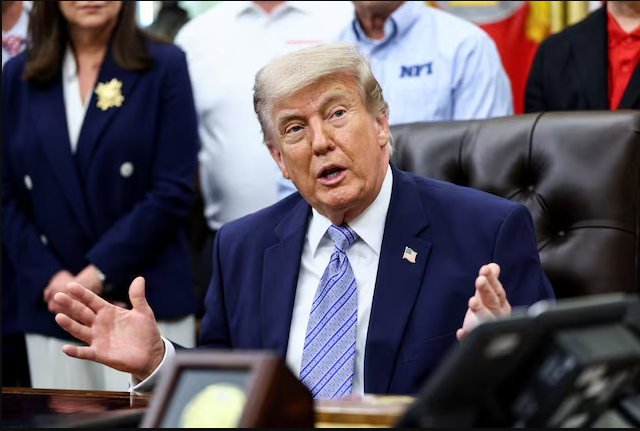
That represents a significant evolution in strategic thinking.
For decades, efficiency was the guiding principle of globalization. Companies produced goods wherever costs were lowest. Investments flowed toward the most profitable opportunities.
The system rewarded efficiency above all else.
Now governments are prioritizing something different.
Resilience.
The lesson learned by many countries is that highly efficient systems can also be highly vulnerable.
A disruption in one region can create shortages across entire continents. Political disputes can suddenly affect trade flows. Critical technologies can become strategic leverage.
As global competition intensifies, these concerns are becoming harder to ignore.
Canada faces a particularly unique challenge because of its close relationship with the United States.
For generations, the two countries built one of the world’s most integrated economic partnerships. That relationship generated enormous benefits and helped support millions of jobs.
But recent tensions have highlighted an uncomfortable reality.
Dependence creates risk.
Even close allies can pursue different priorities when national interests diverge.
That realization appears to be reshaping how Canadian policymakers think about the future.
What makes this transformation especially important is that it extends beyond defense or economics alone.
The conversation has become one about sovereignty.
Not sovereignty defined by borders or military forces.
Sovereignty defined by the ability to make independent decisions, control critical industries, protect strategic technologies, and maintain economic flexibility.
In other words, sovereignty through capability.
That philosophy helps explain why Ottawa is placing greater emphasis on advanced manufacturing, domestic innovation, critical minerals, artificial intelligence, and strategic infrastructure.
These investments are not simply economic programs.
They are strategic assets.
The objective is not merely to create employment opportunities. The objective is to ensure Canada retains the capacity to navigate an increasingly competitive world.
That distinction matters.
Countries that control key technologies possess greater influence. Countries that produce critical goods enjoy greater flexibility. Countries that innovate at scale shape global markets rather than react to them.
Canada wants to be one of those countries.
Whether that ambition succeeds remains uncertain.
Building industrial capacity takes years. Developing strategic industries requires long-term commitment. Maintaining competitiveness demands continuous investment.
Yet Ottawa appears convinced that the cost of inaction would be far greater.
The world that helped shape modern Canada is evolving rapidly.
The assumptions that guided previous generations are being tested.
And Canadian leaders increasingly sound like people who believe a new era has already begun.
The real story, therefore, may not be about defense budgets, manufacturing plants, or trade negotiations.
It may be about a country quietly redefining what national strength means in the twenty-first century.
If Ottawa’s assessment is correct, the decisions being made today will influence Canada’s economy, security, and sovereignty for decades.
And history may eventually view this moment not as a reaction to current events, but as the beginning of Canada’s most important strategic transformation in a generation.






