Speaker Brownlee Faces Renewed Scrutiny After Heated Parliamentary Exchange
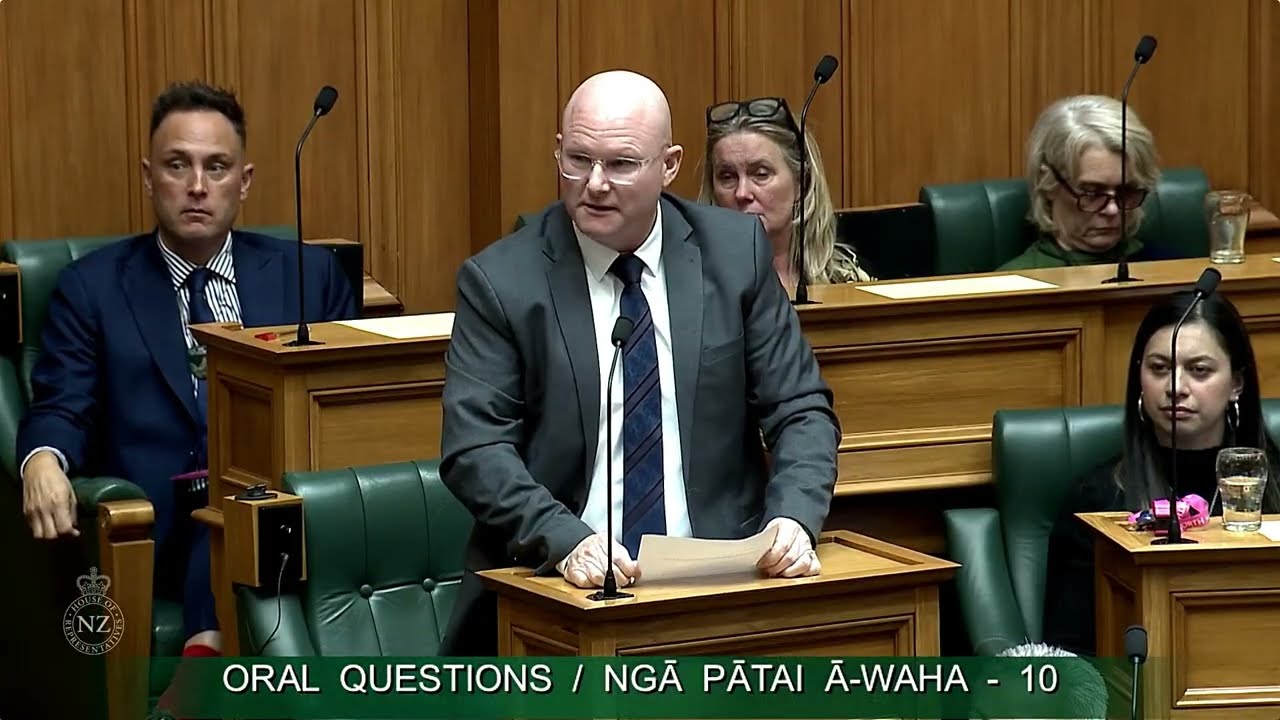
Parliament in Wellington was briefly thrown into disorder after a tense confrontation involving Speaker Gerry Brownlee and Labour MP Dan Rosewarne escalated during a routine parliamentary session. What began as a standard sequence of supplementary questions quickly evolved into a wider debate about parliamentary conduct, procedural authority, and the limits of the Speaker’s intervention inside the House.
The exchange unfolded during discussion around regional economic spending and support for local construction projects across New Zealand. Ministers had been outlining how government investment was being directed into regional economies through builders, contractors, and suppliers, with officials arguing the spending was helping sustain employment and infrastructure activity nationwide.
Attention shifted when Dan Rosewarne rose to ask a question directed at the Minister for Small Business and Manufacturing. Before the question could proceed fully, Speaker Brownlee intervened sharply, warning that any point of order raised should not contradict standing orders or previous rulings from the chair.
The interruption immediately altered the atmosphere inside the chamber. Brownlee’s response suggested frustration over procedural disputes, while opposition MPs appeared increasingly concerned about what they viewed as the Speaker’s handling of members attempting to exercise parliamentary rights.
Questions inside Parliament soon intensified after Rosewarne challenged the Speaker directly, stating that members had a right to raise a point of order without receiving what he described as dismissive treatment from the chair. The unusually direct criticism added further tension to an already strained exchange.
The Speaker responded swiftly by ordering members to leave the House. Although parliamentary removals are not uncommon during heated debates, the confrontation drew particular attention because it centred not on government policy itself, but on the conduct and authority of the Speaker during proceedings.
Observers noted that the dispute reflected broader sensitivities surrounding parliamentary decorum and the increasingly confrontational tone that has emerged during several recent debates in the chamber. Political analysts have argued that procedural disputes often become symbolic of deeper frustrations between government and opposition MPs.
The exchange also highlighted the difficult balancing role expected of the Speaker in New Zealand’s parliamentary system. The Speaker is required to maintain order while remaining politically neutral, a responsibility that frequently places the office-holder under close scrutiny from all sides of the House.
While the confrontation lasted only moments, clips of the incident quickly circulated online, where viewers debated whether Brownlee’s intervention had been justified or unnecessarily aggressive. Public reaction appeared divided, with some defending the Speaker’s efforts to preserve order while others questioned the tone of the exchange.
For opposition MPs, the incident offered another opportunity to raise concerns about fairness during parliamentary proceedings. Critics argued that interruptions from the chair can risk limiting scrutiny at a time when ministers are facing growing pressure over a range of economic and policy issues.
Government supporters, however, maintained that strict enforcement of standing orders remains necessary to prevent parliamentary sessions from descending into disorder. They argued that Speakers must sometimes intervene decisively to ensure debates remain within procedural boundaries.
The moment also underscored how quickly parliamentary debates can shift away from substantive policy discussion and toward questions of conduct and institutional authority. Although the original discussion focused on regional economic investment, public attention rapidly became centred on the confrontation itself.


Political pressure surrounding parliamentary behaviour has intensified in recent years as political discourse becomes increasingly visible across social media platforms. Short exchanges inside the chamber are now rapidly amplified online, often attracting wider national attention than the policy debates themselves.
Some constitutional commentators suggested the incident may renew discussion around how Speakers manage escalating exchanges between MPs. While standing orders provide broad authority to maintain order, their interpretation can become contentious when members believe procedural rights are being restricted.
The incident additionally reflected the adversarial nature of Westminster-style parliamentary systems, where procedural rulings can carry significant political consequences. Even brief interventions from the Speaker may influence the tone, momentum, and public perception of debate.
For Dan Rosewarne, the confrontation elevated his criticism beyond a standard procedural objection. By directly accusing the Speaker of unfair treatment, he placed the dispute into a broader conversation about accountability and respect within parliamentary institutions.
Across political circles, reactions remained cautious rather than overtly partisan. Few MPs appeared willing to escalate the dispute substantially, though several acknowledged privately that tensions inside the chamber have become increasingly visible during contentious exchanges.
The episode comes at a time when Parliament is already operating under heightened public scrutiny over economic management, regional investment priorities, and coalition stability. Against that backdrop, even procedural clashes are capable of drawing disproportionate public and media attention.
Although no formal procedural outcome emerged from the exchange itself, the incident continued to attract discussion because it touched on wider concerns surrounding transparency, authority, and the tone of political debate in New Zealand’s democratic institutions.
As debate continues, the confrontation involving Speaker Brownlee and Dan Rosewarne is likely to remain part of a broader conversation about parliamentary standards and political accountability. While the immediate dispute may fade from the parliamentary agenda, the questions raised about conduct inside the House are expected to continue attracting attention from both political observers and the public.






