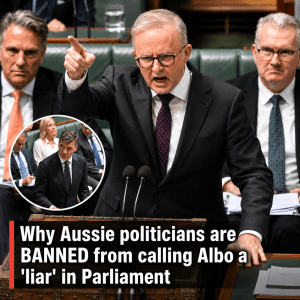
Australia’s Parliament is famous for its fiery debates, sharp political attacks, and relentless questioning of government decisions. Yet there is one accusation that members are strictly prohibited from making inside the parliamentary chamber: directly calling another politician a “liar.” The rule has once again become a major talking point as tensions surrounding Prime Minister Anthony Albanese, widely known as Albo, continue to intensify. Parliamentary procedures require politicians to withdraw such remarks immediately or risk disciplinary action.
The controversy has gained renewed attention following a series of heated exchanges between government and opposition MPs. Critics have accused Albanese of breaking election promises and misleading voters on key policy issues. However, despite the political hostility, parliamentary rules prevent members from directly labeling the Prime Minister a liar during debates.

At the heart of the issue is a long-standing Westminster parliamentary tradition that considers direct accusations of dishonesty to be “unparliamentary language.” The Australian Parliament inherited many of its procedures from the British system, where maintaining order and preserving respect between members are considered essential to democratic debate.
Under these conventions, MPs may challenge the accuracy of statements, question facts, or argue that information is incorrect. What they cannot do is explicitly accuse another member of lying. The distinction may appear subtle, but parliamentary authorities view it as an important safeguard against debates descending into personal attacks.
The Speaker of the House plays a crucial role in enforcing these standards. Whenever an MP uses language considered offensive or unparliamentary, the Speaker can demand that the remark be withdrawn. Failure to comply may result in suspension from Parliament or removal from the chamber for a period of time.
One recent example involved Liberal MP Phil Thompson, who was suspended after refusing to withdraw comments accusing Albanese of dishonesty. The incident reignited debate over whether parliamentary rules protect politicians from accountability or simply maintain decorum during heated discussions.
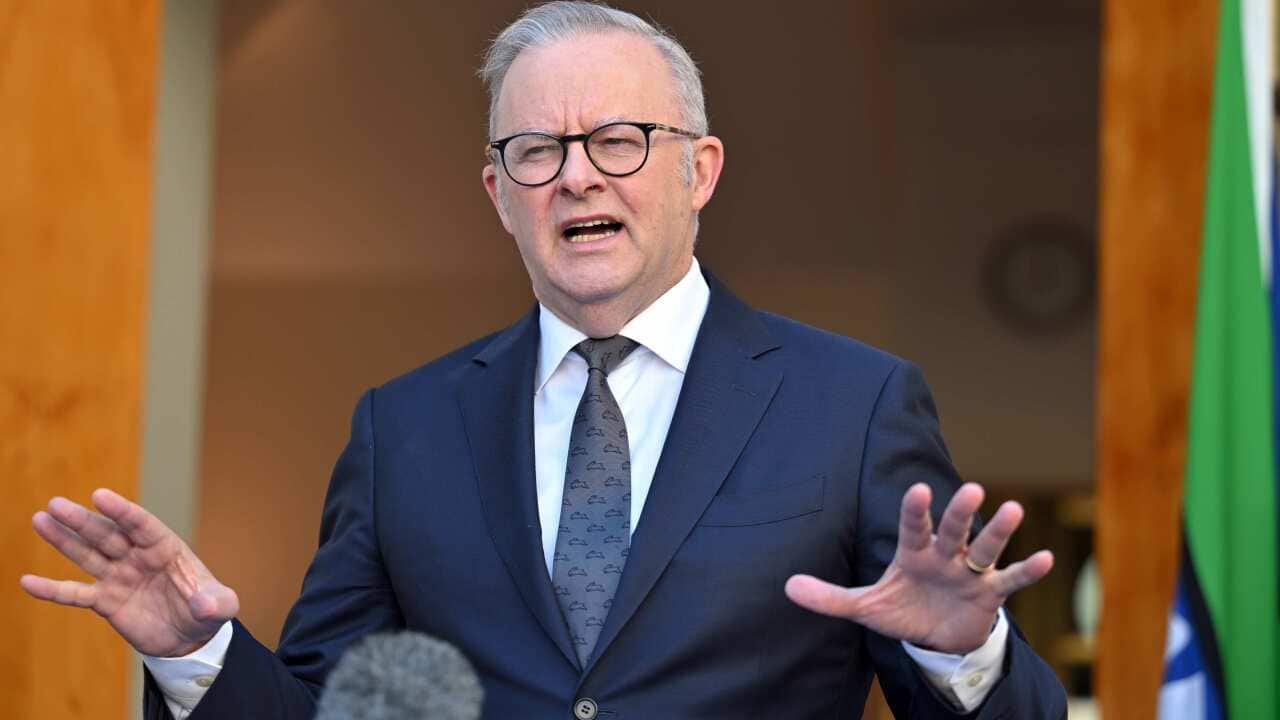
Supporters of the rule argue that Parliament must remain a place where arguments are settled through evidence rather than insults. They believe allowing MPs to freely accuse one another of lying would encourage increasingly aggressive behavior and make productive debate nearly impossible.
Critics, however, contend that the rule can appear outdated in modern politics. Some argue that if a politician has clearly made a false statement, members should be able to describe it honestly without fear of punishment. This perspective has gained traction as public trust in political institutions faces growing scrutiny.
The debate became especially visible during a dramatic parliamentary clash involving Prime Minister Albanese and opposition figures. Heated exchanges escalated when accusations of dishonesty surfaced regarding economic policy and election commitments. The Speaker ultimately ordered participants on both sides to withdraw references suggesting that opponents had lied.
Interestingly, the rule applies equally to government and opposition members. Labor MPs are prohibited from calling Coalition politicians liars, just as opposition MPs are prohibited from making the same accusation against Albanese or his ministers. Parliamentary authorities insist that the standards must be enforced consistently regardless of political affiliation.
Australia is not unique in maintaining such restrictions. Many Westminster-style legislatures, including those in the United Kingdom, Canada, and New Zealand, classify direct accusations of lying as unparliamentary language. Speakers routinely intervene when members cross that line.
The paradox is that while politicians cannot call each other liars inside Parliament, they often make similar accusations outside the chamber. Press conferences, television interviews, and social media platforms frequently feature claims that political opponents have been dishonest or deceptive. The restriction applies specifically to parliamentary proceedings.
Another important distinction involves the concept of misleading Parliament. In Westminster systems, knowingly providing false information to Parliament is considered a serious offense. Ministers who are proven to have deliberately misled Parliament can face significant political consequences, including resignation.
This creates an unusual situation where accusing someone of lying may be forbidden, yet allegations that a minister misled Parliament can become the subject of intense investigation. Parliamentary procedure therefore attempts to separate formal accountability mechanisms from emotional political rhetoric.
For Anthony Albanese, the issue has become politically sensitive because opponents frequently point to campaign promises they believe were abandoned after the election. Government supporters counter that changing circumstances sometimes require policy adjustments and that accusations of dishonesty oversimplify complex governing decisions.
The resulting tension reflects a broader challenge facing democratic institutions worldwide. Voters increasingly demand transparency and direct language from political leaders, while parliamentary traditions continue to emphasize restraint, procedure, and civility. The clash between these expectations has become a defining feature of modern political discourse.
Whether Australians view the rule as necessary or outdated often depends on their political perspective. Supporters see it as a vital protection against chaos in the chamber. Detractors view it as an artificial restriction that prevents politicians from speaking plainly about conduct they believe is dishonest.
For now, the rule remains firmly in place. No matter how intense the political battle becomes, MPs in Canberra must choose their words carefully. They may challenge, criticize, dispute, and condemn the Prime Minister’s actions, but under parliamentary rules, directly calling Albo a “liar” remains a line they are not allowed to cross.