Wellington – A routine question on rising food prices descended into personal acrimony in the House of Representatives on Wednesday, forcing Finance Minister Nicola Willis to withdraw a statement and prompting Labour leader Chris Hipkins to issue a personal apology after suggesting she “may need some medical help”.
The clash occurred during Oral Questions when Labour finance spokeswoman Barbara Edmonds quizzed Willis on ongoing grocery price increases. Recent Statistics New Zealand data shows annual food inflation eased to 3.4% in the year to March 2026 (down from 4.5% in February), with a monthly decline of 0.6%. However, meat, poultry and fish rose 7.3% annually, while fruit and vegetables increased 6.4%. Some items like olive oil and free-range eggs recorded price drops.
Willis’s Contested Statement
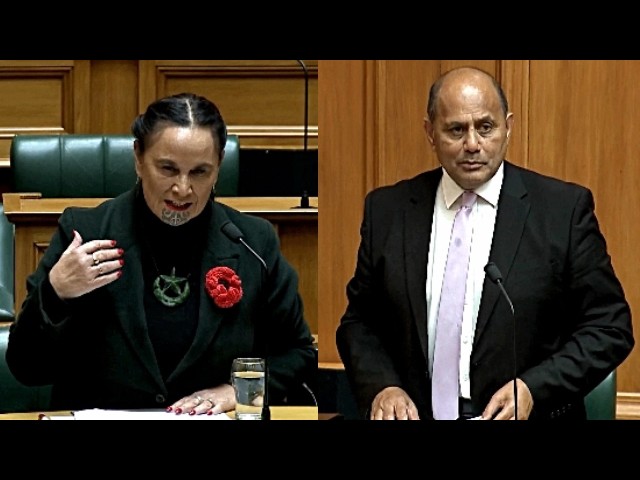
In her response, Willis acknowledged that food price increases “vary across product ranges, some of which do reflect seasonal variation.” She then added that Kiwis “are paying lower prices for groceries than would have been the case if the last government had been re-elected with their record of adding pressure to inflation.”
Hipkins immediately rose on a point of order, arguing the statement was out of order and “without any foundation whatsoever,” as it speculated on hypothetical outcomes under a different government. The Speaker agreed, ruling that while ministers may refer to inherited circumstances or trends, direct counterfactual claims about what “would have happened” under the opposition are not permitted.
After some debate, Willis withdrew the statement, though she initially qualified the withdrawal by saying she was referring to context the member had taken out of context.
The “Medical Help” Remark and Personal Offence
The situation escalated when Hipkins appeared to make an audible interjection or noise during Willis’s response. Hipkins remarked: “I think she might be having a few issues. She may need some medical help.”
Willis took strong offence, rising to say she found the comment “offensive” and part of a pattern of personal aspersions in the House. She assured MPs she was in “great health,” mentioning a recent run with the Treasurer of Australia and the British Chancellor in Washington DC. She described Hipkins’ conduct as “disreputable.”
Hipkins clarified that he was referring to the “noise” she had made, not her physical condition. The Speaker urged calm, describing parts of the exchange as becoming “quite pathetic” and “childish,” and pressed both sides to withdraw their remarks so the House could move on.
Willis ultimately withdrew her earlier statement fully. Hipkins later apologised personally to Willis, both inside and outside the chamber. She accepted the apology. Finance Minister Shane Jones also issued a separate apology to Willis for unrelated comments about her weight loss, which she accepted.
Political Context and Cost-of-Living Debate
The fiery exchange reflects deep partisan divisions over responsibility for the cost of living. The government points to falling overall inflation (now at lower levels than the peaks under Labour), tax bracket adjustments, and efforts to restore economic discipline as reasons households are better off than they might otherwise have been.
Opposition parties, including Labour, argue that food prices remain a burden for families and accuse the government of failing to deliver meaningful relief, especially amid concurrent fuel supply concerns and other pressures.
The incident has drawn widespread media coverage, with headlines focusing on the personal nature of the remarks and the awkward apologies that followed. It comes at a sensitive time for the coalition, following Christopher Luxon’s recent self-initiated confidence vote and Winston Peters’ public warnings about internal instability.
While Question Time often features robust debate, personal aspersions of this nature are relatively rare and tend to draw strong rebukes from the Speaker and public commentary about declining standards in the House.
Both Willis and Hipkins have since moved to de-escalate the matter publicly, with Willis accepting the apology and Hipkins acknowledging the comment was inappropriate.
As food prices continue to feature prominently in household budgets, the underlying policy debate over inflation management, supermarket competition, and economic recovery is expected to remain a central battleground in the lead-up to the 2026 election.






