A nation can survive losing money; it has done so through recessions, depressions, and deficits. But it cannot survive losing “math”—the underlying trust in the invisible structures that hold its currency, bonds, and pensions together. This week, the mathematical foundation of the Canadian Federation began to shift, not because of a riot or a revolution, but because of a sequence of cold, financial signals that suggest the probability of a “Velvet Divorce” has finally entered the global pricing model.
The earthquake began in Washington, D.C., far from the rhetoric of the Alberta legislature. A delegation from the Alberta Prosperity Project reportedly secured a $500 billion (USD) credit facility, backed by the province’s vast oil reserves. This isn’t a campaign slogan; it is a financial war chest. In the eyes of global lenders, it is a “sovereign-grade” weapon intended to bankroll the birth of a new country, and its existence changes the leverage of the entire continent.
Within the same seven-day window, the fallout reached the rating agencies. Moody’s placed Canada’s sovereign credit rating on a “negative watch.” While not a formal downgrade, the shift in outlook serves as a flashing red light for international capital. It signals that the people who lend money to nations have begun to ask the most uncomfortable question in finance: What happens to the Canadian balance sheet if its most productive engine walks out the door?
The market’s reaction was swift and unsentimental. The Canadian dollar dropped 1.4% in just three trading days. To the layman, it is a minor fluctuation; to the currency trader, it is a directional shift in the “Math of Doubt.” When a currency begins to move based on secessionist risk, the timeline for political stability is no longer controlled by the Prime Minister in Ottawa—it is controlled by the collective anxiety of global investment funds.
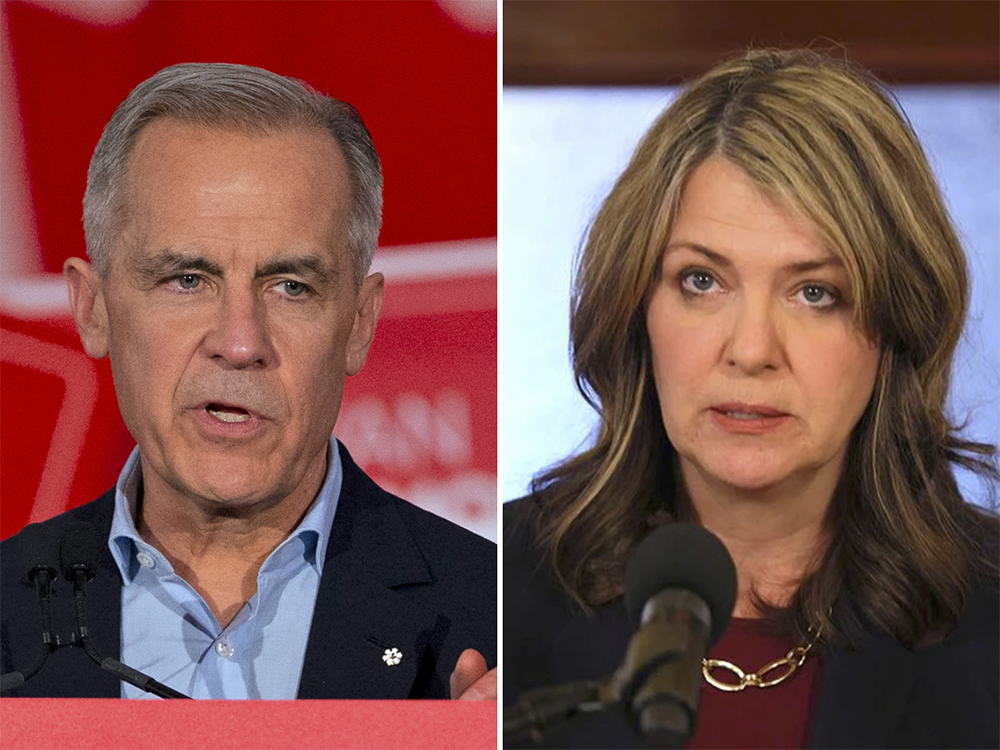
The political fuel for this fire came from a single, measured sentence in Edmonton. When asked if she would authorize a referendum on independence, Premier Danielle Smith declined to say “no.” Her response—that her job is to represent what the people of Alberta want—was a masterstroke of strategic ambiguity. By keeping every option on the table, she effectively stripped the federal government of its ability to close the door on the separatist movement.
Ottawa is now staring down what analysts are calling “Domino Number Four.” After enduring trade pressures on lumber, dairy, and the looming threat of auto tariffs, the federal government is facing an existential crisis. Unlike trade disputes that operate inside the system, the Alberta question challenges the system itself. It is a structural shock that threatens the fiscal and psychological architecture that has held Canada together since 1867.

The early indicators are already visible in the bond markets. The yield spread between federal bonds and Alberta provincial bonds has widened by 18 basis points in just ten days. In the world of sovereign finance, this is a leading indicator. It suggests that investors are no longer viewing Canada and Alberta as an inseparable financial unit. The “secession premium” is now being baked into the price of Canadian debt.
However, history offers a brutal test for such moments, often referred to as the “Velvet Divorce Test.” When Czechoslovakia split in 1993, it was peaceful because both sides agreed on the terms. Canada, by contrast, is failing every condition. There is no agreement on assets, no blueprint for dividing the national debt, and no framework for indigenous treaties. A separation today would not be a divorce; it would be a structural rupture.
The most terrifying variable in this equation is currency. Independence is not just about a new flag; it is about what people use to pay their mortgages. If Alberta were to separate, it would face a “monetary nightmare.” It could use the Canadian dollar without permission, effectively surrendering its interest rate control to Ottawa, or it could adopt the U.S. greenback, handing its sovereignty to the Federal Reserve in Washington.
Creating a new “Alberta Dollar” is the third, most patriotic-sounding option, but also the most volatile. A new currency for an economy of 4.7 million people, tied entirely to the fluctuations of the oil market, would be a magnet for speculators. Without a central bank and a century of established trust, the “New Country” could see its citizens’ life savings devalued before the first national holiday.
The current standoff is not just a regional protest; it is a fundamental test of the North American order. As Washington watches from across the border, the incentive to apply pressure grows. In geopolitics, timing is everything, and the Carney government in Ottawa is finding itself caught between a relentless separatist movement and a U.S. administration that senses a historic opportunity for leverage.
Ultimately, Canada stands at the edge of doubt. Once the market decides that a political risk is real, the momentum becomes self-feeding. Caution triggers pullback, and pullback triggers further uncertainty. The thin line in the dam has appeared, and as the pressure builds, the question is no longer whether Alberta will leave, but whether the “Math of Canada” can still be made to add up in the eyes of the world.






