What began as a series of disconnected trade skirmishes along the world’s longest undefended border has rapidly evolved into a structural realignment of Western geopolitics. For the first time in modern history, Canada is no longer discussing its economic relationship with the United States as an unquestioned, permanent partnership.
Instead, policymakers in Ottawa are openly characterizing their deep economic dependence on Washington as an acute strategic vulnerability. The diplomatic caution that defined continental relations for decades has been shattered by a blunt realization that the structural foundations of the North American economic alliance have fundamentally and permanently changed.
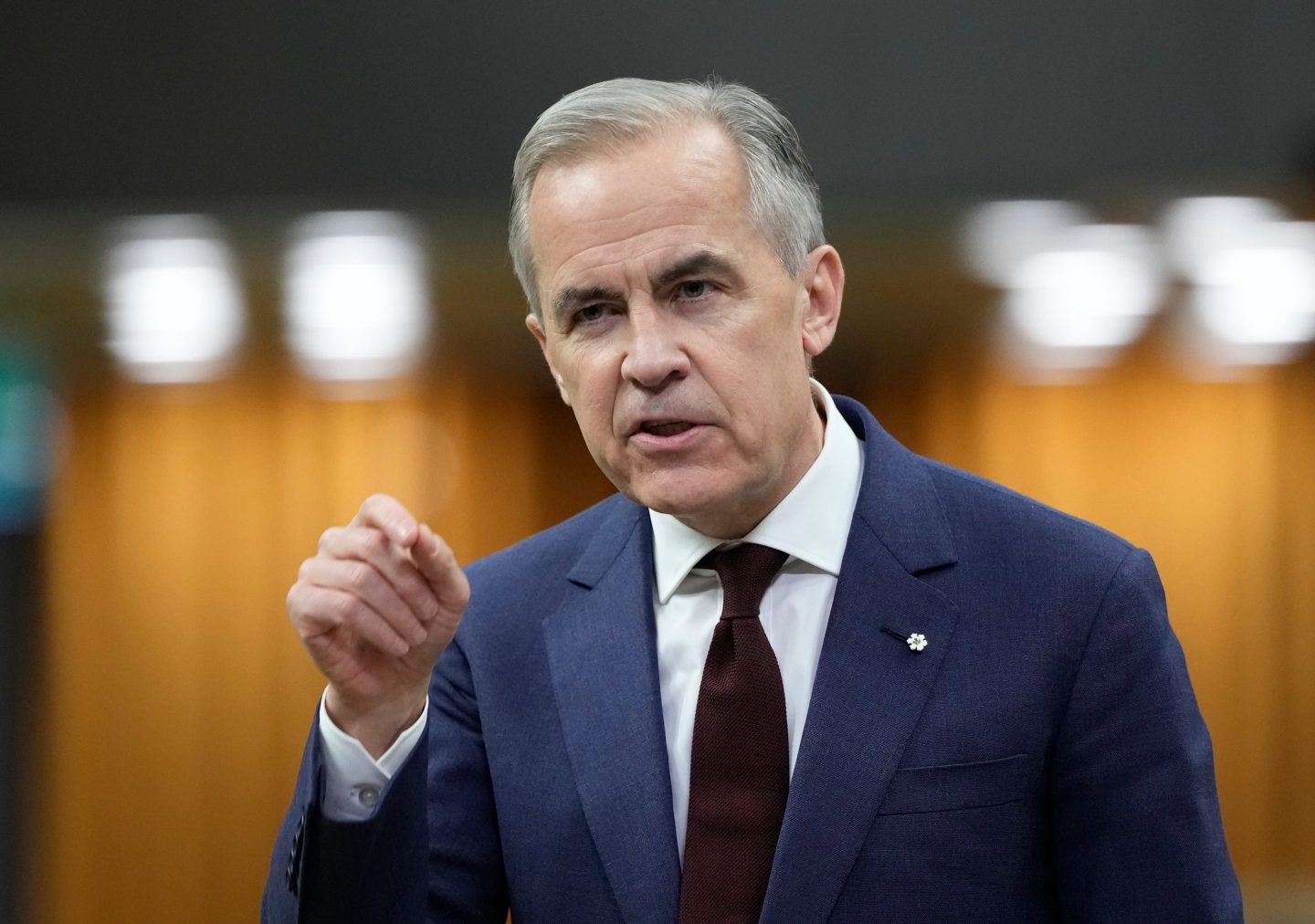
The shift became undeniably public following a remarkable ten-minute national address delivered by Canadian Prime Minister Mark Carney. His message targeted the core of traditional foreign policy, explicitly warning that the economic architecture that once guaranteed Canadian prosperity has transformed into an exposure that requires immediate, aggressive correction.
Carney warned that the United States has altered its approach to international trade, pushing protectionist tariffs to levels unseen since the Great Depression. However, what truly stunned international observers was not the policy criticism itself, but the unusually adversarial tone adopted by the historically cautious northern ally.
The speech did not employ the reassuring language of a traditional partner seeking a temporary diplomatic compromise with Washington. It sounded instead like a nation preparing for a fractured future where the economic commitments and institutional stability of the United States can no longer be trusted by its closest neighbors.
“Hope is not a plan, and nostalgia is not a strategy,” Carney declared during the address, directly challenging decades of continental complacency. “The United States has changed, and Canada must respond accordingly if we are to protect our national sovereignty and the long-term livelihoods of our citizens.”
Behind the polished diplomatic phrasing lay a much harsher geopolitical reality that has been quietly developing within the halls of Ottawa. The Canadian government increasingly believes that Washington is weaponizing its massive market dominance, using aggressive economic leverage against its historical security partners to extract domestic political advantages.
The long-simmering tensions recently exploded into the open after United States Commerce Secretary Howard Lutnick launched a direct assault on Ottawa’s trade strategy. Lutnick publicly suggested that the United States-Mexico-Canada Agreement, once hailed as a triumph of continental integration, should be completely reconsidered and reimagined.
The rhetorical conflict intensified dramatically when Donald Trump issued a blunt public response to Carney’s recent remarks at the World Economic Forum. “Canada lives because of the United States,” the former president asserted in a statement that sent immediate shockwaves through the international diplomatic community. “Remember that.”
To many Canadian citizens and policymakers, the message from across the border sounded less like traditional alliance diplomacy and more like a direct threat. The comment served to validate the growing consensus within Ottawa that total economic reliance on the American consumer market is a dangerous historical relic.
Carney’s symbolic response to the American pressure campaign was both subtle and deeply rooted in the historical consciousness of his nation. During his address, he conspicuously referenced Major General Isaac Brock, the legendary military figure who successfully defended Canada against an American invasion during the War of 1812.
Holding a small statue of the general, Carney reminded his audience that Canadian national identity was originally forged through resistance to American expansionism. The historical reference was not merely rhetorical theater; it signaled a profound psychological shift away from the geographic inevitability of total integration with Washington.
This symbolic defiance is backed by aggressive, concrete policy actions designed to dismantle Canada’s structural dependence on American financial systems. In the final quarter of 2025 alone, Ottawa quietly executed a record liquidation of twenty-point-five billion dollars in United States Treasury holdings, diversifying its national reserves.

Simultaneously, Canadian consumer behavior is delivering a tangible economic blow to the American service and hospitality sectors across border states. Cross-border automobile trips by Canadian tourists have collapsed by thirty-five percent over a two-year period, resulting in an estimated four-point-five billion dollar loss for American businesses.
The drop reflects a broader societal shift, with nearly one quarter of all Canadian citizens reporting they have canceled planned American travel. This collective withdrawal of discretionary capital is the direct result of rising political resentment over trade hostilities and aggressive rhetoric originating from Washington politicians.
In response, Ottawa is rapidly accelerating a comprehensive geopolitical strategy known internally among bureaucratic elites as the “Third Option.” This long-term economic initiative aims to dramatically expand Canada’s trade architecture outside the American sphere, with an official target to double non-United States exports by 2035.
The aggressive pivot toward alternative international markets is already underway, completely ignoring traditional Washington spheres of influence and economic preferences. Earlier this year, Carney met directly with Chinese President Xi Jinping to sign bilateral agreements lowering tariffs on electric vehicles and vital agricultural exports.
Days later, Ottawa and New Delhi announced a separate, major energy arrangement focusing heavily on Canadian crude oil and natural gas infrastructure. Considering that ninety-seven percent of Canadian energy exports currently flow directly to the United States, the strategic implications of this diversification are monumental.
However, Canada’s aggressive search for economic escape routes from the American orbit is not an isolated phenomenon in global politics. Across the European continent, traditional Western allies are quietly pursuing an identical path of decoupling, driven by similar anxieties over Washington’s long-term reliability.
European energy independence has advanced rapidly, with wind and solar installations generating a historic thirty percent of European Union electricity in 2025. This milestone marked the first time renewable infrastructure outpaced fossil fuels, structurally undermining American energy leverage over the continent’s industrial heartland.
Furthermore, nine European nations recently signed the Hamburg Declaration, committing to a massive expansion of wind infrastructure across the North Sea. The multi-billion-dollar initiative is explicitly and strategically designed to systematically reduce Europe’s dependence on expensive liquefied natural gas imports coming from American energy suppliers.
Concurrently, major global financial institutions and sovereign wealth managers are systematically shifting their capital away from United States debt instruments. China’s total holdings of United States Treasuries have declined by nearly forty-eight percent since 2013, reflecting a broader international trend toward asset diversification.
Sovereign wealth funds based in the Gulf region are also aggressively reviewing their trillions of dollars in American market investments. Saudi Arabia’s Public Investment Fund reportedly slashed its total financial commitments to United States assets by an astonishing seventy percent, redirecting capital toward domestic and Asian markets.
Individually, these fiscal and industrial maneuvers across different continents might appear to be disconnected responses to local market conditions. Together, however, they reveal an unmistakable global trajectory: America’s traditional allies are actively constructing permanent escape routes from Washington’s financial hegemony.
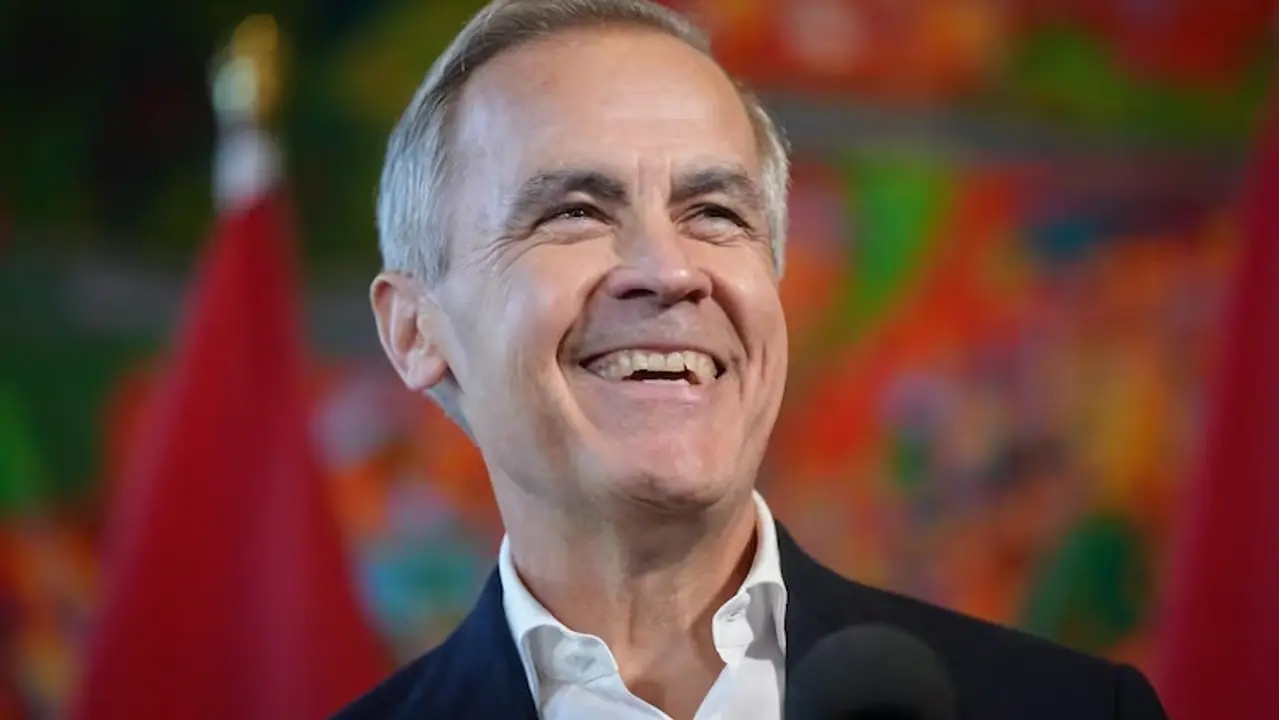
For decades, European heads of state utilized soft, ambiguous phrases like “strategic autonomy” to avoid openly confronting or insulting Washington. Carney’s blunt address has shattered that diplomatic caution, publicly validating what many foreign governments have previously only whispered in closed-door intelligence briefings.
The central irony of the current American administration’s aggressive “America First” foreign policy is now impossible for international strategists to ignore. The relentless pressure campaign is actively accelerating the exact outcome it was designed to prevent: the steady economic decoupling of historical allies.
Every unilateral tariff threat, every public humiliation of allied leadership, and every warning regarding market access pushes nations toward alternative corridors. These alternative trade routes, decentralized energy systems, and non-dollar financial networks are rapidly maturing into a resilient, parallel global economy.
The stubborn realities of continental geography will obviously never change; Canada will always share a massive physical border with the United States. However, the diplomatic and economic leverage derived from that geography can change, and according to Carney, that historical process has already begun.
Once close international partners stop viewing economic dependence as a source of security and begin analyzing it as a dangerous exposure, power shifts. The entire psychological and institutional framework that supported American global dominance since the mid-twentieth century is beginning to fracture from within.
When the single closest geopolitical ally of the United States publicly labels its relationship with Washington a strategic weakness, a boundary is crossed. The rest of the world is paying very close attention to the northern border, watching the birth of a multipolar West.






