Claims of a Greenland Showdown Spread Online — but Diplomacy, Not Deployment, Is Driving the Arctic Debate
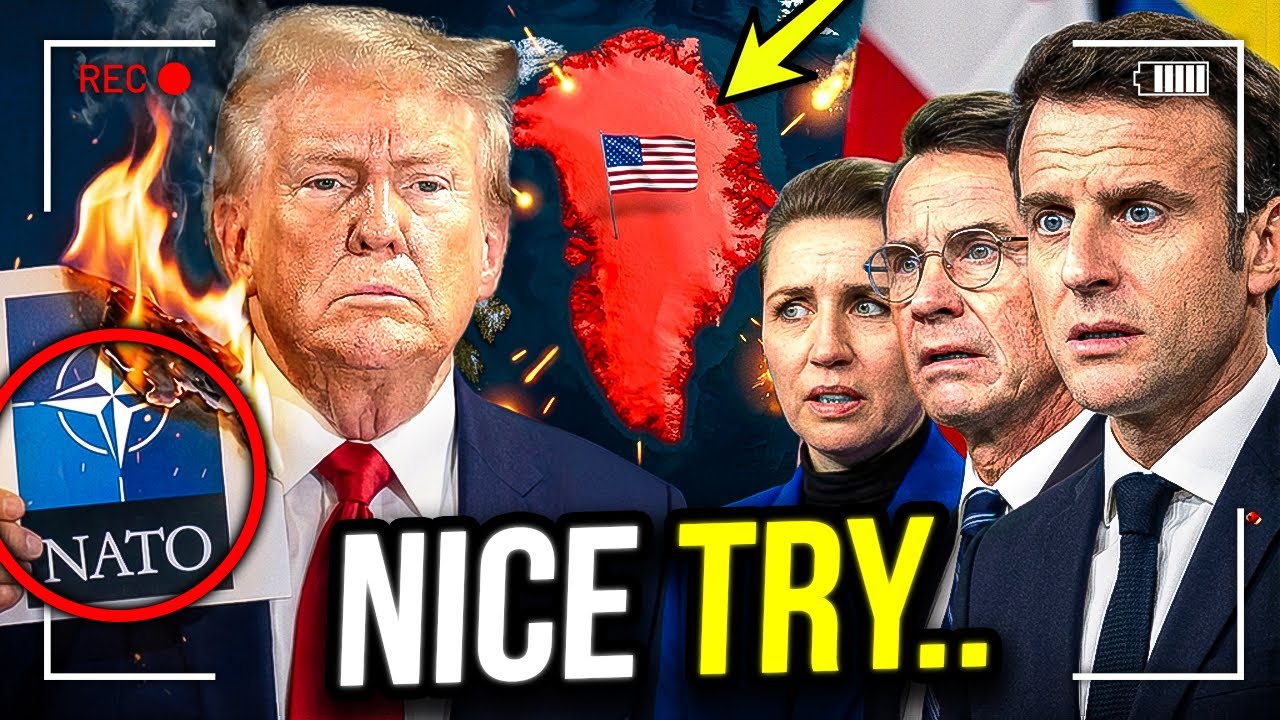
WASHINGTON — A wave of viral posts this week claimed that a bloc of European countries was mobilizing troops to Greenland to block a United States “acquisition,” threatening tariffs, economic retaliation, and even expulsion from NATO. The posts, widely shared across X, TikTok, and YouTube, asserted that Denmark, Norway, Sweden, France, Germany, the United Kingdom, the Netherlands, and Finland had “crashed out” over President Donald Trump’s renewed rhetoric on Greenland — and that Washington had answered with sweeping tariffs and a readiness to leave NATO.
But interviews with European officials, defense analysts, and diplomats paint a markedly different picture: no allied military deployment aimed at blocking U.S. control, no NATO expulsion mechanism, and no confirmed tariff order tied to Greenland. Instead, the dispute remains a diplomatic standoff over sovereignty and Arctic security — heated in tone, constrained in practice, and unfolding within existing treaties.
What’s Driving the Greenland Conversation
Greenland, an autonomous territory within the Kingdom of Denmark, has long been strategically significant. The United States maintains a presence at Pituffik Space Base under a 1951 defense agreement with Denmark, which already grants Washington wide access for defense purposes. Greenland is also covered by NATO’s Article 5.
President Trump has revived public arguments that Greenland is vital to U.S. security in the Arctic, citing Russian and Chinese activity and the region’s future shipping lanes and resources. Those comments have met firm resistance from Copenhagen and Nuuk, which insist that sovereignty and Greenlanders’ right to self-determination are non-negotiable, even as they express willingness to deepen security cooperation.

The Viral Claims — and the Reality
Claim: European allies are sending troops to Greenland to stop the U.S.
Reality: There is no evidence of a multinational deployment intended to confront the United States. European governments acknowledge discussions about Arctic readiness and exercises — routine within NATO — but deny any operation designed to block U.S. action. Defense reporters note that claims of tiny, symbolic contingents (“dozens of troops”) conflate unrelated visits or misreport routine liaison activity.
Claim: The United States imposed 10% tariffs (rising to 25%) on multiple European countries over Greenland.
Reality: No verified tariff order tied to Greenland has been published by the White House or the Office of the U.S. Trade Representative. While tariffs are a tool President Trump has used in the past, trade lawyers say such sweeping measures would require formal notices and would be immediately visible in customs guidance — none of which have appeared.
Claim: Europe is threatening to kick the U.S. out of NATO.
Reality: NATO has no mechanism to expel a member, and officials across the alliance dismiss the notion as implausible. Withdrawal, under the treaty, would be a unilateral decision by a member state — not an allied sanction.
Europe’s Position: Cooperation Without Control
Denmark’s foreign minister, Lars Løkke Rasmussen, has repeatedly said Denmark is ready to increase Arctic capabilities — ships, drones, surveillance — and to work with allies, including the United States, to address long-term risks. Greenland’s foreign minister, Vivian Motzfeldt, has emphasized that cooperation is welcome, ownership is not.
Other European capitals echo that line. Paris, Berlin, London, Stockholm, Oslo, Helsinki, and The Hague support stronger NATO coordination in the High North, not a change in borders. Italy’s prime minister, Giorgia Meloni, has stressed alliance unity while cautioning against theatrics that inflame public opinion.
Resources, Security — and Overstatement
Online commentary often frames Greenland as a treasure trove of rare earth minerals decisive for U.S. dominance in artificial intelligence and the dollar’s reserve-currency status. Geologists and economists urge caution. Greenland does possess mineral potential, but commercial extraction faces high costs, environmental constraints, and long timelines. Analysts say supply chains — not sovereignty — are the binding constraint, and diversification can occur through partnerships rather than annexation.
On security, experts agree the Arctic is changing — melting ice, new routes, and increased Russian activity demand attention. But they also note that existing agreements already allow the U.S. to expand presence in Greenland with Danish consent. “From a defense standpoint, Washington can achieve most objectives through cooperation,” said one former NATO planner. “A sovereignty fight adds risk without adding capability.”
Why the Narrative Took Off
The claims spread quickly because they combine familiar elements: tariff brinkmanship, NATO burden-sharing disputes, and social-media sound bites. Short videos compressed complex diplomacy into punchlines — “Europe counts to 34,” as one post put it — while omitting the legal and operational realities that constrain all sides.
Fact-checkers and defense correspondents say the episode underscores how Arctic security debates are increasingly fought online, where nuance loses to virality. “Exercises become ‘deployments,’ statements become ‘threats,’ and routine diplomacy becomes ‘war prep,’” one analyst said.

What Happens Next
Diplomats from Denmark, Greenland, and the United States have agreed to continue talks via a high-level working group focused on Arctic security — a sign that, despite public rhetoric, channels remain open. NATO officials say the alliance will keep coordinating surveillance, infrastructure resilience, and domain awareness in the High North.
For now, the stakes are real but bounded. Greenland is not changing hands; Europe is not ejecting the United States from NATO; and tariffs tied to Greenland remain unconfirmed. The enduring question is whether leaders can lower the temperature while strengthening cooperation in a region that will only grow more important.
As one European official put it, “The Arctic needs more coordination — not more clicks.”






