A profound and calculated shift in continental power dynamics is unfolding behind closed doors as the official deadline for the renewal of the Canada-United States-Mexico Agreement approaches. Faced with aggressive tariff threats from Washington, Canadian Prime Minister Mark Carney has systematically constructed a sophisticated, multi-layered negotiating strategy.
With exactly thirty-eight days remaining before the critical diplomatic deadline, Ottawa is quietly managing five strategic asymmetric assets that Washington simply cannot match. This high-stakes economic leverage spans vital energy flows, critical defense minerals, immense institutional investment capital, a massive aerospace defense contract, and the impending American congressional midterm election calendar.
The first card in Canada’s hand is its record-breaking domestic crude oil production, which currently stands at an unprecedented five-point-five million barrels per day. The United States remains deeply dependent on this supply, importing roughly four million barrels of Canadian crude every single day to fuel its industrial heartland.
Crucially, major American Midwest refineries across Illinois, Ohio, Minnesota, and Michigan are physically and structurally configured to process Alberta’s specific heavy bitumen. These multi-billion-dollar industrial facilities cannot easily or rapidly switch suppliers without undertaking years of highly expensive and disruptive structural retooling across their networks.
Furthermore, the geopolitical landscape has transformed over the last six months with the expanded Trans Mountain pipeline running at near full capacity. This vital infrastructure allows Canada to reliably ship its oil directly to lucrative Asian markets, establishing a credible economic alternative that did not exist two years ago.
Carney and Alberta Premier Danielle Smith solidified this diversification strategy on May fifteenth by signing a comprehensive West Coast pipeline framework agreement. By demonstrating that Canadian resources can readily access global tidewater at world prices, Ottawa has effectively destroyed Washington’s traditional monopsony power over the nation’s energy sector.
The second strategic asset centers on critical minerals, with Canada holding ten of the twelve elements formally identified by NATO as essential. These minerals, including lithium, cobalt, nickel, and rare earths, are absolutely vital for modern defense manufacturing, advanced telecommunications, and next-generation green technology supply chains.
The Trump administration desires these secure resources intensely, even issuing an explicit executive order identifying Canada as a priority procurement partner. Washington has pushed aggressively for a standalone critical minerals pact that would guarantee preferential, low-cost supply access for American military contractors and domestic technology firms.
However, Canadian Foreign Affairs Minister Anita Anand has remained entirely unyielding, publicly stating that no standalone mineral agreement will be finalized. Ottawa is keeping these indispensable commodities firmly tied to the broader trade negotiations, refusing access until Washington completely eliminates its punitive tariffs and renews CUSMA.
The third card involves the immense scale of Canadian pension fund capital, which collectively manages over two trillion dollars in institutional assets. Sophisticated entities like the CPP Investment Board hold hundreds of billions of dollars in vital American infrastructure, including airports, toll roads, utilities, and major digital data centers.
This immense flow of institutional capital directly funds American construction projects, supports real estate markets, and creates thousands of domestic jobs. While this financial lever has never been explicitly weaponized, American trade negotiators understand the arithmetic: a prolonged trade war inevitably forces these funds to redirect capital away.
The fourth card is the highly lucrative twenty-seven billion dollar aerospace contract to purchase eighty-eight F-35 stealth fighters from Lockheed Martin. While Canada has already initiated payments for thirty aircraft, the Carney government has strategically kept the comprehensive defense review open rather than finalized.
Defense Minister Bill Blair confirmed the acquisition remains under active evaluation, with the Swedish Saab Gripen E positioned as a viable alternative. Because Lockheed Martin supports hundreds of thousands of aerospace jobs across multiple swing states, any signal of cancellation triggers immense corporate lobbying pressure on Washington.
The fifth and perhaps most potent card is the upcoming United States midterm congressional elections, scheduled for November third, twenty-six. With every single House seat and thirty-four Senate seats contested, the ruling Republican majorities are facing severe political exposure from self-inflicted economic disruptions.
Recent independent polling indicates that sixty percent of American citizens oppose the administration’s punitive tariffs on Canadian imported goods. Furthermore, economic data from the Tax Foundation estimates that these trade barriers cost the average American household an additional thirteen hundred dollars annually in inflated prices.
Republican lawmakers representing border communities, agricultural districts, and manufacturing hubs are already experiencing severe political blowback from their anxious constituents. Six Republican representatives have already voted against the tariffs, realizing that economic warfare directly imperils their reelection prospects against surging Democratic challengers.
Carney’s extensive international experience at the Bank of England gives him a highly sophisticated understanding of how political cycles impact economic policy. He recognizes that Trump’s effective negotiating window narrows dramatically as November approaches, creating an institutional urgency in Washington that simply does not exist in Ottawa.
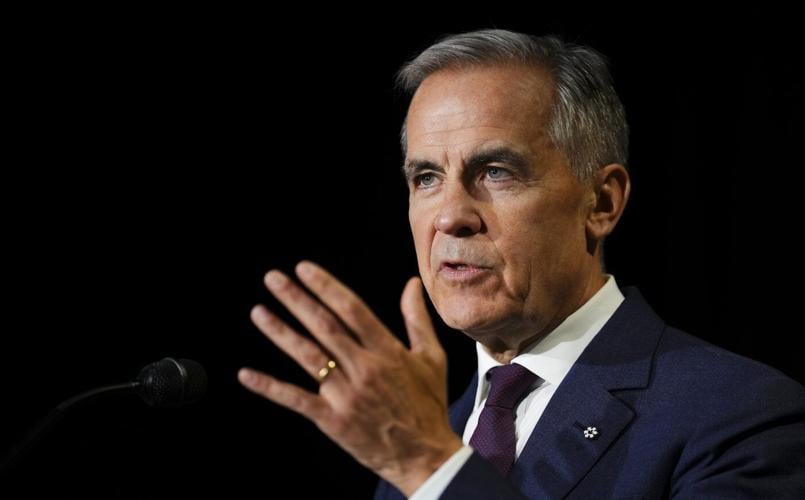
“I reject the characterization that this represents leverage,” Carney stated with precise diplomatic poise regarding his multi-layered negotiating strategy. “It is simply looking at whether it is in our mutual interest to trade more, and if it is not, we have alternative options.”
The prime minister is not issuing crude geopolitical threats; he is calmly describing structural realities to an increasingly cornered American administration. He is informing Washington that Canada’s economic integration with Asian and European markets will proceed regardless of the outcome at the CUSMA negotiating table.
Nevertheless, clear economic asymmetries remain a serious challenge, as seventy-six percent of Canadian goods exports still flowed southward in twenty-four. This intense structural dependence grants Washington massive leverage, and Canadian manufacturers, farmers, and working families are absorbing real economic pain from tariffs right now.
Furthermore, strategic assets that are held in reserve represent potential leverage rather than immediate, legally binding commercial realities. The West Coast pipeline expansions are not fully constructed, the alternative fighter jet contracts remain unsigned, and the midterm outcomes remain inherently unpredictable.
If the Republican party successfully retains its congressional majorities this November despite the tariff disruptions, Trump’s executive leverage will increase. A dominant midterm performance would effectively neutralize the domestic political pressure that currently makes a rapid CUSMA compromise attractive to Washington negotiators.
The strategic calculus of the next thirty-eight days will focus entirely on timing, execution, and psychological endurance between the two capitals. The fundamental question confronting Ottawa is not whether Canada possesses adequate leverage, but precisely when and how aggressively Carney should deploy these cards.
The interaction of these five distinct variables creates a complex political matrix that Washington cannot easily counter with simple tariff threats. While oil risks alienating Midwest governors, critical minerals and fighter jets directly threaten the defense establishment, and pension capital impacts Wall Street.
By targeting diverse, powerful constituencies inside the United States, Canada’s strategy effectively forces domestic American industries to lobby their own government. This internal domestic pressure disrupts the administration’s unified front, transforming corporate leaders into inadvertent advocates for the renewal of the trade pact.
Meanwhile, Canadian trade infrastructure continues to adapt with remarkable agility, preparing for a long-term future characterized by reduced American dependence. The strategic pivot toward global markets is no longer a temporary tactical maneuver, but a permanent rewiring of the nation’s macroeconomic architecture.
The New York Times-style analysis indicates that the historical paradigm of automatic Canadian compliance with American economic mandates is permanently over. Under Carney’s disciplined, institutionalist leadership, Ottawa is conducting its foreign policy with the cold, calculated precision of a sophisticated global asset manager.
The diplomatic chess match in Washington is entering its final, most critical phase as the rigid CUSMA clock continues to tick down. Every move executed by both sides will reverberate across continental supply chains, influencing industrial investments and consumer prices for a generation.
For Canadian citizens and business leaders, the immediate costs of the trade war are being borne with a resilient sense of national purpose. There is a growing collective realization that short-term economic sacrifice is necessary to secure long-term sovereign independence and global respect.
The final agreements signed in the coming weeks will ultimately define the economic geography of North America for the next several decades. In this high-stakes game of continental leverage, Canada has proven that it possesses the structural cards to stand its ground against any superpower.






