The Ghost in the Ledger: How the Specter of a ‘Death Tax’ Is Fracturing Australian Politics
ARMIDALE, Australia — In the sweeping, windswept pastures of New England in northern New South Wales, the generational anxieties of rural Australia have found a volatile new focal point. Following the federal government’s latest budget and structural revenue adjustments, a bitter dispute over inheritance, family wealth, and the boundaries of state taxation has ruptured into the national mainstream.
The political firestorm was ignited when Barnaby Joyce, the combative former National Party leader and veteran regional MP, launched a fierce, uncoordinated public offensive against the ruling Labor government. His rhetoric did not merely dissect specific line items or balance sheets; instead, he invoked one of the most potent and historically radioactive concepts in the country’s political lexicon: the “death tax.”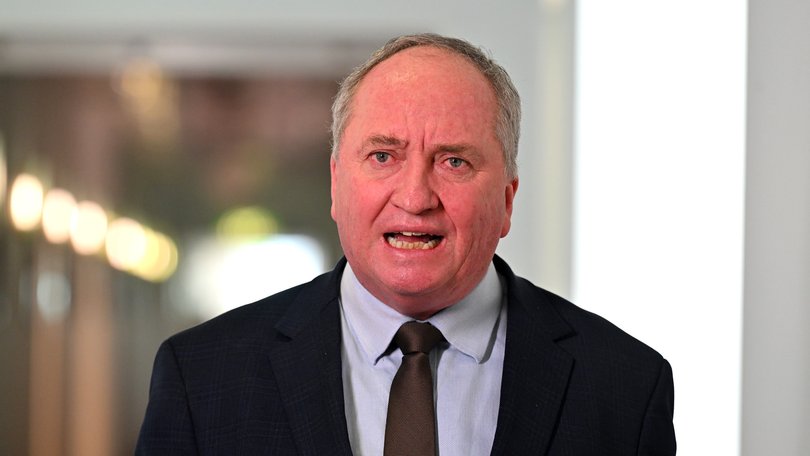
Mainstream economic analysts and government ministers moved swiftly to dismiss the accusations as an engineered piece of political fiction. Yet, the rapid, wildfire-like dissemination of the narrative across regional communities and digital networks suggests that the phrase has tapped into a deep, latent vulnerability within the Australian electorate regarding the long-term security of family assets.
The Architecture of Intergenerational Fear
To understand the velocity with which Joyce’s attack has captured public attention, one must look at the specific economic landscape facing modern Australia. Decades of unceasing real estate appreciation and agricultural land consolidation have transformed family homes and regional properties into multi-million-dollar assets on paper, even as the families living on them grapple with acute, day-to-day cash flow constraints.
In this high-stakes environment, the mere insinuation that the state might seek to intercept wealth at the point of inheritance acts as an immediate political accelerant. Proponents of Joyce’s protectionist view argue that after a lifetime of paying income taxes, goods and services taxes, and localized rates, the imposition of any further levy on accumulated assets is a profound violation of the social contract.
“What we are seeing from Canberra is a slow, creeping hunger to balance the nation’s structural deficit on the backs of hardworking families who want nothing more than to pass down the fruits of their labor to their children,” Joyce declared during a recent, heavily attended community rally in his electorate. “It is a fundamental assault on the Australian dream of intergenerational security.”
The Government’s Defensive Calculus
Inside the executive branch offices at Parliament House in Canberra, the reaction to Joyce’s offensive has been a mix of intense frustration and tactical damage control. Senior Labor ministers have repeatedly taken to the airwaves to emphasize that the government has zero legislative plans, hidden agendas, or structural blueprints to introduce an inheritance tax.

Government strategists contend that the recent adjustments to the tax code are entirely focused on closing corporate loopholes, rebalancing superannuation concessions for high-net-worth individuals, and ensuring multinational compliance. They argue that framing these targeted, structural reforms as a broad-spectrum “death tax” is a cynical exercise in political fearmongering designed to induce panic among vulnerable demographics.
“There is no inheritance tax, there is no asset transfer levy, and there is no death tax being contemplated by this administration,” the Treasurer stated during a combative press conference designed to kill the narrative. “To suggest otherwise is to engage in a deliberate, reckless disinformation campaign that insults the intelligence of the Australian public.”
Despite these explicit denials, the government faces a steep uphill battle in completely neutralizing the anxiety. In the theater of populist politics, an emotional narrative centered on the defense of the family home frequently carries far more weight than technical legislative text, leaving Labor in a permanently defensive posture.
The Shadow of 2019 and Historical Trauma
The current debate does not exist in a vacuum; it is deeply haunted by the ghosts of recent Australian political history. Labor strategists remain acutely aware of the 2019 federal election, where a complex, ambitious suite of tax reforms proposed by then-leader Bill Shorten was successfully branded by the Coalition opposition as a “retirement tax” and a “housing tax.”
That devastating campaign demonstrated that the Australian electorate possesses a remarkably low tolerance for perceived complexity or unpredictability in the tax code, particularly when it relates to personal savings and property. By resurrecting the “death tax” terminology, Joyce is deliberately attempting to trigger that exact historical muscle memory, hoping to recreate the electoral coalition that swept Labor out of contention a seven years ago.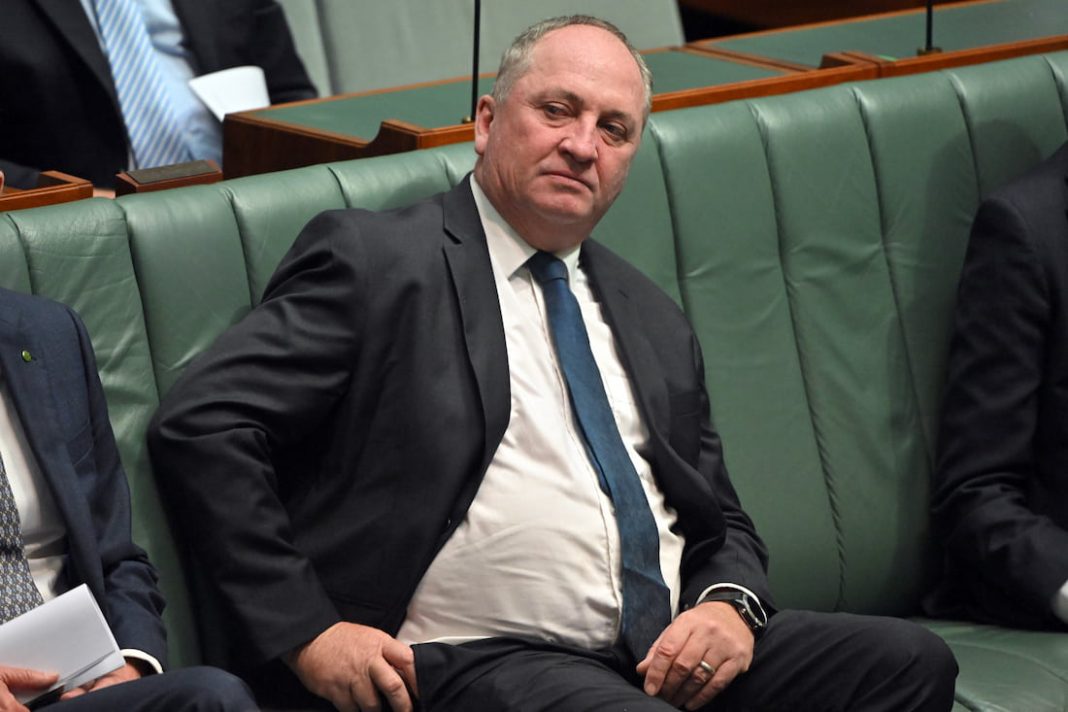
For regional primary producers and multi-generational farming families, the stakes are perceived as existential. Land values have inflated to such a degree that even a modest percentage-based tax at the time of intergenerational transfer could force families to liquidate portions of their holdings just to satisfy a sudden liquidity obligation to the state.
Digital Micro-Targeting and Narrative Control
A critical variable driving the intensity of this current row is the role of decentralized media networks and algorithmic micro-targeting. Unlike the centralized media environment of past decades, the contemporary landscape allows for the instantaneous distribution of unverified political claims directly to targeted, anxious demographics.
Within hours of Joyce’s initial broadside, localized social media groups and farming forums were flooded with user-generated infographics detailing highly speculative scenarios of state asset confiscation. This rapid-fire dissemination has effectively bypassed traditional journalistic filtering, creating self-reinforcing echo chambers where official government denials are viewed not as factual corrections, but as bureaucratic obfuscation.
This fragmentation presents an unprecedented challenge to the traditional two-party system. When a significant portion of the electorate loses faith in institutional assurances, the capacity to conduct rational, evidence-based debates over genuine fiscal policy is severely compromised, giving way to a volatile cycle of preemptive political panic.
The Ultimate Verdict of the Electorate
As the legislative session in Canberra intensifies, the true test of Joyce’s strategy will lie in its capacity to alter primary voting data in critical suburban and regional electorates. If the fear of an impending asset tax takes firm root among middle-income earners, the government’s path to retaining its parliamentary majority becomes extraordinarily narrow.
Ultimately, the fierce argument over Labor’s tax policies highlights a nation caught in a deeper, unresolved conflict regarding the role of the state. It is a fundamental philosophical contest between those who view targeted tax reform as a necessary tool for funding essential public services, and those who see any expansion of revenue-raising mechanisms as an unacceptable overreach into the private wealth of citizens.
The battle lines have been drawn with remarkable clarity across the Australian landscape. While the government continues to rely on the technical accuracy of its legislative text, Barnaby Joyce and his populist allies have successfully shifted the conflict onto the emotional terrain of family legacy—and in the volatile arena of modern democracy, that is a domain where facts alone are rarely enough to win.






