OTTAWA — For decades, the economic relationship between the United States and Canada was viewed by economists as a “quiet miracle”—a seamless, integrated machine that functioned with the reliability of a heartbeat. But this week, that machine didn’t just stall; it ignited.
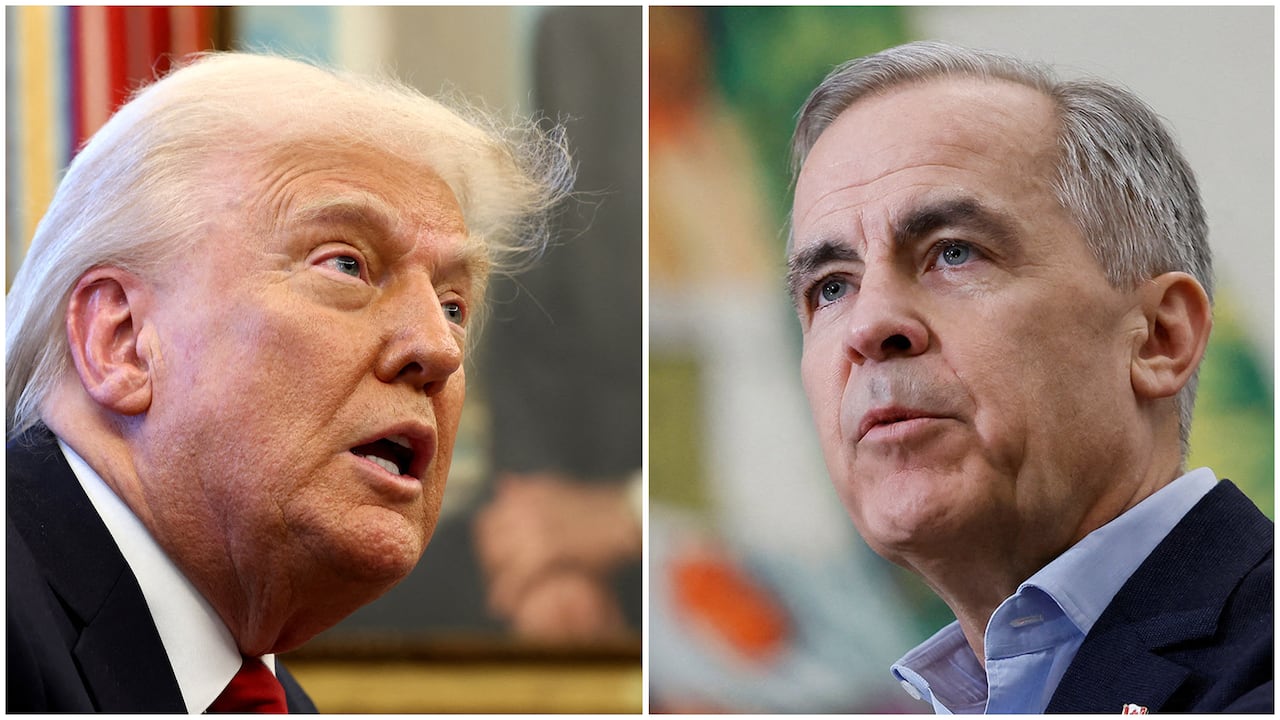
What began as a localized tariff campaign by the Trump administration, designed to shock Canada into submission, has instead triggered a global chain reaction. By underestimating the strategic resolve of Prime Minister Mark Carney, Washington has inadvertently sparked a realignment of international trade and alliances that analysts say may be irreversible. From the boardrooms of Tokyo to the halls of the European Commission, the “Canada Precedent” is being studied as a masterclass in how a middle power can not only survive American economic coercion but thrive by setting the old rules on fire.
The Miscalculation of Leverage
The fatal error at the heart of the White House strategy was a failure of data, or perhaps a failure of imagination. President Trump’s advisors operated on a superficially compelling premise: since Canada sends 75 percent of its exports to the U.S., its dependency was a one-way street.
They assumed that Mr. Carney—a former central banker with a penchant for stability—would choose the “reasonable” path of accommodation over the “reckless” path of resistance. They modeled a scenario where Ottawa would make swift concessions to save its auto and energy sectors.
They were wrong.
Mr. Carney did not treat Canadian vulnerability as a liability; he treated it as a bridge. He recognized that in a deeply integrated production system, a blow to Canada is a blow to the American supply chain. By launching precise retaliatory tariffs and redirecting strategic energy resources toward Asia and Europe, Mr. Carney proved that the “dependency” ran both ways.
Five Arenas of Conflict
The “fire” Canada lit is now burning across five distinct, interconnected arenas, each representing a failure of American strategic modeling:
-
The Alliance Architecture: European partners, long frustrated by Washington’s “America First” unilateralism, have found in Canada a normative framework for resistance. The conversation has shifted from “How do we appease Washington?” to “How do we build a multilateral system that doesn’t require American permission?”
-
The Trading System: By embedding the dispute in formal USMCA and WTO legal filings, Canada has forced a global referendum on the rules-based order. Countries that were waiting for a champion of multilateralism have rallied behind Ottawa.
-
Energy Realignment: The redirection of Canadian oil and gas to Asian markets is not a temporary pivot; it is a structural change. Once long-term supply contracts are signed with Japan or Germany, those resources do not easily return to American refineries.
-
Diplomatic Gravity: Canada has emerged as the intellectual leader of a “Coalition of the Reliable.” This new center of gravity has given the Carney government a diplomatic weight far exceeding its population or GDP.
-
Domestic Political Blowback: The fire has burned inward. American farmers, manufacturers, and auto workers are feeling the heat of Canadian retaliation, creating a “fever” in the Republican base that the administration is struggling to break.

The Historical Echo
Foreign policy scholars are comparing this moment to Charles de Gaulle’s defiance of the American NATO command structure in the 1960s. Just as de Gaulle’s “No” eventually produced a more durable, genuinely multilateral alliance, Mr. Carney’s defiance is forcing a recalibration of how great powers interact with their most integrated partners.
“Great powers make fatal errors when they treat their allies as optional,” noted a senior fellow at the Council on Foreign Relations. “Trump revealed that he viewed the USMCA and NATO as suggestions rather than binding commitments. Once that veil is lifted, the world doesn’t just go back to the way it was. They find new partners.”
Conclusion: A World Reordered
The IMF has already begun successively downward revisions of global growth forecasts, citing the North American trade war as a primary cause. But the damage is not just measured in decimals of GDP; it is measured in lost confidence.
In financial markets and international diplomacy alike, confidence is a currency that is recovered only at great cost. Canada has demonstrated that a smaller partner, when pushed, can activate a global network of alternatives. Whether the eventual result is a more resilient, multipolar order or a fragmented world of competing blocs remains to be seen.
However, one conclusion is inescapable: the assumption that Canada would quietly fold under pressure has been incinerated. The fire is burning, the world is watching, and the “51st state” rhetoric has been replaced by the reality of a sovereign power that knows exactly how much it is worth.






