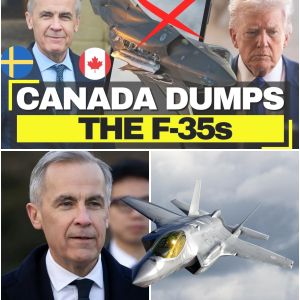
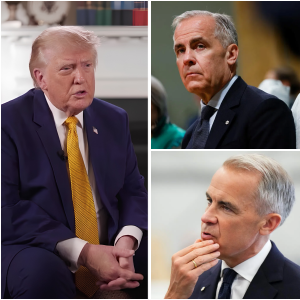
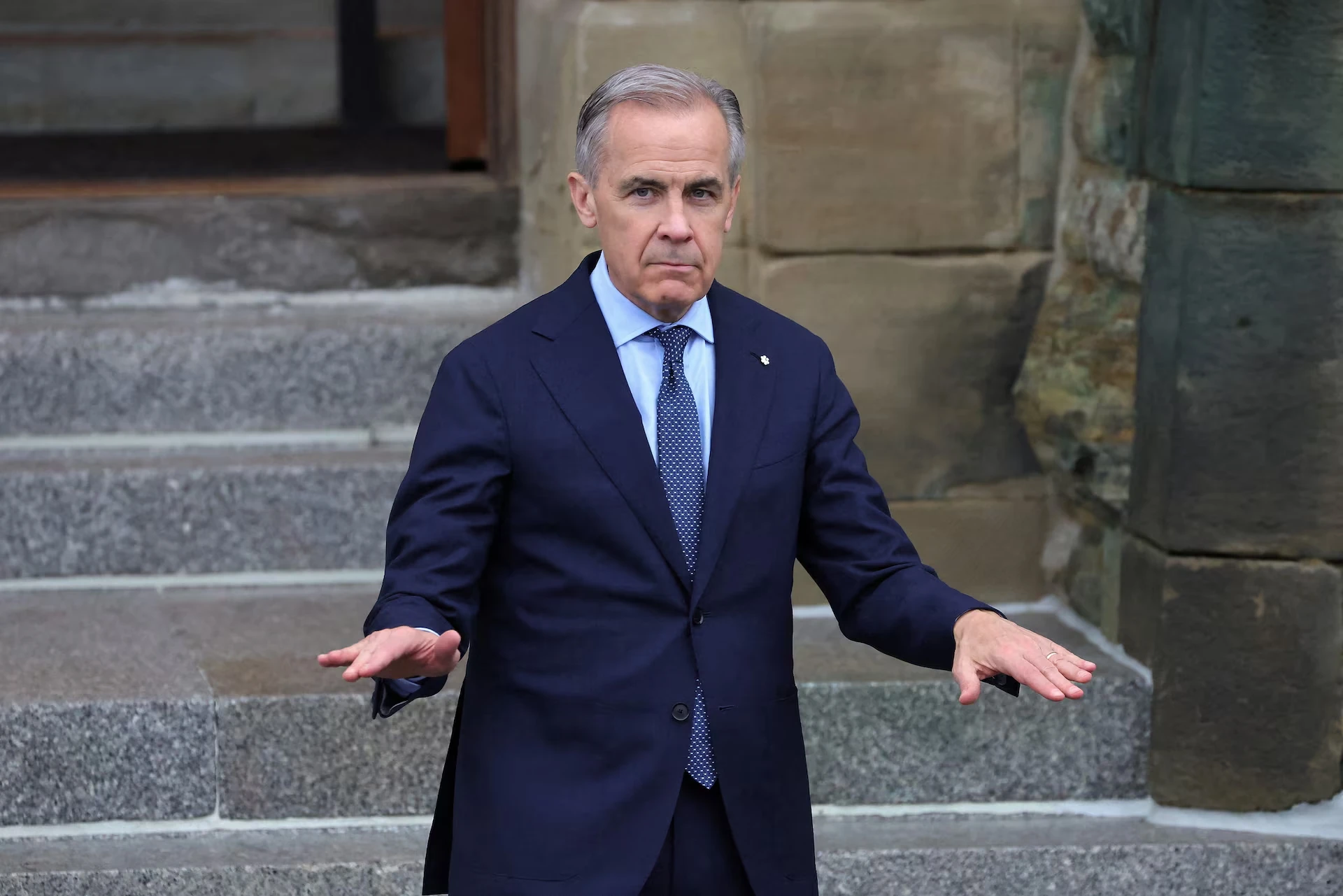
In a rain-soaked press event in Quebec, a moment that was meant to focus on a major industrial investment quickly evolved into something far larger: a statement about sovereignty, strategy, and shifting global alliances. Mark Carney stood before reporters with an unusually calm tone, responding to renewed criticism from Washington and offering a vision of a Canada reshaping its economic and security future.
The backdrop was a new graphite mining initiative, positioned as one of the most significant critical minerals developments in recent years. Yet instead of being the sole focus, the project became a platform for broader geopolitical messaging. Carney linked resource development directly to national resilience, arguing that critical minerals are no longer just an economic asset but a strategic necessity.
Tensions with the United States had reportedly escalated following remarks from the administration of Donald Trump, which questioned Canada’s level of commitment to shared defense responsibilities. In response, cooperation within long-standing defense coordination mechanisms—including aspects of NORAD modernization discussions—was temporarily strained, adding pressure to already sensitive cross-border relations.
Carney addressed these concerns head-on, emphasizing that Canada has already committed more than $40 billion toward upgrading continental defense systems. These investments include radar modernization, Arctic surveillance infrastructure, and next-generation early warning technologies designed to counter evolving missile threats in the North American region.
He stressed that these commitments are not symbolic but structural, aimed at ensuring long-term continental security. According to his framing, Canada is not stepping back from its responsibilities but instead adapting its defense posture to reflect a more complex and technologically advanced threat environment.
At the same time, Carney underscored that Canada is not limiting itself to North American defense partnerships alone. He pointed to growing cooperation within NATO and increasing strategic alignment with European and Indo-Pacific partners. The message was clear: Canada is broadening its alliances rather than narrowing them.
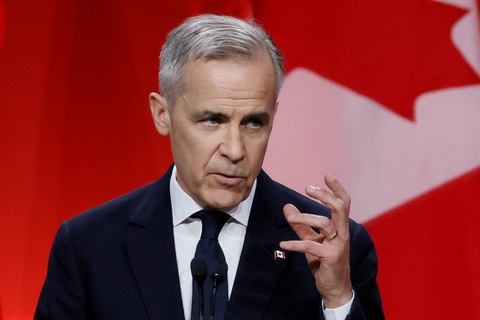
Economic independence was another central theme of the speech. Carney highlighted data suggesting that Canadian exports outside the United States are growing at a faster rate than at any point in the past decade. He suggested that, under current trajectories, non-U.S. trade could potentially double within ten years.
Foreign direct investment was also framed as a key indicator of confidence in Canada’s long-term stability. Carney noted that inflows have reached their highest levels in two decades, placing Canada ahead of many comparable advanced economies in attracting global capital.
A significant portion of his remarks focused on critical minerals, particularly graphite. The newly announced mining project was described as a cornerstone of Canada’s emerging industrial strategy. Graphite, essential for electric vehicle batteries, energy storage systems, and defense applications, is increasingly seen as a resource of geopolitical importance.

Carney argued that control over such resources will define the next era of global competition. By scaling up domestic production and securing international supply agreements, Canada aims to position itself as a reliable and stable supplier in an increasingly fragmented global market.
The graphite project itself is expected to generate billions in long-term economic value and create thousands of high-skilled jobs. Beyond employment, however, it was framed as part of a broader transition toward a “strategic economy”—one that prioritizes resilience over short-term efficiency.
Observers at the scene noted that Carney’s delivery remained steady despite heavy rain disrupting the event. Rather than pausing or shifting tone, he continued speaking with minimal interruption, reinforcing an image of control and composure under pressure.
This contrast in leadership style was repeatedly noted in political commentary. While Trump-era rhetoric has often been characterized by confrontation and escalation, Carney’s messaging emphasized planning, diversification, and institutional stability.
The implicit comparison between Ottawa and Washington was difficult to ignore. Without directly escalating rhetoric, Carney presented Canada as a country responding to global volatility through long-term economic restructuring rather than reactive policy shifts.
He also suggested that overreliance on any single trading partner introduces strategic vulnerability. While the United States remains Canada’s largest economic partner, the speech implied that diversification is no longer optional but necessary for national resilience.
In this context, the graphite initiative becomes more than an industrial project. It represents a shift toward securing supply chains for technologies that underpin both economic growth and national defense capabilities.
Analysts have interpreted these developments as part of a broader recalibration of Canada’s global positioning. Rather than distancing itself from the United States, Canada appears to be hedging its dependencies while strengthening parallel networks of trade and security.
This approach reflects a wider global trend in which mid-sized economies seek to reduce exposure to geopolitical shocks by expanding partnerships and investing in domestic capacity for strategic materials and technologies.
The speech concluded without dramatic declarations, but its implications were widely noted. Carney’s framing suggested a Canada preparing for a more fragmented international order—one where resilience, not alignment, determines influence.
Whether this marks a temporary policy shift or a longer-term strategic transformation remains uncertain. What is clear, however, is that the tone of Canada’s economic and security messaging is evolving—and the ripple effects may extend far beyond Ottawa and Washington.