Australia’s alliance with the United States has entered one of its most uncertain periods in decades, as growing tensions in the Middle East collide with rising doubts about the future of AUKUS, national sovereignty, and Canberra’s long-term strategic direction.
What was once considered an unshakable partnership is now facing questions that would have seemed politically impossible only a few years ago.
Can Australia still fully rely on Washington?

Would the United States truly come to Australia’s defence in a future crisis?
And perhaps most explosively of all — is AUKUS slowly collapsing before it has even fully begun?
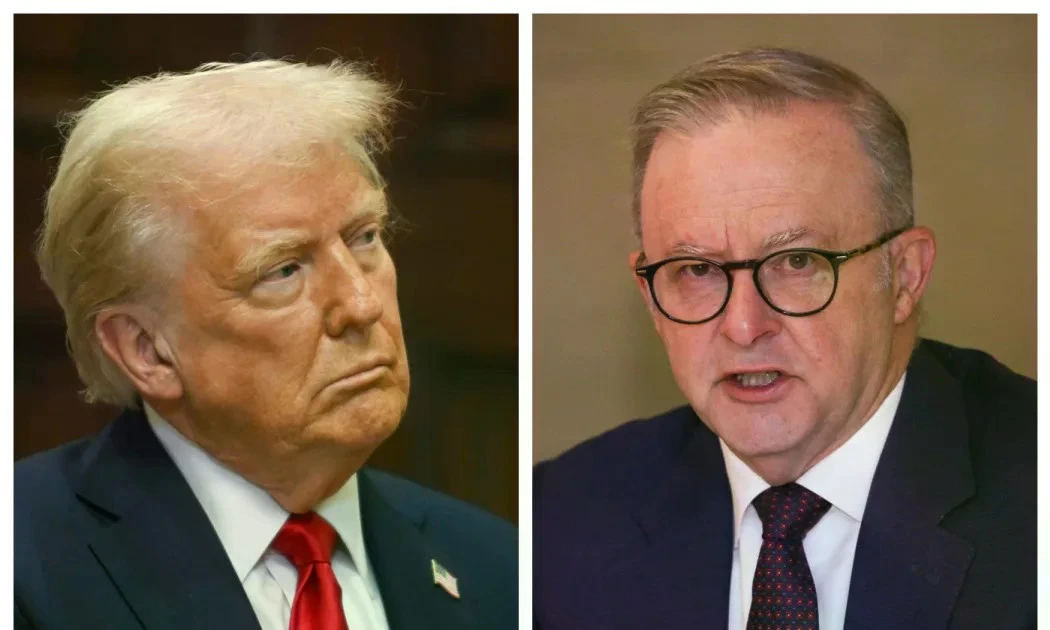
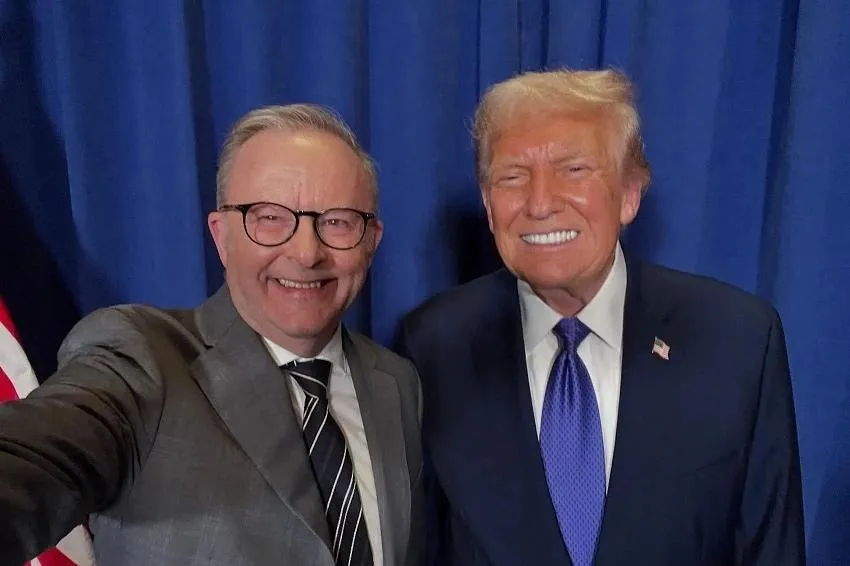
Those questions have intensified following Prime Minister Anthony Albanese’s cautious response to escalating conflict involving Iran and the United States. While Canberra has continued publicly reaffirming the importance of the alliance, the government has notably stopped short of offering direct military backing for potential American operations in the region.
That hesitation may appear small on the surface.
But according to some analysts, it could represent a historic turning point in the strategic relationship between Canberra and Washington.
Counter-insurgency expert Dr Allan Orr delivered one of the starkest warnings yet, arguing the Albanese government’s position may have fundamentally altered how Australia is viewed inside American conservative political circles.
“I think Anthony Albanese is the first prime minister to break the American alliance,” Dr Orr told News.com.au.
“I don’t know if we can come back from this. It’s the first time we haven’t automatically gone to war with the Americans.”
The comments immediately ignited fierce debate across Australia’s defence and political communities.
For decades, Australia’s alliance with the United States has operated on an almost automatic assumption of strategic alignment. From Vietnam to Iraq to Afghanistan, Canberra repeatedly stood beside Washington in major conflicts, reinforcing the perception that Australia was among America’s most dependable military partners.
But the world is changing rapidly.
The wars of the post-Cold War era have become deeply unpopular across much of the Western public. Economic instability, inflation, energy shocks, and geopolitical fragmentation are reshaping political calculations everywhere — including inside Australia.
And now, for the first time in generations, a growing number of Australians are openly asking whether unconditional alignment with Washington still serves Australia’s national interests.
Dr Orr believes the consequences could stretch far beyond the current Middle East crisis.
“You’ll probably see AUKUS dead from this,” he warned.
“The conservatives in America will remember this. This is going to outlast Trump.”
Those words strike directly at the heart of Australia’s future defence planning.
AUKUS — the trilateral defence pact between Australia, the United States, and the United Kingdom — was once presented as the defining strategic agreement of the century for Australia. Under the deal, Canberra would eventually acquire a fleet of advanced nuclear-powered submarines while deepening military integration with both Washington and London.
At the time, supporters described the pact as essential for deterring China’s growing military influence in the Indo-Pacific.
Critics, however, warned it would bind Australia even more tightly to American strategic priorities while exposing the country to enormous financial, industrial, and geopolitical risks.
Years later, those concerns are becoming harder to dismiss.
The projected cost of AUKUS has continued to climb dramatically. Questions remain over whether Australia has the industrial workforce, infrastructure, or long-term political commitment necessary to sustain such an ambitious program.
At the same time, uncertainty surrounding America’s own political stability is growing.
Donald Trump’s return to power has intensified concerns across allied capitals about whether the United States remains a predictable strategic partner.
For Dr Orr, Australia’s hesitation over Iran could further weaken trust inside Washington.
“At the moment, we could not rely on America to come to our aid if we needed it,” he said.
“Trump would say, ‘You weren’t there for us on Iran, so why would we be there for you?’”
That fear — that alliances may increasingly become transactional rather than automatic — now sits at the center of Australia’s strategic debate.
But not everyone believes the alliance is nearing collapse.
University of Sydney international politics expert Dr Stuart Rollo argues that predictions of AUKUS disintegrating are being overstated.
“It will have little or no impact on AUKUS or the US-Australia alliance more broadly,” Dr Rollo said.
“While American administrations always like to have the public support of junior partners in their wars of choice, they are fundamentally pragmatic about alliances and strategy.”
According to Dr Rollo, Australia’s true strategic value to Washington has little to do with Iran and everything to do with China.
“Australia is the southern anchor of the American containment strategy against China in the Pacific,” he explained.
Its geography, intelligence capabilities, military infrastructure, and access to the Indo-Pacific make Australia central to Washington’s long-term competition with Beijing.
From that perspective, Canberra’s position on Middle Eastern conflicts may be frustrating for some American conservatives, but ultimately not decisive.
“The Australian-US alliance will be strong for as long as the Americans see good use for Australia in their Pacific strategy,” Dr Rollo said.
Yet even that argument reflects a growing reality many Australians are beginning to confront more openly.
Australia’s security relationship with the United States is increasingly being defined not by shared values alone, but by strategic utility.
And that realization is changing the national conversation.
The deeper issue now emerging is whether Australia should continue building its defence posture almost entirely around American power — or whether it must begin preparing for a future where US support can no longer be assumed.
Dr Orr believes the country eventually faces only two realistic options.
“This one foot in, one foot out strategic policy with America has run its course,” he argued.
“You either go into a security treaty that’s triggered automatically by one side or the other — no questions asked — or you develop nuclear weapons.”
The statement is controversial, but it reflects a broader shift occurring across strategic circles globally.
Countries that once relied heavily on American security guarantees are increasingly reconsidering what happens if those guarantees weaken, become conditional, or disappear entirely.
Europe is debating strategic autonomy.
Japan is dramatically expanding defence spending.
South Korea is openly discussing nuclear deterrence.
And now similar conversations are beginning to emerge inside Australia.
Dr Rollo, however, rejects the idea that the choices are so extreme.
“Such choices are rarely binary,” he said.
Still, even he acknowledged that support for greater sovereign defence capability — including potentially nuclear options in the future — is likely to grow as confidence in the alliance declines.
Instead of nuclear weapons, Dr Rollo points toward strategies centered around asymmetric defence.
That includes expanding missile systems, drones, cyber warfare capabilities, undersea surveillance, and stronger regional partnerships with countries such as Indonesia and Japan.
The goal would be to make Australia harder to threaten without becoming entirely dependent on a single great power.
This is where the debate over AUKUS becomes even more complicated.
Supporters argue the submarine deal strengthens deterrence and guarantees access to advanced military technology that Australia could never develop alone.
Critics argue it risks locking Australia into decades of dependence on American systems, logistics, maintenance, intelligence, and political decision-making.
Dr Rollo was blunt in his assessment.
“Pillar 1 of AUKUS is a major strategic liability for Australia,” he said.
“It is the most expensive and complex weapons acquisition in Australian history.”
More importantly, he warned the program could compromise Australia’s sovereign ability to independently equip, maintain, and direct its own military forces.
That criticism is increasingly resonating with parts of the Australian public.
Many now question whether the country is sacrificing too much strategic independence in exchange for promises that may take decades to fully materialize
Others argue Australia has little choice.
China’s military expansion continues accelerating.
Regional tensions remain high.
And without American backing, Australia could find itself dangerously exposed in a far more unstable Indo-Pacific.
That fear explains why the alliance debate remains so emotionally and politically charged.
Because underneath every argument about submarines, treaties, or Iran lies a much larger question:
What kind of country does Australia want to be in the emerging world order?
A fully integrated junior partner inside an American-led security system?
Or a more independent middle power capable of balancing relationships while defending its own sovereignty?
For now, there are no easy answers.
The alliance remains intact.
AUKUS remains official policy.
And both Canberra and Washington continue publicly emphasizing the strength of their partnership.
But beneath the diplomatic language, something is clearly shifting.
The unquestioned certainty that defined the alliance for generations is beginning to erode.
Not necessarily collapsing overnight.
But weakening slowly under the pressure of geopolitical change, domestic political divisions, economic uncertainty, and a world that no longer feels as stable as it once did.
Whether the Iran conflict becomes merely another disagreement between allies — or the moment historians eventually identify as the beginning of a new strategic era for Australia — remains unknown.
What is certain is that the debate is no longer theoretical.
It has already begun.