A quiet but potentially historic transformation is unfolding across Europe.
For decades, European governments, institutions, and businesses have relied heavily on American technology giants for everything from internet searches and office software to cloud computing and digital communications. Google became synonymous with search. Microsoft dominated workplace productivity. U.S.-based cloud providers stored vast amounts of European data.
Now, Europe is taking concrete steps to reduce that dependence.
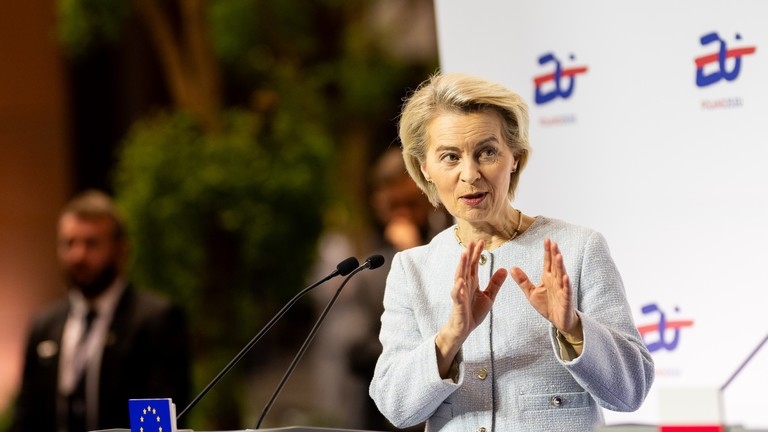
In what many analysts are calling a watershed moment for European digital sovereignty, several major initiatives launched in June 2026 are signaling a new direction—one in which Europe seeks greater control over its own technological future.
At the center of the shift is a growing belief among European policymakers that technological independence is no longer simply an economic issue. It has become a matter of security, sovereignty, and geopolitical resilience.
The most symbolic move came from the European Parliament, which recently replaced Google as its default search platform with Qwant, the French search engine known for its privacy-focused approach and compliance with European data protection standards.
While the practical impact of the decision may be limited in the short term, its political significance is difficult to ignore.
For supporters, the move represents a clear message: Europe intends to build and support digital infrastructure that operates according to European laws, European values, and European strategic interests.
At nearly the same time, the European Commission unveiled its new Tech Sovereignty Package, a broad initiative designed to encourage the development of domestic alternatives to foreign digital services.
Officials described the package as part of a long-term effort to strengthen Europe’s technological competitiveness while reducing vulnerabilities linked to excessive dependence on external providers.
The timing is no coincidence.
Over the past several years, concerns have steadily grown among European leaders regarding data security, foreign legal jurisdiction, and the strategic risks associated with relying on a handful of non-European technology corporations.
Those concerns intensified following reports that Microsoft had provided information related to Dutch civil servants under legal obligations stemming from U.S. legislation.
Although such data-sharing arrangements are governed by complex legal frameworks, the incident triggered renewed debate throughout Europe about who ultimately controls sensitive information and which laws take precedence when conflicts arise.
For many policymakers, the episode served as a warning.
If critical government communications, public administration systems, and sensitive national data remain dependent on foreign technology providers, Europe could find itself vulnerable to decisions made outside its borders.
That concern is helping drive a broader effort to develop alternatives across nearly every major sector of the digital economy.
One of the most closely watched developments is the launch of Euro Office, scheduled for June 9.
Created by a consortium of European technology companies, the platform aims to provide a fully open-source alternative to Microsoft 365.
Developers say the software will include familiar tools for word processing, spreadsheets, presentations, collaboration, and document management while ensuring that data remains under European control.
Supporters argue that open-source architecture offers greater transparency, flexibility, and security compared to proprietary systems controlled by multinational corporations.
Critics, however, question whether European alternatives can realistically match the scale, functionality, and ecosystem integration offered by established American platforms.
Yet momentum appears to be building.
France has emerged as one of the strongest advocates of technological sovereignty.
Government agencies have accelerated plans to migrate parts of their infrastructure from Windows-based systems toward Linux solutions. Officials have also explored alternatives to Microsoft Teams and other collaboration tools, favoring domestic platforms whenever feasible.
The French government argues that reducing dependence on foreign technology providers is consistent with broader national objectives related to strategic autonomy.
Similar discussions are taking place across Germany, the Netherlands, Denmark, Austria, and several Nordic countries.
In many cases, governments are evaluating whether critical public services should rely on software and infrastructure controlled by companies operating under foreign jurisdictions.
The debate extends far beyond search engines and office software.
European leaders increasingly view cloud computing, artificial intelligence, digital payments, cybersecurity, telecommunications, semiconductor production, and satellite systems as strategic assets that require stronger domestic capabilities.
As a result, substantial investments are being directed toward European alternatives in each of these sectors.
Supporters believe the effort could stimulate innovation, create jobs, strengthen competitiveness, and ensure that Europe remains a major technological actor in an increasingly multipolar world.
They argue that Europe cannot claim genuine strategic autonomy while remaining dependent on foreign technology for essential digital infrastructure.
Some policymakers compare the challenge to energy security.
Just as Europe has sought to diversify energy supplies and reduce external vulnerabilities, many now believe similar principles should apply to digital systems.
Not everyone agrees.
Technology companies and some economists warn that excessive fragmentation could increase costs, reduce efficiency, and slow innovation.
They argue that the global technology ecosystem benefits from interoperability, scale, and international collaboration.
According to critics, replacing established platforms solely for political reasons could create unnecessary complexity while offering uncertain benefits.
Nevertheless, the political momentum behind digital sovereignty appears stronger than ever.
Growing geopolitical competition between major powers, increasing concerns about cybersecurity, and ongoing disputes over data governance have transformed what was once a niche policy discussion into a central strategic priority.
The result is a Europe that is becoming increasingly determined to chart its own technological path.
Whether initiatives such as Qwant, Euro Office, European cloud services, and domestic AI projects ultimately succeed remains to be seen.
What is already clear, however, is that June 2026 may be remembered as a turning point.
Not because Europe suddenly abandoned American technology overnight.
But because it marked the moment when Europe began seriously building the foundations of an alternative digital ecosystem—one designed, governed, and controlled within Europe itself.
For supporters of digital sovereignty, this is not merely a software transition.
It is the beginning of a new chapter in Europe’s quest for strategic independence in the digital age.






