Trump Faces Chilly Reception at United Nations as Global Response to Iran Situation Diverges

What was expected to project strength instead revealed a more complicated global reality.
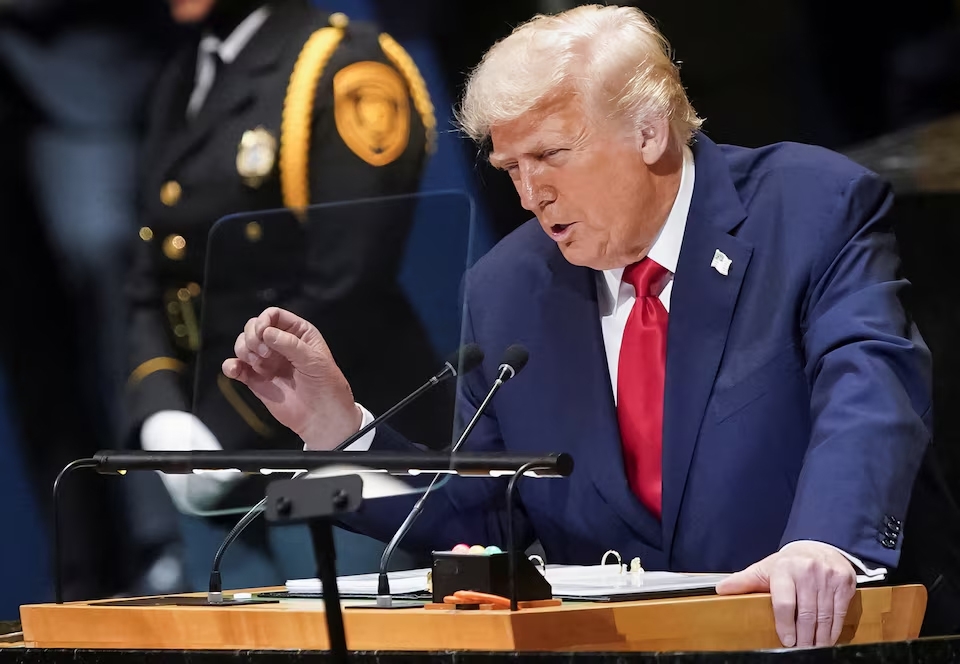
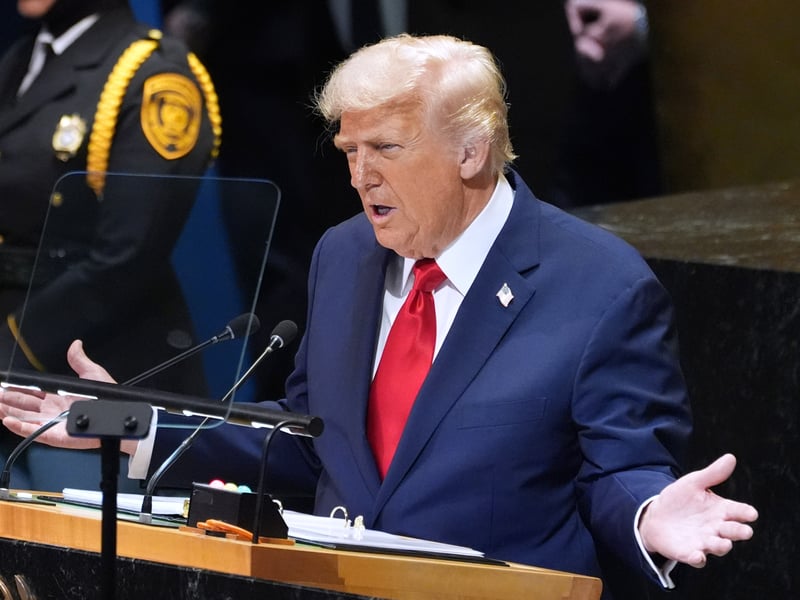
President Donald Trump’s recent appearance at the United Nations, following U.S. actions involving Iran, was met with a noticeably restrained response from international leaders—highlighting growing differences between Washington and its traditional allies.
Rather than the unified backing often seen in past moments of global tension, the atmosphere reflected caution, distance, and, in some cases, quiet disagreement.
This reaction aligns with broader public sentiment across key allied nations. Recent polling suggests that support for U.S. involvement in Iran remains significantly low. In Canada, net approval stands at minus 27 points. In the United Kingdom, it is minus 34. Japan records an even steeper decline at minus 73.
These figures mark a notable shift. Compared to public opinion during the early stages of the Iraq conflict in 2003, support has dropped further across all three countries. Analysts say this reflects a deeper hesitation among global audiences toward overseas interventions.
For leaders in democratic nations, public opinion plays a crucial role. Aligning too closely with unpopular international actions can carry political consequences at home—making cooperation a far more delicate decision.
That dynamic is already visible in recent responses. Germany has emphasized that the situation does not fall under NATO’s direct responsibility. Italy has called for diplomatic solutions. Australia has declined to expand its involvement in the Strait of Hormuz. Estonia, in a pointed remark, suggested expectations for support may be “a bit much.”
At the same time, President Trump has maintained that many allies privately agree with the U.S. position, even if public actions suggest caution. He has also stressed that the United States is capable of handling the situation independently.
“We don’t need any help,” Trump said, while also expressing surprise that more countries have not stepped forward.
The contrast between those statements and ongoing outreach for international support has drawn attention. Earlier remarks from the president suggested the situation was already under control. Now, several weeks in, the administration appears more open to broader cooperation.
Observers say this shift highlights a key challenge in modern diplomacy: influence alone does not guarantee alignment.
At the United Nations, that reality appeared especially visible. Instead of strong, unified backing, the response reflected a more measured and reserved tone. Diplomats described the moment as one defined less by consensus and more by careful observation.
Beyond the immediate situation, broader perceptions of the United States may also be evolving. Surveys indicate that favorable views of the U.S. have declined across many countries compared to the previous year. Analysts suggest this trend could influence how future international efforts are received.
For Trump, whose approach to foreign policy has often emphasized strength and decisiveness, the current environment presents a more nuanced test. The expectation that assertive action would lead to alignment is being met with a more complex global response.
What is emerging instead is a shift in how alliances function. In today’s interconnected world, public opinion, domestic politics, and long-term strategy all play a role in shaping decisions.
As the situation continues to unfold, the gap between U.S. expectations and allied responses remains a defining feature.
For now, the scene at the United Nations offers a clear snapshot of that moment: not a unified front, but a world watching carefully, weighing its options, and choosing its steps with caution.






