While Trump Called Canada the 51st State Again, Mark Carney Quietly Changed the Entire Conversation
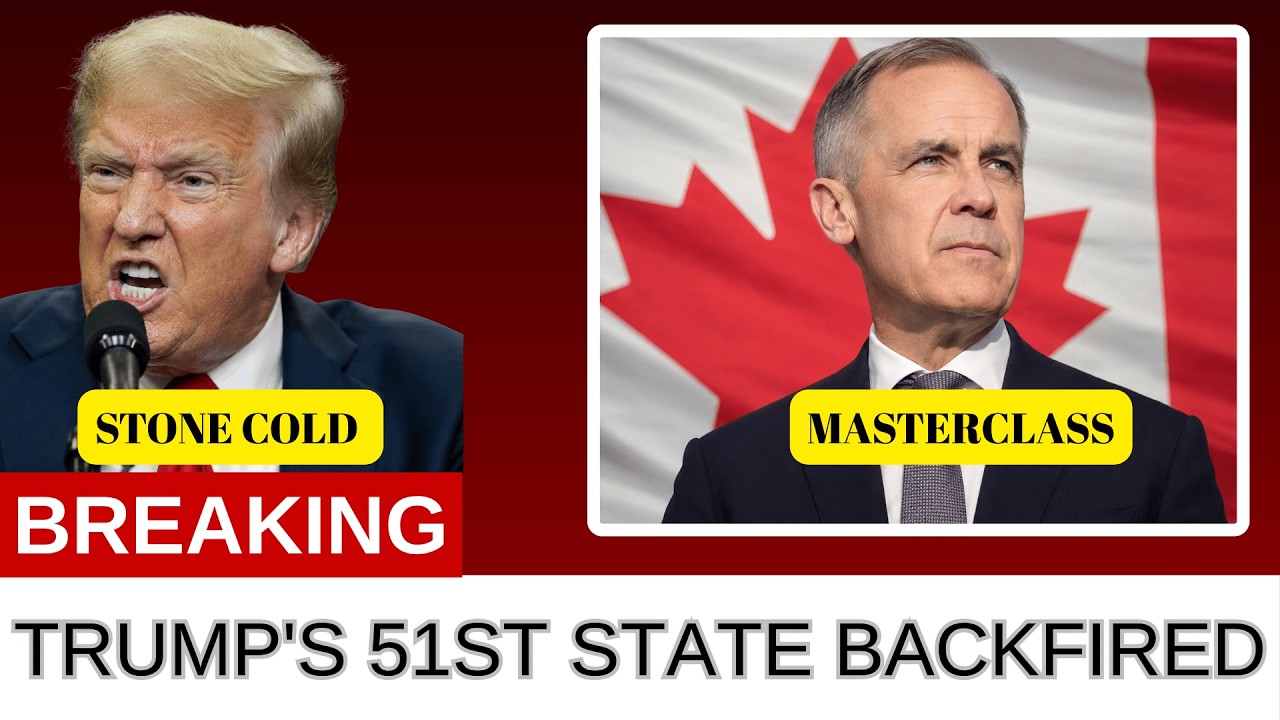
Something unusual happened in Canada this week. While political commentators expected outrage, confrontation, and another round of diplomatic drama, Prime Minister Mark Carney responded to a provocative American message with something far more powerful: restraint.
For months, the relationship between Ottawa and Washington has been tested by trade disputes, political pressure, and repeated references to Canada as America’s “51st state.”
When former President Donald Trump revived that rhetoric once again, many expected Canada’s leadership to react aggressively.
Instead, Carney chose a different path.
The controversy began after economic data showed Canada had entered what economists describe as a technical recession. Headlines quickly spread across North America, creating concerns about growth, jobs, and household finances.
For political opponents, the numbers looked like an opportunity.
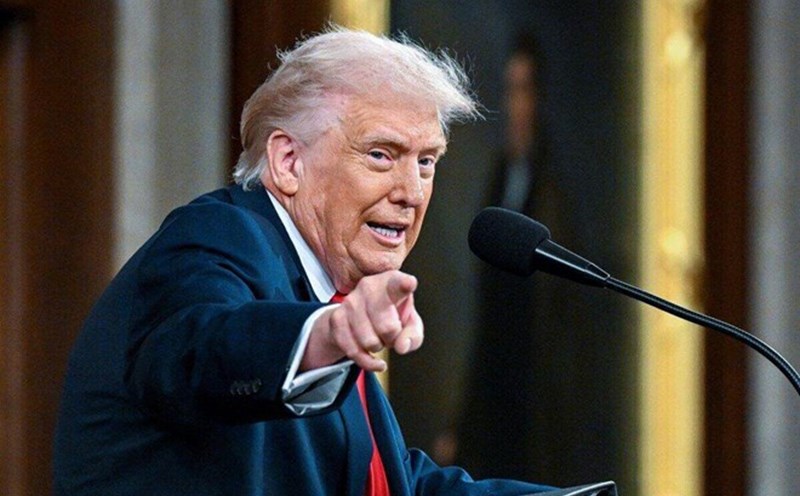
Trump seized on the moment almost immediately. On social media, he once again referenced Canada as the “51st state,” reviving a phrase that has repeatedly irritated Canadians across the political spectrum.
What made this episode different was what happened next.
The message was amplified by U.S. Ambassador Pete Hoekstra, giving the comments additional visibility and raising questions about whether Washington intended to escalate tensions.
Canadian politicians from different parties quickly united in opposition.
Prime Minister Carney rejected the idea. Ontario Premier Doug Ford rejected it. Opposition leader Pierre Poilievre rejected it. In a country often divided on major issues, there was remarkable consensus.
Canada is not for sale.
Yet while media attention focused on political rhetoric, another story was unfolding behind the scenes.
Canada’s Trade Minister, Dominic LeBlanc, was already in Washington holding discussions about the future of North American trade cooperation.
That detail mattered.
The review of the Canada-United States-Mexico trade agreement represents one of the most important economic negotiations facing Canada this decade. Hundreds of billions of dollars in trade depend on maintaining a stable framework.
Carney appeared to understand that reality better than anyone.
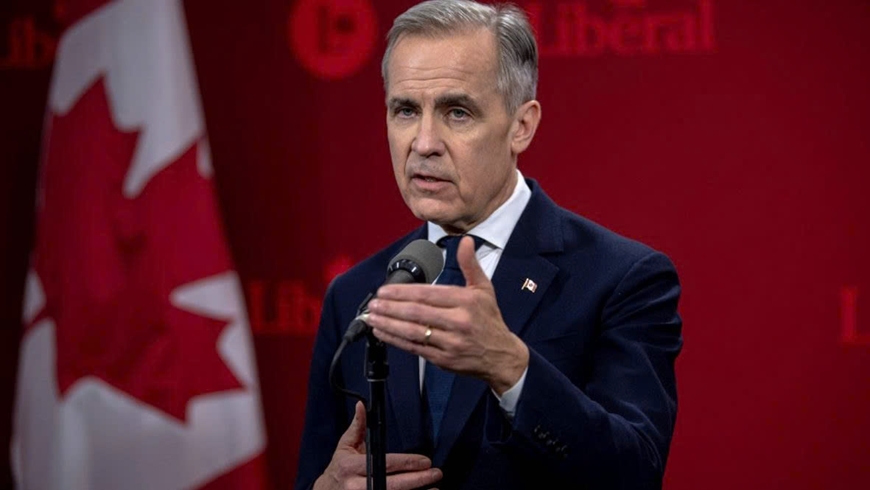
When reporters asked about Trump’s comments, he refused to engage emotionally. He described Trump as an active social media user and emphasized that Canada would not react to every online post.
At first glance, the response seemed understated.
In reality, it may have been one of the most strategic political decisions of the year.
Modern politics often rewards outrage. Every reaction generates headlines, social media engagement, and another cycle of public confrontation.
Carney declined to participate.
By refusing to elevate the comments, he shifted attention away from political theater and back toward economic priorities.
The contrast between the two approaches was striking.
One side focused on headlines and social media exchanges. The other focused on negotiations, trade agreements, and long-term economic interests.
That distinction reveals something larger happening inside Canadian policymaking.
Ottawa increasingly appears focused on reducing vulnerability while strengthening Canada’s position in a more uncertain international environment.
Recent discussions about supply chains, industrial policy, defense procurement, and economic diversification all point toward the same objective.
Resilience.
Canadian officials understand that geopolitical competition is intensifying. Global trade patterns are shifting. Strategic industries are becoming matters of national security.
In that environment, maintaining productive relationships matters more than winning short-term political arguments.
The Canada-U.S. relationship remains one of the most integrated economic partnerships in the world.
Canadian energy supports American industries. Canadian minerals feed American manufacturing. Canadian steel and aluminum remain essential to supply chains that cross the border every day.
Neither country can easily separate itself from the other.
That reality gives Canada more leverage than many observers assume.
It also explains why Ottawa appears increasingly determined to approach disputes calmly rather than emotionally.
The goal is not confrontation.
The goal is protecting Canadian interests while preserving a relationship that remains vital to both economies.
Perhaps the most revealing moment came when reporters asked whether Ambassador Hoekstra should be expelled from Canada for amplifying Trump’s remarks.
Many leaders would have embraced the opportunity.
Carney answered with a simple “No.”
It was a response that surprised critics and supporters alike.
But it reflected a broader philosophy that seems to be emerging from his government: keep communication channels open, avoid unnecessary escalation, and focus on outcomes rather than symbolism.
In geopolitical terms, that approach may prove more effective than any dramatic speech.
Because relationships between countries rarely change overnight.
They evolve through negotiations, economic decisions, strategic partnerships, and countless choices made far from television cameras.
As Canada prepares for critical trade discussions in the months ahead, that reality may become increasingly important.
Trump’s rhetoric generated headlines. Carney’s response generated less attention.
Yet history often remembers results more than reactions.
And as Canada navigates an increasingly complex world, the real story may not be who shouted the loudest.
The real story may be whether calm strategy, economic leverage, and long-term thinking ultimately prove stronger than political noise.






