The “51st State” Debate May Be Hiding a Much Bigger Shift in Canada–US Relations
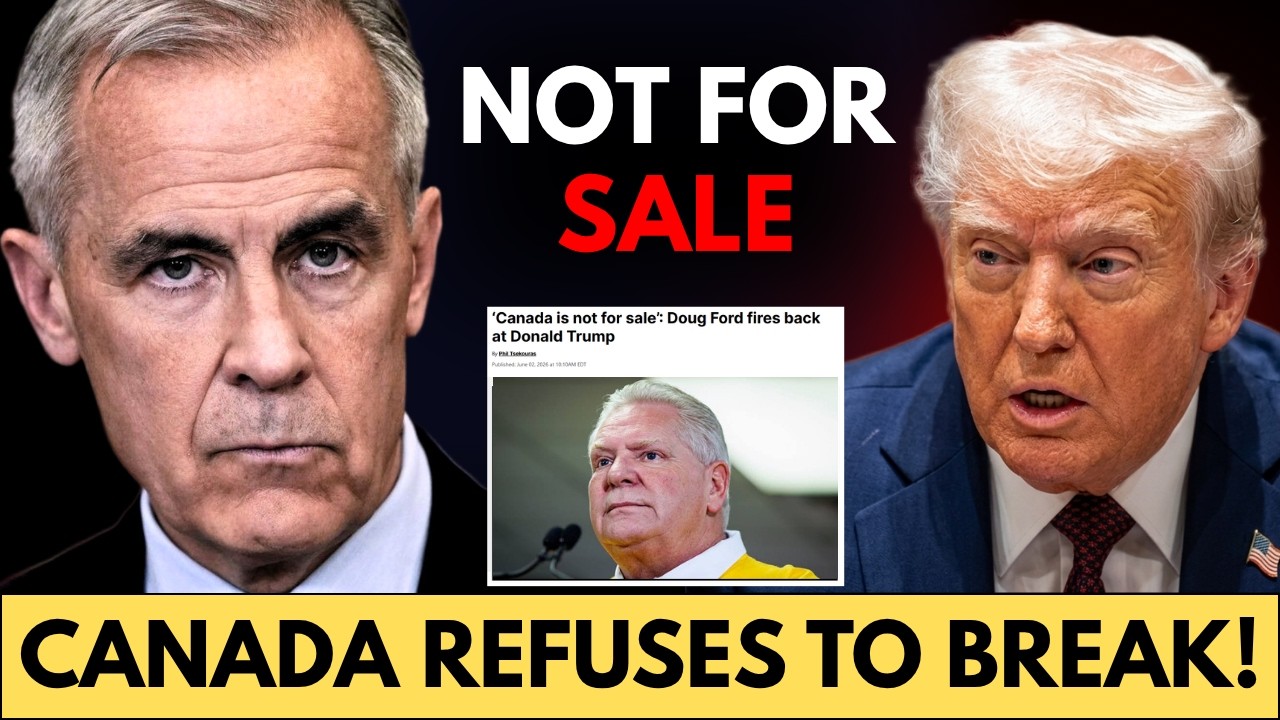
Something happened this week that immediately grabbed headlines across Canada.
US President Donald Trump once again referred to Canada as the “51st state,” reviving a phrase that many Canadians had hoped was finally behind them.
At first, the reaction was predictable.
Most Canadians rolled their eyes. They had heard the comment before, and few took it seriously as an actual policy proposal.
But this time felt different.
The reason wasn’t necessarily Trump’s comment itself. It was what happened afterward.
The rhetoric was echoed by US Ambassador Pete Hoekstra, a move that surprised many observers. Diplomats are generally expected to reduce tensions between allied nations, not amplify politically sensitive remarks.
Almost instantly, Canadian leaders responded.
Prime Minister Mark Carney rejected the idea. Ontario Premier Doug Ford rejected it. Opposition leader Pierre Poilievre rejected it.
For a country known for political disagreements, the response was remarkably unified.
Canada is not for sale.
Yet while public attention focused on the political controversy, another conversation was quietly developing behind the scenes.
And that conversation may prove far more important than any headline.
Reports began circulating that Canada could be exploring ways to reduce long-term dependence on certain American defense systems while expanding discussions with European partners.
No major policy shift has been officially announced.
But the fact that the discussion is happening at all reveals something significant.
A question that once seemed almost unnecessary is now being openly debated.
How dependent should Canada be on the United States?
That question extends far beyond military procurement.
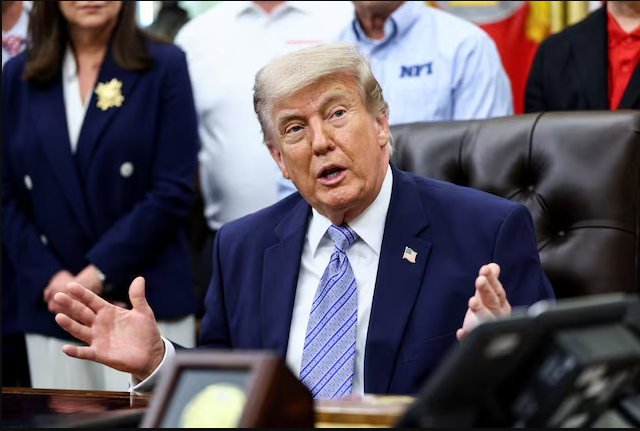
It touches trade, supply chains, energy security, technology, critical minerals, and Canada’s broader place in the world.
For decades, the relationship between Canada and the United States was built on a simple assumption.
The partnership would remain stable, predictable, and mutually beneficial.
The world’s longest undefended border became a symbol of that trust.
Economic integration deepened year after year.
Canadian industries became closely connected to American markets.
Supply chains crossed the border so frequently that many products effectively became North American rather than Canadian or American.
The arrangement generated enormous prosperity.
But recent years have exposed vulnerabilities within that model.
Trade disputes have become more frequent.
Tariffs have reappeared.
Political disagreements have become increasingly public.
Economic decisions in Washington now have immediate consequences for businesses and workers across Canada.
That reality has not gone unnoticed in Ottawa.
Canadian policymakers appear to be asking a question that many middle powers are asking today.
What happens when a country becomes too dependent on a single partner?
The answer is not necessarily separation.
Nor is it confrontation.
The answer, increasingly, appears to be diversification.
Canada is not seeking to replace the United States.
That would be unrealistic.
The United States remains Canada’s largest trading partner, closest ally, and most important economic relationship.
But Canada is clearly showing greater interest in creating additional options.
Whether through new trade partnerships, expanded defense cooperation with Europe, or deeper engagement with Indo-Pacific markets, Ottawa appears determined to broaden its strategic flexibility.
The timing is difficult to ignore.
While Canada has faced tariff pressure and political criticism from Washington, the United States has also encountered growing domestic challenges.
American businesses have warned about uncertainty.
Manufacturers have raised concerns about rising costs.
Consumers have worried about inflation and affordability.
Several policies have faced adjustments as those pressures intensified.
The result is a more complicated picture than many assumed only a few years ago.
For decades, conventional wisdom suggested that Washington held nearly all the leverage.
Today, leverage appears increasingly mutual.
Canada depends heavily on access to American markets.
But the United States also benefits from Canadian energy, critical minerals, manufacturing capacity, and security cooperation.
Neither side can easily ignore the other.
That is why the “51st state” debate matters less than many people think.
The real story is not about annexation.
The real story is about trust.
Trust between allies is rarely lost overnight.
Instead, it erodes gradually.
One tariff dispute.
One political disagreement.
One procurement decision.
One diplomatic controversy.
Individually, each event appears manageable.
Together, they begin to form a pattern.
Many analysts believe that pattern is already emerging.
A Canada that is becoming more cautious.
More independent.
And increasingly interested in ensuring that no single relationship defines its future.
Ironically, the repeated “51st state” rhetoric may be accelerating that process.
Rather than weakening Canadian identity, it appears to strengthen it.
Liberals and conservatives may disagree on taxes, spending, and economic policy.
Provinces may disagree with Ottawa.
Urban and rural communities may hold very different priorities.
Yet on this issue, the response remains remarkably consistent.
Canada’s future will be determined in Canada.
Not in Washington.
And that may ultimately become the defining lesson of this entire episode.
Years from now, few people will remember a specific social media post or political comment.
What they may remember instead is whether this period marked the beginning of a broader transformation in Canada–US relations.
A transformation not driven by hostility, but by strategic caution.
Not by separation, but by diversification.
The question now is no longer whether Canada values its relationship with the United States.
It clearly does.
The question is whether both countries are entering a new phase—one where Canada seeks greater autonomy
while maintaining its closest alliance.
If that shift continues, the Canada–US relationship five years from now may look very different from the one both countries took for granted for generations.
And that possibility is far more significant than any debate about a “51st state.”






