A major strategic shift is unfolding behind closed doors — and analysts say Washington is only now beginning to understand how significant it could become. According to emerging reports from defense and diplomatic circles, Canada is moving dramatically closer to Europe’s expanding defense-industrial system, securing broad participation rights in military programs, procurement networks, and advanced technology cooperation that could reportedly reach nearly 80% access across key sectors.

For decades, American policymakers largely assumed Canada would remain permanently anchored inside the United States’ military-industrial orbit. The two countries built some of the deepest defense ties in the modern world through NORAD, NATO cooperation, intelligence sharing, aerospace integration, and intertwined defense supply chains stretching across North America.
But Ottawa now appears increasingly interested in diversifying those relationships.
What makes this development especially sensitive is the timing. Global geopolitical tensions are intensifying simultaneously across Europe, the Arctic, the Middle East, and the Indo-Pacific, while concerns continue growing about long-term American political stability and Washington’s future reliability toward allies.
Inside Europe, leaders have openly acknowledged they must reduce dependence on the United States and build stronger independent military capabilities. Massive investments are already flowing into missile defense, drone systems, cyber warfare infrastructure, artificial intelligence, naval systems, aerospace manufacturing, and strategic supply chains.

Canada now appears determined to position itself directly inside that transformation.
According to defense analysts, Ottawa’s growing access to European military procurement and industrial programs could fundamentally reshape Canada’s strategic options over the next decade. Instead of relying overwhelmingly on American defense systems and contractors, Canada may now gain far greater flexibility to cooperate directly with European manufacturers and military industries.
That possibility is reportedly triggering serious concern inside parts of Washington.
For years, American defense giants benefited enormously from Canada’s military procurement decisions. Fighter aircraft, surveillance systems, communications networks, missile defense integration, and aerospace partnerships all helped reinforce U.S. dominance inside North American defense architecture.
Now some analysts fear billions of dollars in future contracts may increasingly shift across the Atlantic rather than south of the Canadian border.
The implications go far beyond money.
Military procurement creates long-term strategic dependence. Countries that build weapons systems together often share maintenance infrastructure, technological standards, logistics networks, operational planning, and intelligence integration for decades afterward.
That is precisely why Canada’s growing alignment with Europe matters so much geopolitically.
Some observers believe Ottawa’s move reflects deeper concerns that have quietly grown inside Canadian leadership circles for years. Successive American administrations increasingly used tariffs, trade threats, sanctions pressure, and economic leverage even against close allies, forcing countries like Canada to reconsider how dependent they should remain on Washington.
Those concerns accelerated dramatically during recent trade disputes and protectionist policies targeting Canadian industries.
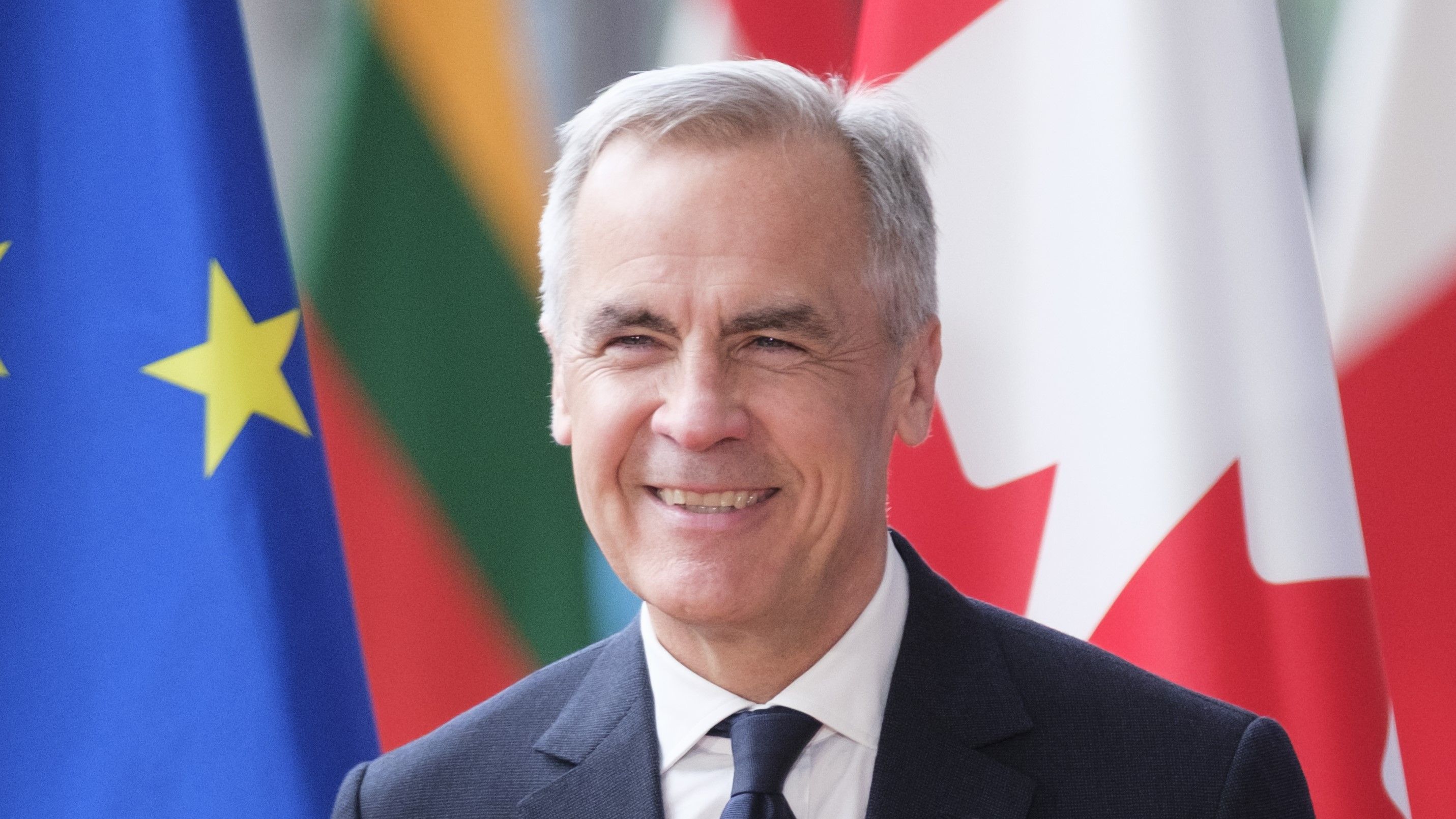
Prime Minister Mark Carney now appears to be responding with a broader long-term strategy focused on diversification, resilience, and strategic independence. Supporters argue Canada is not abandoning the United States, but instead building alternatives to avoid excessive dependence on any single partner.
That distinction is politically important.
Officials close to the Canadian government reportedly view Europe as an increasingly attractive strategic partner because European nations share similar approaches toward multilateralism, climate policy, industrial planning, Arctic cooperation, and long-term infrastructure development.
At the same time, Europe desperately wants reliable partners capable of contributing resources, energy, advanced manufacturing, and military-industrial capacity outside direct American control.
Canada fits that role almost perfectly.
Defense analysts say Ottawa’s participation in European military-industrial frameworks could eventually extend into AI-assisted battlefield systems, next-generation drones, aerospace engineering, Arctic defense infrastructure, cyber warfare coordination, advanced radar networks, and naval modernization projects.
Some experts believe the Arctic may become one of the most important areas of cooperation.
As global warming opens northern shipping routes and increases competition over energy reserves, minerals, and strategic territory, both Canada and Europe increasingly view Arctic security as a major geopolitical priority. Russia has already massively expanded military infrastructure across the Arctic region, while China continues increasing polar ambitions through trade, scientific missions, and resource investments.

That broader context is making Canada’s strategic position far more valuable internationally.
Inside NATO itself, some officials reportedly worry that the alliance is gradually evolving into something very different from its Cold War structure. While the United States remains NATO’s dominant military power, Europe is increasingly building an independent military-industrial pillar capable of operating with greater autonomy.
Canada’s participation in that shift could significantly alter alliance dynamics over time.
Critics inside the United States warn Washington may slowly lose influence over allies if countries continue building parallel defense-industrial ecosystems outside direct American control. European governments increasingly want procurement independence, domestic manufacturing capacity, and greater strategic flexibility after years of depending heavily on U.S. systems.
Canada joining that process could accelerate the trend further.
Some American strategists reportedly underestimated how frustrated certain allies became during recent years of tariffs, political volatility, and pressure campaigns targeting even close partners. From Ottawa’s perspective, dependence on Washington increasingly carries risks that previous Canadian governments may not have considered seriously enough.
That realization now appears to be driving policy change.
Supporters of Carney’s strategy argue modern geopolitics requires flexibility and diversification. In an unstable world shaped by trade wars, sanctions, supply chain disruptions, and political polarization, countries that depend too heavily on one dominant power may eventually lose strategic leverage.
Canada appears increasingly determined to avoid that scenario.
Critics, however, warn the shift could create new tensions with Washington at precisely the wrong moment. The United States remains Canada’s largest trading partner, closest military ally, and most important intelligence partner. Any perception that Ottawa is drifting away strategically could eventually trigger political backlash from future American administrations.
Those concerns are not insignificant.
The Canadian and American defense sectors remain deeply intertwined after decades of integration. NORAD, aerospace cooperation, border security systems, intelligence coordination, and continental defense planning all rely heavily on close bilateral trust.
Completely separating those relationships would be nearly impossible.
But many analysts believe that is not Canada’s objective at all.
Instead, Ottawa seems increasingly focused on gaining options.
The ability to work more deeply with Europe gives Canada greater bargaining power, greater strategic flexibility, and greater resilience in case political tensions with Washington intensify again in the future. In global politics, countries with alternatives are usually treated differently than countries without them.
That may ultimately be the real significance behind Canada’s growing European defense integration.
For decades, many assumed North American security architecture would remain permanently dominated by Washington with Canada operating almost automatically inside the American strategic system.
Now that assumption is beginning to weaken.
And if Ottawa continues gaining deeper access to Europe’s rapidly expanding military-industrial ecosystem, the balance of influence inside NATO — and even inside North American defense planning itself — could eventually begin changing in ways Washington never fully expected.
One reality is now becoming increasingly difficult to ignore:
Canada may have just taken one of the biggest strategic steps away from automatic American dominance in modern history.






