U.S. Floats 100% Tariff Threat on Canada as Trump Targets China Ties, Stirring Economic and Political Shockwaves

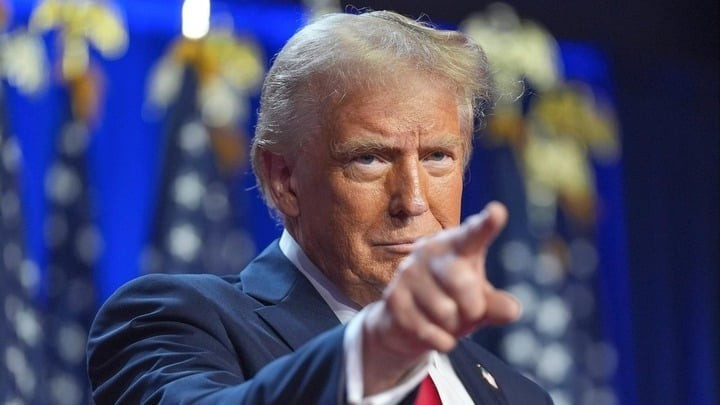
WASHINGTON — A fresh trade storm is brewing across North America after President Donald Trump publicly threatened to impose sweeping 100 percent tariffs on Canadian goods if Ottawa deepens its economic engagement with Beijing. The warning, delivered in characteristic blunt fashion, has ignited debate over Canada’s economic vulnerability, Western provincial unrest, and the future of U.S.–Canada strategic alignment.
In a recent statement, Trump accused Canada of positioning itself as a “drop-off port” for Chinese goods seeking indirect access to the American market. The remark appeared to reference concerns in Washington that Canadian ports could serve as transshipment hubs allowing Chinese exports to bypass U.S. trade restrictions.
While tariffs between the two allies are not new, the scale of the proposed measure — a full 100 percent levy — represents an extraordinary escalation. Canada exports more than $600 billion in goods annually to the United States, accounting for roughly 75 percent of its total exports. By contrast, China represents only a small fraction of Canadian export volume, estimated at roughly 4 to 5 percent.
The imbalance underscores a stark reality: Canada’s economy remains deeply intertwined with that of its southern neighbor.
A Strategic Line in the Sand
U.S. officials have increasingly framed the issue not merely as trade friction but as a matter of national security. Once trade disputes shift into the security domain, policy flexibility often narrows.
Washington’s broader strategy toward Beijing has centered on isolating critical supply chains in semiconductors, artificial intelligence, defense manufacturing, and rare earth minerals. Against that backdrop, any North American partner perceived to be facilitating Chinese market access risks scrutiny.
Trump’s comments suggest that, in his view, Canada’s outreach to China crosses a red line.
Ottawa has publicly resisted the notion that it is undermining U.S. trade enforcement. Yet the optics of expanded dialogue with Beijing during heightened U.S.–China tensions have complicated Canada’s diplomatic position.
Economic Fragility at Home
The timing of the tariff threat raises further concerns because Canada’s domestic economy faces structural pressures.
Household debt-to-GDP ratios exceed 100 percent — among the highest in the G7 — leaving consumers heavily leveraged. Food inflation recently hovered above 7 percent, and federal deficits have consistently surpassed $40 billion annually. Productivity growth has lagged behind that of the United States for years, while business investment per worker remains comparatively weak.
Should a 100 percent tariff materialize, the impact would likely be swift and concentrated. Ontario’s auto sector depends on cross-border supply chains in which vehicle components traverse the U.S.–Canada border multiple times before assembly. Lumber and aluminum exporters, historically vulnerable to American duties, would again face severe constraints.
Unlike the United States, Canada lacks diversified export markets capable of rapidly absorbing displaced goods. Europe and Asia could not easily replace American demand at equivalent scale.
Western Provinces on Edge
Economic strain has intensified political tensions within Canada itself.
Alberta, which holds approximately 165 billion barrels of proven oil reserves, produces nearly 3.8 million barrels of oil per day. Saskatchewan controls roughly 30 percent of global potash supply — a crucial input in fertilizer production. The country also possesses significant reserves of lithium, nickel, cobalt, and rare earth minerals critical to electric vehicles and defense industries.
Yet energy policy disputes between federal authorities and Western provinces have simmered for years. Regulatory hurdles and pipeline controversies have fueled perceptions in Alberta that Ottawa undervalues the energy sector’s contribution to national prosperity.
Polling in parts of Western Canada has shown separatist sentiment fluctuating between 30 and 40 percent. While not indicative of imminent secession, the figures reflect growing regional frustration, particularly when federal foreign policy decisions appear to risk the export-driven economy.
Equalization payments — federal transfers intended to balance provincial fiscal capacity — have further complicated relations between Alberta and Ottawa, reinforcing perceptions of imbalance.
The Arctic and Strategic Geography
Beyond trade, strategic geography looms large. Climate change is gradually expanding Arctic shipping routes, raising their importance for missile defense systems, radar coverage, and future maritime commerce.
The United States’ 1867 purchase of Alaska established its long-standing northern foothold. Discussions in recent years regarding Greenland, though controversial, signaled continued American interest in Arctic positioning.
Compared with U.S. installations in Alaska, Canada’s Arctic defense infrastructure remains limited. As geopolitical competition intensifies, Washington’s emphasis on securing its northern flank has sharpened.
Leverage and Math
From a purely economic perspective, leverage favors Washington. Canada runs a trade surplus with the United States, meaning tariffs would disproportionately impact Canadian exporters. While roughly 75 percent of Canadian exports go south, only about 17 percent of U.S. exports head north.
Such asymmetry shapes negotiating power.
If tariffs are imposed, Canadian producers would likely feel immediate strain, while American consumers would face price increases but within a larger, more diversified economy.
A High-Stakes Gamble
The unfolding dispute presents Ottawa with a difficult calculation: pursue diversified trade relations, including with China, or preserve unambiguous alignment with its dominant economic partner.
For Washington, the message appears clear: North American trade integration must not become a conduit for Chinese access.
As tensions rise, the stakes extend beyond tariffs. They encompass supply chains, Arctic security, regional unity within Canada, and the broader architecture of Western economic alliances.
In the end, the numbers tell a stark story. When three-quarters of exports depend on one market, strategic experimentation carries risks. Whether this confrontation escalates into a sustained trade conflict or resolves through negotiation may shape the North American economy for years to come.






