Ursula von der Leyen’s Silence Speaks Volumes as Meloni’s Washington Pivot Rattles Europe
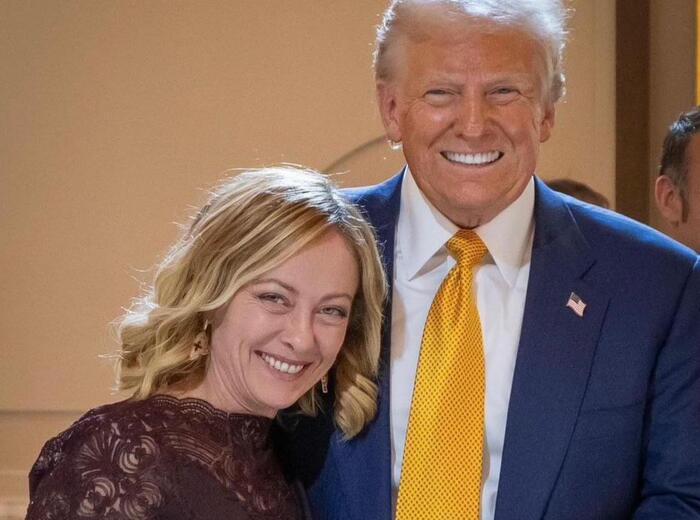
In the ornate corridors of Brussels, where policy is often shaped through consensus and quiet negotiation, a new kind of silence has taken hold. It followed a highly symbolic moment: Giorgia Meloni standing shoulder to shoulder with Donald Trump in Washington. What appeared at first glance to be a routine diplomatic visit has since evolved into something far more consequential — a visible fracture in the European Union’s political fabric.

For years, Ursula von der Leyen and her allies treated Meloni as a manageable outlier — a nationalist voice expected to soften under institutional pressure. Instead, Meloni has redrawn the map of influence, bypassing Brussels to engage directly with Washington. The result is not merely tension, but a recalibration of power that is sending tremors across the continent.
The imagery alone was enough to unsettle European officials. Meloni’s meeting with Trump carried the weight of strategic alignment rather than ceremonial diplomacy. In that handshake, analysts saw the outline of a new axis — one rooted not in collective European governance but in bilateral, interest-driven cooperation. For Brussels, this was not just deviation; it was defiance.
Behind closed doors, the reaction has been notably restrained — and that restraint is telling. Gone are the public warnings and rhetorical rebukes that typically follow such moves. In their place: calculated quiet. Diplomats describe an atmosphere that has shifted from urgency to cold deliberation, as if the European Commission is reassessing not just its response, but its entire approach to internal dissent.
At the heart of the issue lies a deeper philosophical divide. The European Union has long operated on the premise of shared sovereignty — that member states cede a degree of autonomy for collective strength. Meloni’s Washington outreach challenges that premise directly. By securing independent channels for energy, trade, and political backing, Italy signals that sovereignty, not integration, may define the next phase of European politics.
This shift carries tangible consequences. Italy, the eurozone’s third-largest economy, has historically been a cornerstone of EU cohesion. Its pivot raises uncomfortable questions: Can the union maintain unity if one of its largest members operates on a parallel track? And what happens when others begin to follow?
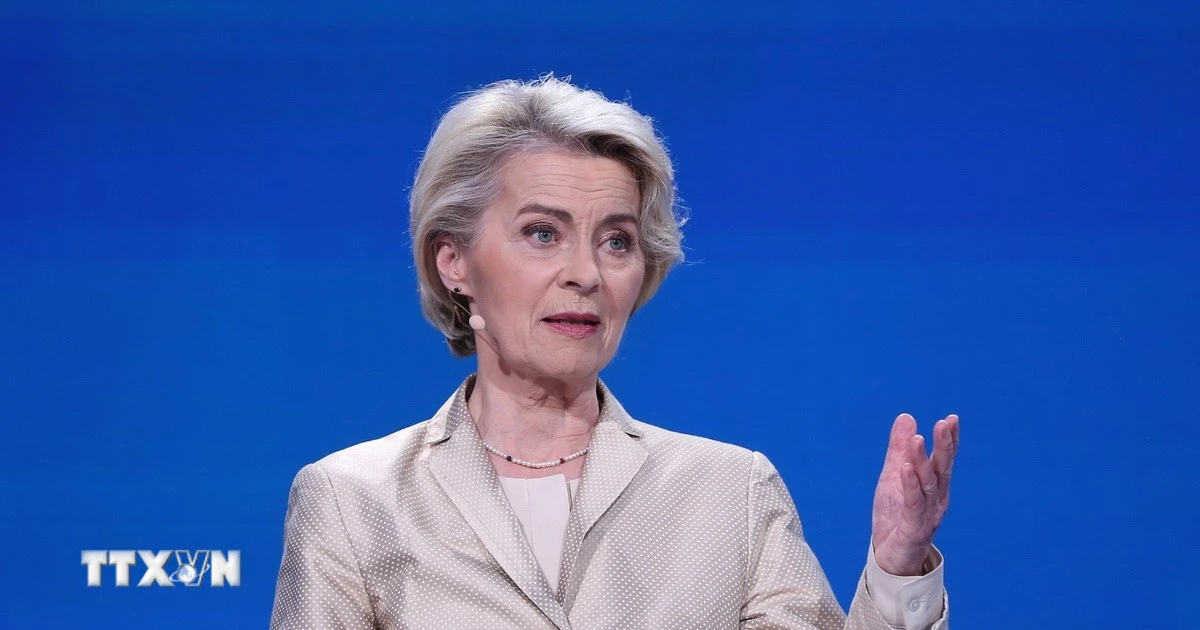
Indeed, the ripple effects are already visible. Leaders in Central and Eastern Europe, long skeptical of Brussels’ centralized authority, are watching closely. Figures like Viktor Orbán have spent years advocating for national sovereignty over supranational control. Meloni’s actions may provide a blueprint — or at least a proof of concept — for governments seeking greater independence without formally exiting the EU.
Meanwhile, within Italy, the political calculus appears favorable. Rather than isolating Meloni, Brussels’ muted response has amplified her domestic standing. To supporters, she is not a disruptor but a defender — a leader willing to challenge an unelected bureaucracy in pursuit of national interest. Each perceived slight from Brussels reinforces that narrative.
The European Commission, for its part, is not without tools. Legal mechanisms, budgetary controls, and regulatory oversight remain powerful levers. Yet deploying them carries risks. Aggressive action could validate claims of overreach, further alienating member states already wary of centralized authority. In this sense, Brussels faces a strategic dilemma: act and risk escalation, or wait and risk erosion.
Complicating matters is the broader geopolitical context. The transatlantic relationship itself is evolving, shaped by shifting priorities in Washington and growing uncertainty in global markets. Meloni’s outreach to the United States reflects a recognition that alliances are no longer static. They are negotiated, recalibrated, and — when necessary — redefined.
What makes this moment particularly significant is not a single policy dispute, but the precedent it sets. If Italy can effectively operate within the EU while pursuing an independent strategic agenda, the traditional boundaries of membership begin to blur. Integration becomes optional, cohesion conditional.
For von der Leyen, the challenge is existential. Her leadership has emphasized unity, regulatory strength, and a cohesive European identity. Meloni’s move tests each of those pillars. The silence from Brussels may not signal weakness, but it does reflect the complexity of the moment — a recognition that the old playbook may no longer apply.
As Europe navigates this uncertain terrain, one reality is becoming clear: the balance between national sovereignty and collective governance is shifting. Whether this marks a temporary disruption or the beginning of a deeper transformation remains to be seen.
But in the quiet halls of Brussels, where silence now carries more weight than words, the question lingers: is this a passing storm — or the first crack in a system built on unity?






