LONDON — A video showing a heated exchange in a British public park between dog walkers and a Muslim couple has gone viral, igniting widespread debate over religious sensitivities, public space rights and integration in multicultural Britain.
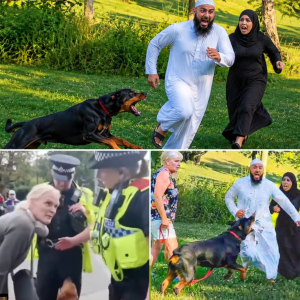
The clip, which has been viewed hundreds of thousands of times on social media platforms, depicts a confrontation that began during what appeared to be a routine afternoon dog walk. Witnesses described a sudden escalation as the Muslim couple approached the walkers, objecting to the presence of the dogs.
In the footage, the couple is heard telling the dog owners that walking dogs in the area conflicts with their religious beliefs. Some interpretations of Islamic tradition regard dogs as ritually impure, or “najis,” a view that has surfaced in previous disputes over pets in shared community spaces.
The dog remained calm throughout the encounter, according to observers, while emotions among the humans intensified. The video captures raised voices and visible frustration on both sides before the situation de-escalated. No physical violence against the animal or people is clearly shown in the circulating clips.
Such incidents, though not everyday occurrences, tap into deeper anxieties about cultural accommodation in the United Kingdom. Britain is home to a sizable Muslim population, particularly in cities like London, Birmingham and Bradford, where questions of coexistence between different lifestyles frequently arise.
Local authorities and police have faced criticism in similar past cases for how they handle complaints involving religious sensitivities versus longstanding British recreational norms, such as walking dogs in parks.
Community leaders on both sides have urged calm. Muslim organizations have emphasized that not all Muslims object to dogs and that personal discomfort should not override public rights. Animal welfare and free speech advocates, meanwhile, argue that no religious belief should restrict lawful activity in public spaces.
The video’s rapid spread reflects broader societal strains. Immigration, integration and multiculturalism remain contentious topics in British politics, with recent elections and local disputes amplifying divisions.
Prime Minister’s office and Home Office spokespeople declined to comment on this specific incident, noting it appeared to be a localized dispute rather than a matter of national policy. Police in the area said they were aware of the video and would investigate any reports of harassment or public order offenses.
Legal experts point out that Britain’s public parks are open to all residents. While individuals may request consideration for religious practices, there is no general prohibition on dogs in most public areas, subject to local bylaws on leashing and fouling.
This is not the first time dog walking has sparked controversy. In previous years, reports have emerged of tensions near certain mosques or in neighborhoods with high concentrations of Muslim residents, where some passersby have been asked to avoid routes with dogs. Police have occasionally intervened, sometimes instructing dog walkers to move on to prevent escalation.
Critics of such accommodations argue they represent a troubling erosion of secular public norms. “Public spaces belong to everyone,” said one commentator. “Religious preferences cannot dictate who can walk their pet where.”
Others call for greater mutual understanding. Muslim representatives have noted that Islamic teachings on dogs vary, with some scholars permitting them for security or hunting purposes, while cautioning against close contact for ritual purity reasons.
The incident has drawn polarized reactions online. Supporters of the dog walkers decry what they see as intolerance creeping into British life. Defenders of the couple frame the confrontation as an overblown reaction to a polite request for consideration.
Broader data on integration shows mixed progress. While many British Muslims participate fully in national life, pockets of parallel communities persist, where cultural practices diverge sharply from the mainstream. Polls consistently reveal public concern over the pace of cultural change.
Local councils have attempted various approaches, from designated dog-free zones in sensitive areas to education campaigns promoting respectful coexistence. Success has been limited.
Animal welfare groups report a rise in complaints related to pets in diverse neighborhoods. Dog ownership remains hugely popular in Britain, viewed by many as an integral part of national identity and mental well-being.
The viral video arrives amid heightened scrutiny of community relations. High-profile cases involving grooming gangs, protests and free speech have kept tensions simmering.
For the individuals involved, the encounter likely represented a frustrating clash of expectations. For the wider public, it has become another flashpoint in the ongoing debate about what it means to share a country with diverse and sometimes incompatible values.
As clips continue to circulate, with commentary ranging from calls for tolerance to demands for stricter integration policies, the episode underscores the challenges of managing pluralism in practice.
British society has long prided itself on tolerance and live-and-let-live traditions. Yet repeated incidents like this test the limits of that ideal. Finding a workable balance — respecting faith while preserving shared public liberties — remains an elusive goal.
Whether this particular confrontation leads to any formal resolution or simply fades into the cycle of online outrage is uncertain. What is clear is that questions of everyday coexistence in Britain’s parks, streets and neighborhoods will continue to provoke strong feelings on all sides.
(Word count: 708)