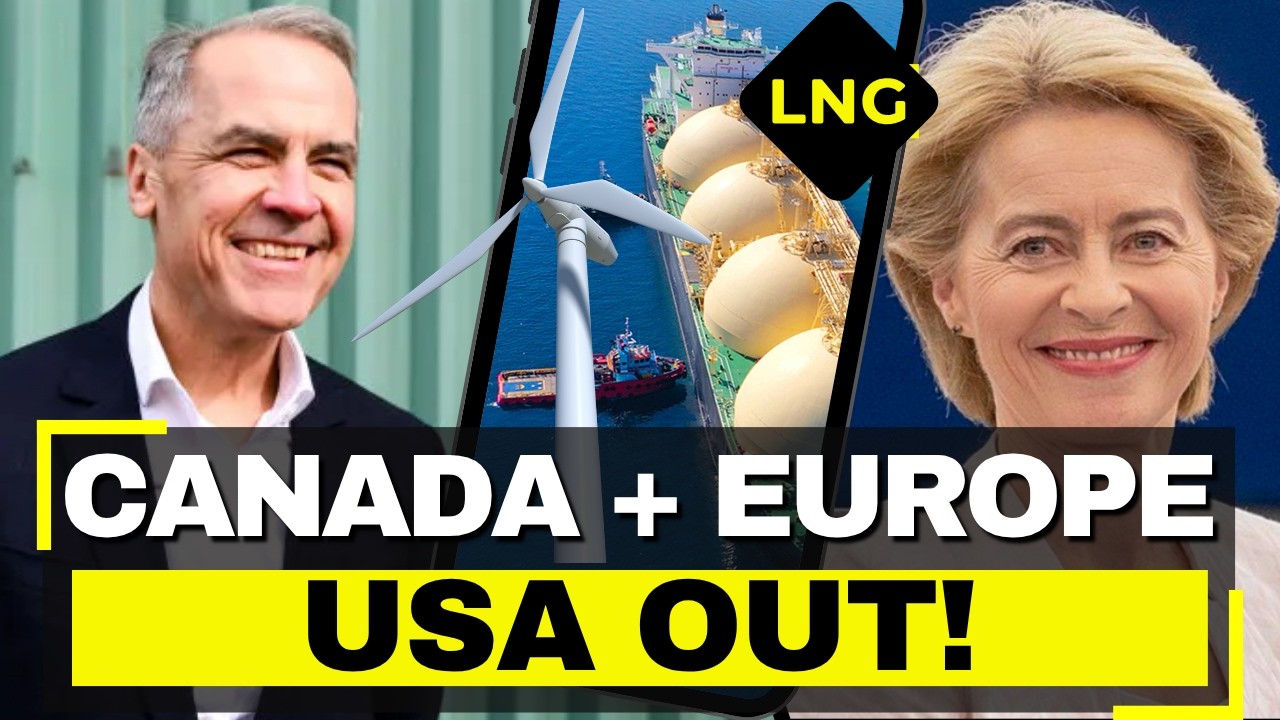
Europe’s Quiet Energy Revolution Just Exposed the Real Global Power Shift
What if the biggest economic breakthrough of the next decade isn’t AI, crypto, or Wall Street… but wind turbines?
And what if Europe has already discovered a way to turn energy independence into a money-printing machine?
A bombshell new study released this week by Trinomics and DTU Wind has dropped a statistic so staggering it’s sending shockwaves through Europe’s industrial and geopolitical circles: every single euro invested in European wind energy could generate seven euros in annual economic returns by 2040.
Not over decades. Not buried in optimistic assumptions. Annual returns.
The peer-reviewed analysis, commissioned by WindEurope, examined the entire wind energy ecosystem — from turbine factories and grid integration to installation crews and long-term maintenance networks. Its conclusion was blunt: Europe is massively underinvesting in one of the most profitable strategic industries on the planet.
According to the report, a targeted €11.6 billion public investment package would inject an astonishing €33 billion per year into the EU economy by 2040. It would also create roughly 180,000 new jobs, boost European wind equipment exports by €12.6 billion annually, and ensure nearly 89% of the economic value stays inside Europe.
Without that investment, the picture changes dramatically. Europe would retain only 47% of the value generated by its own wind sector, with much of the remaining wealth flowing overseas — particularly to Chinese manufacturers who have spent years receiving subsidies at levels two to five times higher than their European competitors.
And that’s where the story stops being just about clean energy.
Because this is rapidly becoming a geopolitical arms race disguised as climate policy.
Chinese turbine makers have been scaling aggressively, slashing prices and expanding globally while Europe’s funding system remains fragmented, bureaucratic, and painfully slow. The study notes that wind projects currently receive less than 2% of the funding available across 12 eligible EU programs. In many cases, companies wait more than nine months just to secure contracts through programs like Horizon Europe and the Innovation Fund.
Europe has the engineering. It has the factories. It has the demand.
What it doesn’t have — yet — is the financial speed Beijing is deploying.
That’s why Brussels is now considering a dedicated wind investment mechanism designed to consolidate funding into a single strategic instrument capable of accelerating the entire supply chain before Europe loses control of one of its most critical industries.
But the most explosive part of the report may be what it says about energy security.
If Europe fully executes this wind expansion strategy, it could eliminate the need for 70 billion cubic meters of imported gas every year by 2040. That is roughly equivalent to 700 LNG cargo shipments annually simply disappearing from Europe’s dependency list.
At today’s volatile energy prices, the savings would amount to tens of billions of euros every year.
And timing matters.
Global gas markets have remained unstable since escalating Middle East tensions disrupted shipping routes and intensified fears around supply chokepoints. Europe suddenly finds itself asking a question that once sounded impossible: what if true sovereignty means producing energy at home instead of relying on unstable foreign suppliers?
That question is also reshaping Europe’s relationship with Canada.
Behind the scenes, a massive transatlantic economic architecture is quietly taking form.
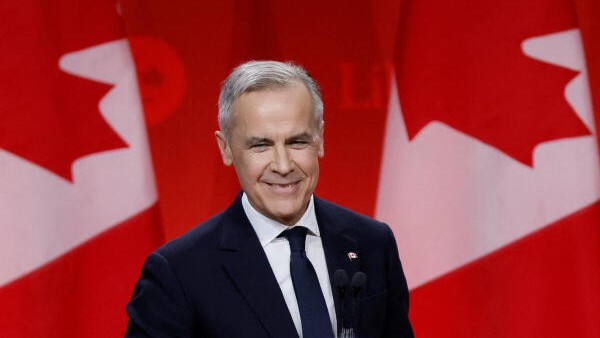
During Prime Minister Mark Carney’s visit to Berlin, Canada and Germany deepened cooperation on critical minerals, LNG, and hydrogen infrastructure — the exact materials and energy systems Europe now needs to break dependence on hostile or unstable supply chains.
Canada’s critical mineral alliance has already unlocked billions in mining investment while Canadian suppliers begin feeding Germany’s industrial machine with copper, lithium, and rare earth materials essential for wind turbines, EV batteries, defense systems, and heat pumps.
At the same time, Canada is moving toward supplying liquefied natural gas directly to Europe through Atlantic export infrastructure. Unlike Middle Eastern supply routes or Russian pipelines, Canadian LNG offers Europe something increasingly rare in global energy markets: political stability.
And then comes hydrogen.
The Canada-Germany Hydrogen Alliance is now laying the groundwork for a transatlantic green hydrogen corridor that could power Europe’s heavy industry in the 2030s. Canada’s vast hydroelectric resources, offshore wind potential, and renewable energy capacity make it one of the few countries capable of producing green hydrogen at scale cheaply enough for export.
The strategy is becoming remarkably clear.
Canadian minerals feed European wind manufacturing.
European wind farms slash fossil fuel dependence.
Canadian LNG stabilizes the transition period.
Green hydrogen eventually replaces gas altogether in heavy industry.
And unlike previous globalization models, the value largely stays inside allied democratic economies rather than leaking toward geopolitical rivals.
Meanwhile, the contrast with the United States is becoming impossible to ignore.
As Washington spends nearly a trillion dollars annually servicing national debt and absorbing the economic aftershocks of global instability, Europe is increasingly funneling money into infrastructure designed to lower long-term energy costs, strengthen industrial independence, and generate compounding economic returns.
One model accumulates liabilities.
The other compounds sovereignty.
The battle over energy is no longer just about climate policy. It is rapidly becoming the defining economic power struggle of the next decade.






