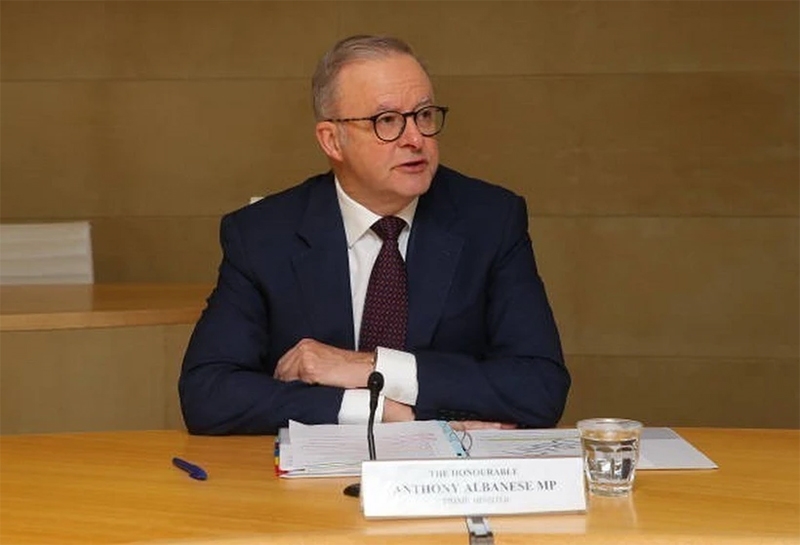
The father of an Australian woman repatriated from a Syrian detention camp has publicly thanked Prime Minister Anthony Albanese after his daughter returned home to Sydney in one of the country’s most controversial counterterrorism-related operations in recent years.
Zakaria Zahab, father of Nesrine Zahab, spoke emotionally to reporters after his daughter arrived back in Australia alongside several other women and children who had spent years detained in the al-Roj camp in northern Syria. The group landed in Sydney aboard a Qatar Airways flight from Doha under heavy security and police supervision, reigniting fierce debate across Australia over national security, rehabilitation, and whether former ISIS-linked families should be allowed back into the country.
“Who wouldn’t be happy?” Zahab told journalists when asked whether he appreciated the Australian government’s role in bringing his daughter home.
His comments came as federal and state politicians rushed to distance themselves from any suggestion that the arrivals were being celebrated or officially welcomed by authorities.
The latest repatriation involved four Australian women and six children arriving in Sydney, while another two women and seven children landed separately in Melbourne. The operation followed weeks of behind-the-scenes negotiations involving humanitarian advocates, lawyers, Kurdish authorities, and Australian officials.
Although the Albanese government has repeatedly insisted it did not “facilitate” the repatriation, officials acknowledged that Australian citizens cannot legally be denied passports or blocked indefinitely from returning home if they are entitled to citizenship.
The women had spent years inside Syria’s notorious al-Roj detention camp, where families linked to the Islamic State group have remained trapped since the collapse of ISIS territory in 2019. Conditions inside the camp have long been described by humanitarian groups as harsh, overcrowded, and dangerous, particularly for children.
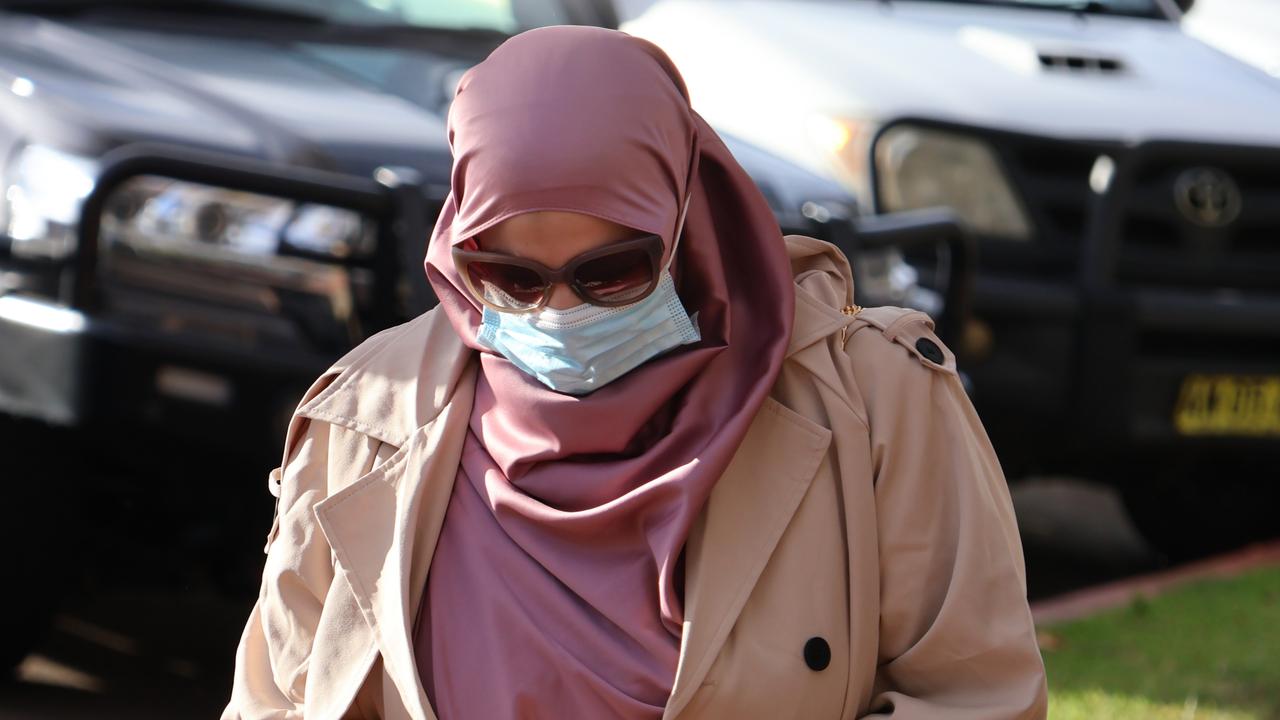
For Zakaria Zahab, however, politics was secondary to the emotional reality of seeing his daughter again after more than a decade.
Speaking outside the family’s Sydney home, he described an emotional reunion that included multiple generations of relatives embracing for the first time in years. He said Nesrine was exhausted but overwhelmed with relief at finally returning to Australia.
“The first thing she wanted to do was hug everybody,” he reportedly said. “She is so happy to be home.”
According to family members, Nesrine Zahab had long wanted to return to Australia after becoming trapped in Syria. Her father claimed she originally traveled near the Turkish-Syrian border to help refugees and later found herself unable to escape once conflict escalated and ISIS territory tightened its control.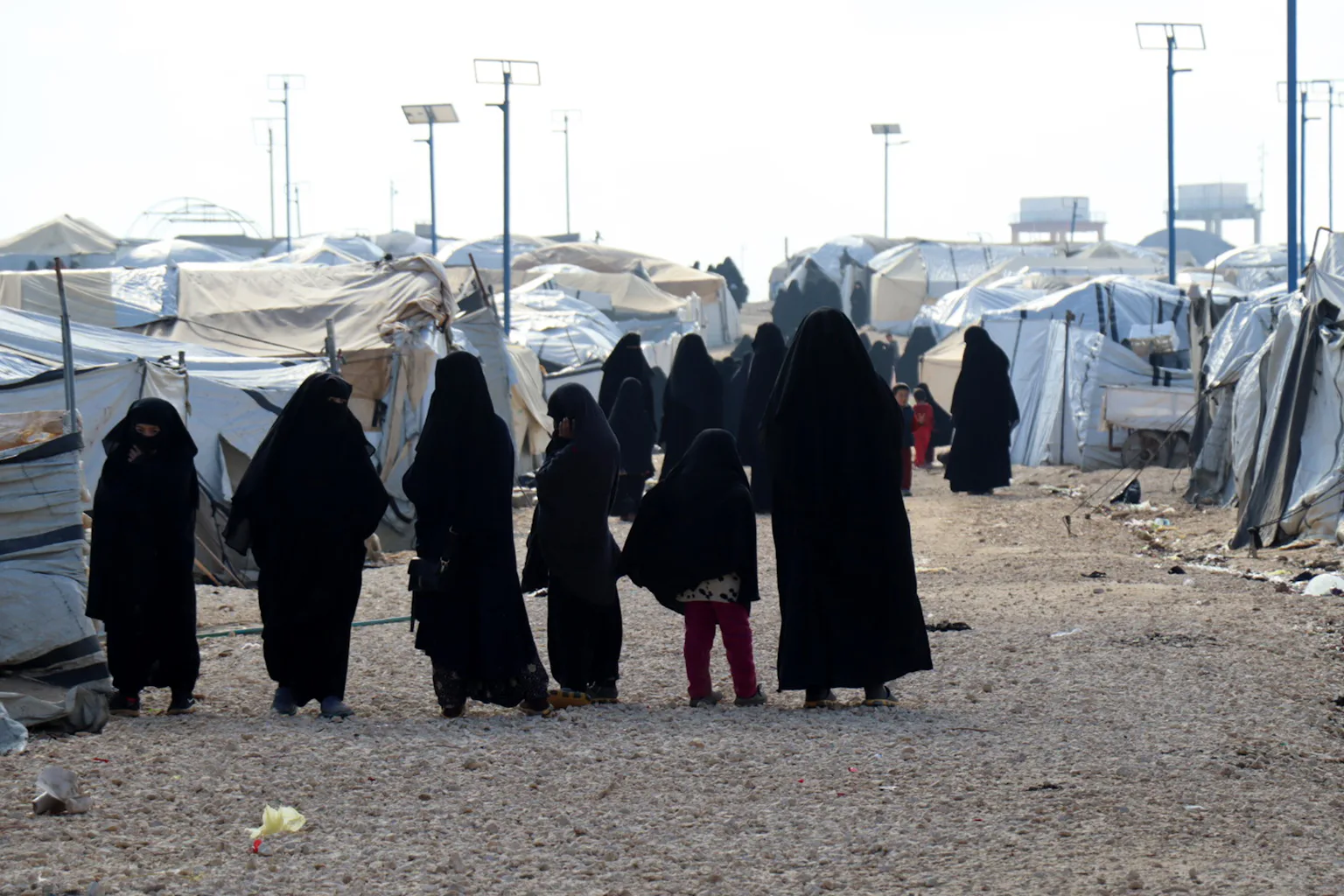
Nesrine Zahab has previously claimed that she did not initially realize she had crossed into Syria when she traveled overseas as a young woman in 2014. While there, she married Australian ISIS fighter Ahmed Merhi, a member of a notorious extremist network linked to terror investigations involving Australian authorities.
Her story has remained one of the most closely watched among Australian women associated with ISIS because of the complex circumstances surrounding her journey to Syria and her years inside detention camps afterward.
The Australian Federal Police confirmed that the returning women were met upon arrival by counterterrorism officials and transported to temporary accommodation under police monitoring. Authorities have stressed that investigations into their activities overseas remain ongoing and that electronic devices and background evidence are still being examined.
No immediate criminal charges were announced against the newly returned women upon arrival this week, though officials have not ruled out future prosecutions.
Earlier repatriation operations involving Australian women from Syrian camps resulted in several terrorism-related charges, including allegations connected to extremist group membership and crimes committed during the ISIS conflict.
Prime Minister Anthony Albanese has consistently taken a hard public line regarding the women returning from Syria. While acknowledging that Australian citizens cannot simply be abandoned overseas forever, Albanese has repeatedly condemned those who traveled to ISIS territory.
At previous press conferences, he said the women had made “horrific choices” and insisted they would receive no special assistance from the government.
Home Affairs Minister Tony Burke also rejected claims that the government had organized or welcomed the repatriation effort, arguing that authorities were merely complying with legal obligations while prioritizing public safety.
Still, the optics of the operation sparked immediate political backlash.
Opposition figures accused the government of quietly helping former ISIS-linked families return while publicly denying involvement. Critics argued the repatriation could create future security risks and questioned whether enough safeguards were in place to monitor the women and children once resettled in Australian communities.
Some conservative commentators described the operation as reckless, while others argued that children raised inside extremist camps should not be punished for the actions of their parents.
The debate quickly spread across Australian media and online platforms, where reactions became sharply divided.
Supporters of the repatriation pointed to humanitarian concerns, particularly for children who had spent most or all of their lives inside detention camps. Aid organizations and counter-extremism experts have repeatedly warned that leaving children in camps such as al-Roj may increase the risk of future radicalization rather than reduce it.
Several experts have argued that bringing families back under Australian supervision offers a safer long-term solution than allowing vulnerable children to remain in unstable foreign camps controlled by armed groups.
Others strongly disagreed, insisting that adults who willingly entered ISIS territory forfeited any expectation of public sympathy.
That tension has become one of the defining political challenges surrounding the Albanese government’s handling of the issue.
The return operation itself was reportedly coordinated with the assistance of humanitarian lawyer Robert Van Aalst and various intermediaries working quietly across the Middle East. Reports in Australian media claimed negotiations involved Kurdish camp authorities, travel logistics through Syria and Qatar, and legal documentation required for Australian citizens to fly home.
Security surrounding the arrivals was intense.
Police officers, counterterrorism investigators, and government officials were present during the Sydney and Melbourne airport arrivals. In Melbourne, media coverage reportedly became chaotic after confrontations erupted involving photographers and security personnel attempting to shield the identities of the returning families.
Despite the controversy, Zakaria Zahab insisted his daughter simply wanted a chance to rebuild her life.
According to interviews given after the reunion, Nesrine hopes to continue studying in Australia and eventually pursue nursing or community work. Her father also said she wants her young son to attend school and experience a normal childhood after years inside the Syrian camp system.
He described simple moments following her return that highlighted how different life in Australia felt compared to conditions inside al-Roj.
One story involved her son reportedly being unfamiliar with drinking water from a glass because children inside the camp had become accustomed to plastic cups and limited facilities.
The family also revealed that one of the first things Nesrine wanted after landing in Sydney was Australian fast food.
But alongside the emotional reunion came intense scrutiny.
Zakaria Zahab said his daughter had become frightened by the constant presence of television crews and photographers outside the family home. He claimed she was afraid to leave the house because cameras continued following her movements after her arrival.
“She is scared to go outside,” he reportedly said.
For Australian authorities, the issue extends far beyond one family.
The government now faces the difficult challenge of balancing national security concerns with rehabilitation, surveillance, and social reintegration. Counter-extremism specialists have warned that children returning from ISIS-controlled environments may require years of psychological support and education to adapt successfully to life in Australia.
State governments have also indicated that voluntary deradicalization and intervention programs may be offered to some returnees, though participation cannot always be legally forced.
At the same time, questions remain over whether additional Australians linked to ISIS may still seek repatriation in the future.
Reports suggest that some individuals connected to Australian extremist networks remain in Syrian camps or detention facilities, while at least one woman has reportedly been prevented from returning under a Temporary Exclusion Order issued on national security grounds.
For now, however, public attention remains fixed on the Zahab family and the emotional images emerging from Sydney.
The reunion has become both a deeply personal family story and a national political flashpoint.
To supporters, it represents the return of Australian citizens — particularly children — from a dangerous humanitarian crisis zone. To critics, it symbolizes a troubling willingness to allow people associated with one of the world’s most notorious terrorist organizations back into Australian society.
Caught between those competing narratives is a father simply relieved to have his daughter alive and home again.
“Beautiful Australia,” Zakaria Zahab reportedly said while reflecting on her return.
After years inside a Syrian detention camp surrounded by conflict, fear, and uncertainty, the words carried enormous weight — even as the political storm surrounding the repatriation continues to grow across the country.






