Australian Defence Row Explodes After MP Calls Prime Minister a “Liar”
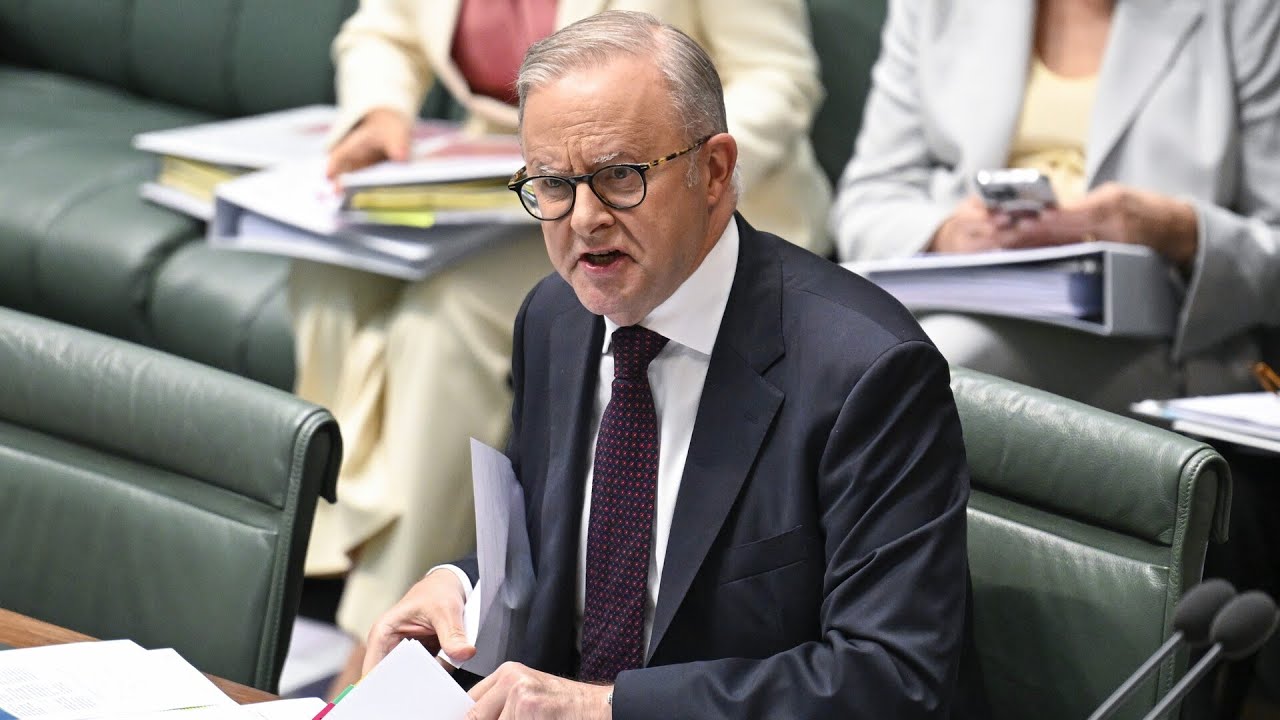
A fierce political confrontation is erupting in Canberra after a senior parliamentarian refused to back down from accusations that have sent shockwaves through Australia’s defence and political establishment.
The controversy began with a blunt statement that immediately dominated headlines.
According to the MP, recent government actions and public statements regarding defence policy amounted to a betrayal of Australia’s military personnel.
His criticism escalated even further when he openly described the Prime Minister as a “liar” and insisted he would not retract the remark despite growing pressure from political opponents and government supporters.
The comments quickly triggered a national debate.
At stake is not merely a personal dispute between politicians.
The argument touches on defence spending, military readiness, national security priorities, and the government’s relationship with the men and women serving in Australia’s armed forces.
For many observers, that is what has transformed the controversy from a routine political clash into a much larger national conversation.
The MP’s strongest statement came when he declared that recent decisions “spit in the face of every soldier, sailor and aviator in the country.”
The phrase immediately spread across television broadcasts, radio programs, newspapers, and social media platforms.
Supporters praised the language as honest and direct.

Critics described it as inflammatory and politically reckless.
Yet regardless of opinion, few disputed its impact.
The statement ensured the controversy would dominate discussion well beyond Parliament House.
The disagreement centers on broader concerns regarding Australia’s defence posture during a period of growing geopolitical uncertainty.
Across the Indo-Pacific region, strategic competition continues intensifying.
China’s military modernization remains a major focus for defence planners.
Tensions surrounding Taiwan persist.
Security concerns in the South China Sea continue affecting regional calculations.
Meanwhile, conflicts in Europe and the Middle East have highlighted the importance of military readiness and industrial capacity.
Against this backdrop, defence policy has become one of the most important political issues facing Australia.
Many military experts argue that the country faces an increasingly complex security environment.
That reality has intensified scrutiny of government decisions involving procurement, force structure, recruitment, and defence spending.
The MP’s criticism appears rooted in concerns that Australia’s military capabilities are not expanding quickly enough to match emerging threats.
Supporters of his position argue that defence commitments must be backed by concrete investments rather than political messaging.
They believe military personnel deserve certainty regarding equipment, resources, and long-term planning.
From their perspective, the issue is fundamentally about credibility.
Promises alone cannot strengthen national security.
Capabilities can.
Capabilities require funding, planning, and execution.
That is why defence debates frequently become so politically sensitive.
They involve not only budgets but also questions of trust.
For serving members of the military, these discussions are particularly significant.
Defence personnel depend on decisions made in Canberra.
Those decisions affect everything from operational readiness to recruitment, training, and future career opportunities.
When politicians clash over defence policy, military members often find themselves indirectly caught in the middle.
The government has strongly rejected the accusations.
Officials argue that Australia is investing heavily in defence modernization and implementing reforms designed to strengthen military capability over the long term.

They point to major procurement programs, alliance cooperation, and strategic reviews as evidence of their commitment.
According to government supporters, the opposition criticism ignores substantial investments already underway.
They argue that transforming military capability takes time and cannot be achieved overnight.
The disagreement therefore reflects two competing narratives.
One side claims the government is failing to deliver what it promised.
The other insists significant progress is already occurring.
The public is left to determine which interpretation appears more convincing.
The timing of the dispute is particularly important.
Defence issues have become increasingly prominent within Australian politics.
Voters are paying closer attention to national security than they did a decade ago.
Rising geopolitical tensions have elevated defence discussions from specialist policy debates to mainstream political issues.
As a result, arguments that might once have remained confined to parliamentary committees now attract national attention.
Political leaders understand this reality.
They know that perceptions of strength, competence, and credibility can influence public opinion significantly.
This helps explain why the latest confrontation has become so heated.
Neither side wants to appear weak on defence.
Neither side wants to appear indifferent to military concerns.
And neither side wants to lose the trust of Australians who prioritize national security.
The controversy also highlights a broader shift occurring throughout many Western democracies.
Defence policy is no longer viewed solely through the lens of military operations.
It increasingly intersects with economic policy, industrial strategy, technological development, and geopolitical competition.
Governments must now think about supply chains, critical minerals, advanced manufacturing, cyber security, and defence production simultaneously.
Military preparedness has become deeply connected to broader national resilience.
That complexity makes political disputes even more difficult to resolve.
Simple slogans rarely capture the full picture.
Yet political battles often reward simplicity rather than nuance.
The accusation that the government has betrayed military personnel resonates emotionally because it speaks directly to trust and loyalty.
Government supporters respond by emphasizing long-term investments and strategic planning.
Both narratives contain elements likely to appeal to different groups of voters.
The coming months may determine whether the controversy fades or develops into a larger political challenge.
Much will depend on future defence announcements, budget decisions, and developments in the international security environment.
If geopolitical tensions continue rising, scrutiny of defence policy is likely to intensify rather than diminish.
That would ensure the current dispute remains relevant.
For now, one thing is clear.
What began as a sharp criticism from a single MP has evolved into a broader debate about military readiness, political accountability, and Australia’s strategic future.
The argument is no longer merely about one politician calling another a liar.
It is about whether Australians believe their leaders are adequately preparing the country for an increasingly uncertain world.
And in an era defined by geopolitical instability, few questions carry greater political significance than that.