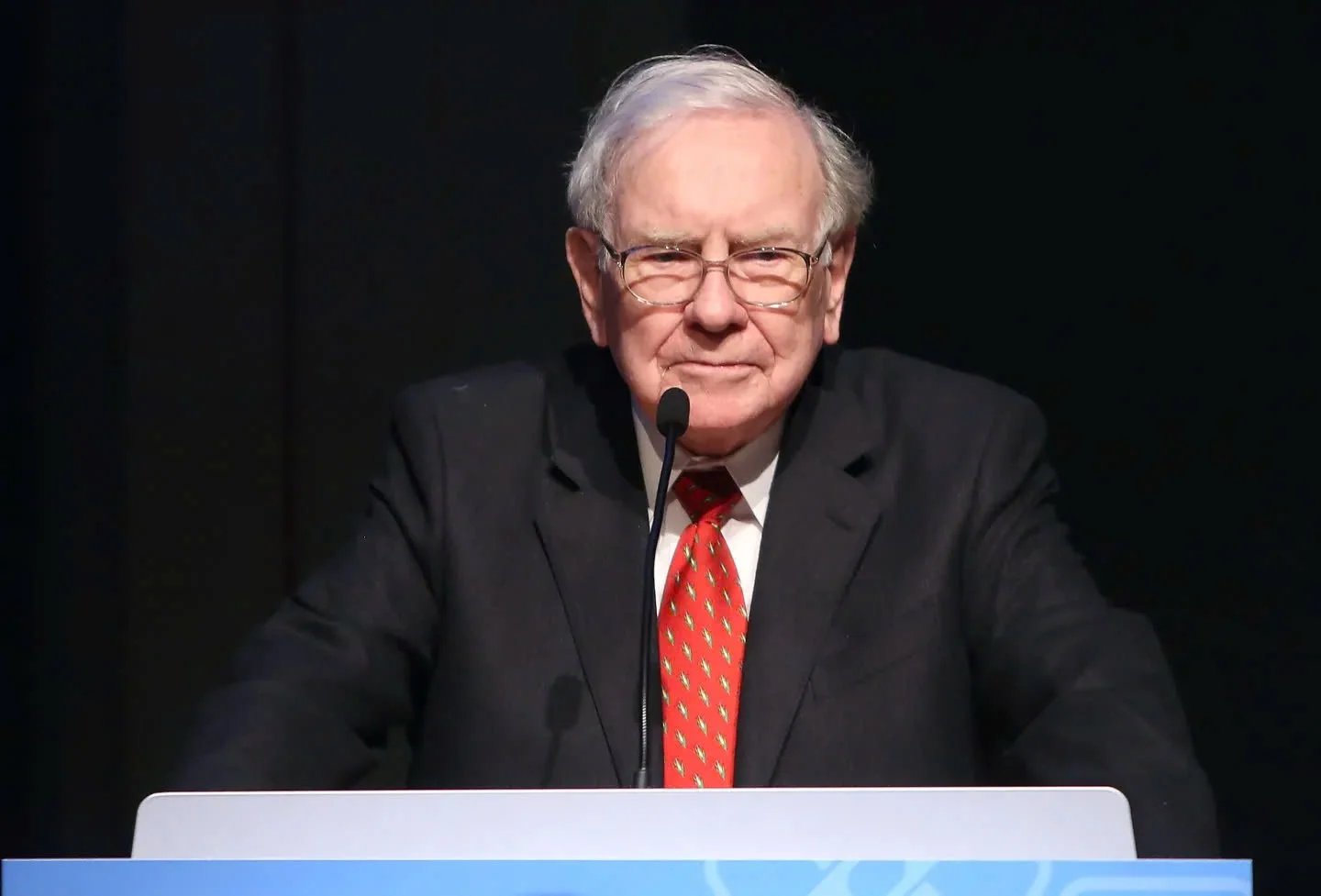
OMAHA, Neb. — A widely circulated video and accompanying text narrative purporting to show Warren Buffett delivering an impassioned, uncharacteristic warning about former President Donald J. Trump, social chaos and the possible imposition of martial law has spread rapidly across social media platforms in recent days.
The account describes Mr. Buffett, long known for his calm and measured public persona, suddenly adopting a sharp, urgent tone during what appears to be a television studio discussion. It quotes him saying, “ARE Y’ALL BLIND TO WHAT’S COMIN’, OR ARE YOU JUST TOO SCARED TO SAY IT?” before launching into claims about engineered disorder and threats to democracy.
Fact-checking organizations, including Snopes, have examined the claims and determined that the video and the dramatic monologue are false. No such broadcast or panel appearance took place, and Mr. Buffett did not make the statements attributed to him.
The fabricated narrative paints a vivid scene: Mr. Buffett leaning forward intensely, silencing panelists, and warning that market and social unrest could pave the way for emergency powers, the suspension of elections and a loss of fundamental freedoms. It specifically ties these concerns to Mr. Trump, suggesting he “needs” disorder to avoid legal accountability.
Such content has resonated in deeply polarized online environments, where anxieties about political stability, election integrity and institutional erosion run high. Clips and text versions have been shared thousands of times, often framed with alarmist commentary.
Mr. Buffett, 95, has maintained a relatively low public profile in recent years. He continues to influence Berkshire Hathaway, the conglomerate he has led for decades, but has signaled plans to step back further from day-to-day commentary and leadership.
In verified public appearances, including recent Berkshire Hathaway shareholder meetings, Mr. Buffett has addressed economic policy issues such as tariffs and trade in characteristically restrained terms. He has cautioned against using trade as a weapon but has not engaged in the kind of partisan, apocalyptic rhetoric described in the viral story.
\
The contrast between the real Mr. Buffett — known for his folksy wisdom, long-term investment philosophy and aversion to sensationalism — and the fiery figure in the fabricated clip is stark. Those familiar with his career note that he rarely, if ever, delivers such confrontational monologues.
Political analysts and misinformation researchers say the story exploits Mr. Buffett’s reputation for credibility to lend weight to broader conspiracy-oriented narratives. “Attributing extreme statements to respected, non-partisan figures is a common tactic to bypass skepticism,” said one expert who tracks online falsehoods.
The rapid spread highlights ongoing challenges with digital platforms and the public’s appetite for dramatic political content. Reactions have split along familiar lines: some users praised what they believed was Mr. Buffett’s “courage” in speaking out, while others questioned the authenticity from the start.
Berkshire Hathaway and representatives for Mr. Buffett have not commented directly on this specific viral claim, consistent with their approach to unverified social media stories. The company has focused on operational matters and Mr. Buffett’s gradual transition plans.
Legal and constitutional scholars emphasize that scenarios involving martial law or the suspension of democratic processes face significant barriers under American law. While presidents have broad authority under certain statutes like the Insurrection Act, such measures are subject to congressional oversight and judicial review.
The episode arrives amid continued national divisions following the 2024 election cycle. Discussions about executive power, political prosecutions and public trust in institutions remain sensitive topics across the political spectrum.
Mr. Buffett’s actual record shows a preference for economic stability, institutional continuity and pragmatic policymaking. He has occasionally critiqued specific policies, including aspects of trade strategy, but always within a framework of long-term thinking rather than immediate crisis-mongering.

Media literacy advocates urge caution when encountering emotionally charged content featuring prominent figures. “Extraordinary claims, especially those that dramatically depart from a person’s well-documented style, require strong verification,” said a journalism professor at a major university.
As the fabricated narrative continues to circulate in various forms, it serves as a reminder of how easily misinformation can mimic credible voices. Mr. Buffett’s public image — built over decades of consistent, level-headed commentary — makes him an appealing but inappropriate vessel for such stories.
For those who follow financial markets and public discourse, the real Warren Buffett remains a symbol of patience and rationality amid uncertainty. The viral claims, however compelling in their drama, do not reflect his actual statements or approach.
The persistence of this story, even after debunking, underscores deeper societal tensions. In an era of high polarization, narratives that confirm preexisting fears can gain traction regardless of their grounding in fact.
Whether this particular fabrication fades or joins the ranks of enduring online myths remains to be seen. What is clear is that it has once again spotlighted the importance of verifying sensational claims before amplifying them.