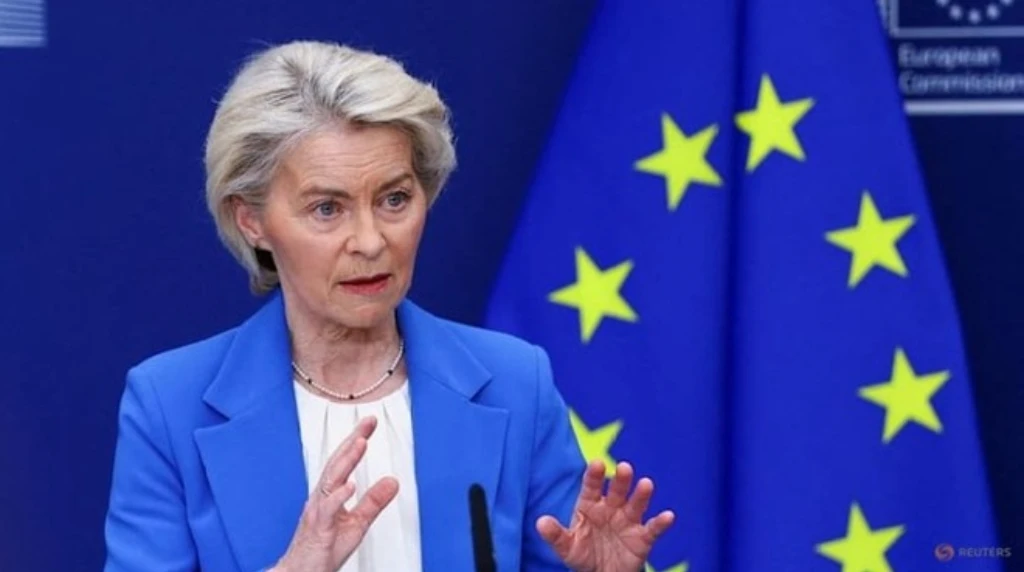
European Commission President Ursula von der Leyen has ignited a fierce political firestorm following her declaration that the European Union must move away from unanimous voting, effectively stripping individual member states of their veto power over crucial foreign policy decisions.
The announcement, heavily criticized by eurosceptic and right-leaning commentators, represents a monumental shift toward centralized power in Brussels and a significant dilution of national sovereignty for the bloc’s 27 member states.
The End of the Veto?
Historically, the European Union has required unanimous voting on highly sensitive issues, including foreign policy, taxation, treaty changes, and enlargement.
This mechanism ensures that every single member state—regardless of its size or economic influence—holds a veto, allowing a single country to block a proposal supported by the rest of the union.
In a recent address, President von der Leyen explicitly targeted this mechanism.
Citing past difficulties in passing legislation, she stated: “I think moving to qualified majority voting in foreign policy is an important way to avoid systematic blockages as we’ve seen in the past… we should use the momentum now really to move forward on that topic.”
The Political Context: Targeting “Rogue” Nations

The timing of this push is highly significant.
Political commentators on the podcast Point Blank immediately linked von der Leyen’s announcement to the recent electoral defeat of right-wing Hungarian Prime Minister Viktor Orbán, a frequent critic of Brussels who regularly utilized Hungary’s veto to stall EU initiatives, particularly regarding foreign policy and sanctions.
According to commentators, the EU elite are seizing a moment of perceived weakness among populist governments to permanently alter the rules of engagement.
By moving from a unanimous vote to “qualified majority voting,” the EU seeks to bypass the objections of smaller, right-leaning, or nationalist governments—such as those previously seen in Hungary, Poland, and Slovakia.
This change would allow larger, dominant nations like Germany and France to successfully push their agendas without the threat of a single-nation blockade.
Backlash: A “Concentration of Power”
The proposal has been met with immediate hostility from conservative critics, who view the maneuver as a blatant power grab by “unelected bureaucrats.”
The hosts of Point Blank condemned the move, arguing that stripping smaller countries of their veto power is tantamount to stripping them of their national sovereignty.
“If you can’t essentially use governmental tactics in order to force regime change on these countries… you can just take away their power to begin with,” one host argued.

Critics assert that describing a sovereign nation’s right to veto legislation as a “systematic blockage” reveals a fundamental disdain for the democratic rights of individual member states. They argue the EU is leveraging access to its lucrative single market to force smaller, poorer nations to surrender their autonomy to Brussels.
Conclusion
Ursula von der Leyen’s push to abolish unanimous voting strikes at the very heart of the European project’s structural balance. If successful, the transition to qualified majority voting will drastically increase the power of Brussels and the EU’s largest member states, ensuring that foreign policy decisions can be imposed upon dissenting nations. As populist and right-wing factions within the European Parliament continue to grow, this structural power grab is likely to deepen the divide between integrationists and those demanding the return of national sovereignty.